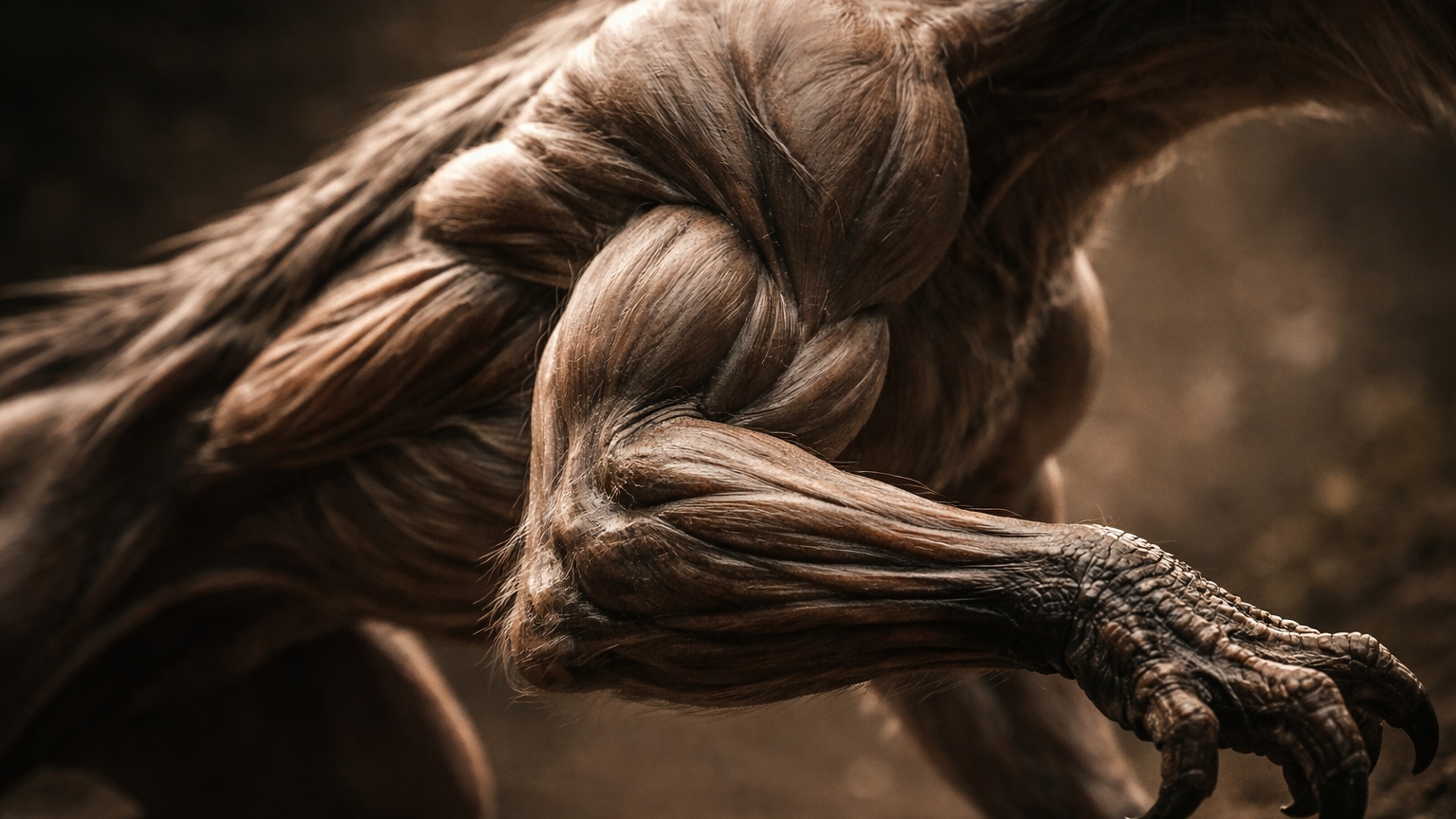
Welcome to Creature Anatomy & Form—where every ridge, claw, fin, and feather tells a survival story. On Creature-Street, we crack open the blueprints of life and explore how creatures are built to hunt, hide, sprint, swim, glide, or simply endure. From armored exoskeletons and spring-loaded jaws to heat-sensing pits and camouflage skin that seems like magic, anatomy is nature’s engineering—shaped by habitat, pressure, and time. Here you’ll find articles that trace muscle maps, bone structures, sensory systems, and movement mechanics across real-world wildlife and legendary beasts alike. Why do some predators have forward-facing eyes? How can a gecko stick to glass? What makes a serpent’s spine so fluid, or a bird’s wing so powerful? Whether you’re here to learn, design, write, illustrate, or just marvel, this category turns “cool-looking” into “now I get it.” Step closer—this is where form becomes function, and function becomes wonder.
A: Look at teeth/beak shape, jaw hinge, and eye placement.
A: Specialized organs help detect prey, predators, or mates in tough environments.
A: Not always—structure, muscle arrangement, and gait matter as much as size.
A: Long limbs, flexible spine, springy tendons, and lightweight frames.
A: Claws, pads, micro-textures, and limb angles that keep traction.
A: Streamlining reduces drag, saving energy and boosting speed.
A: It helps, but it can reduce agility—many rely on speed, camouflage, or toxins.
A: Horns usually persist; antlers are typically shed and regrown seasonally.
A: Often yes—body plans hint at hunting style, habitat, and social signaling.
A: Combine real anatomical functions: locomotion, feeding, defense, and sensing.