
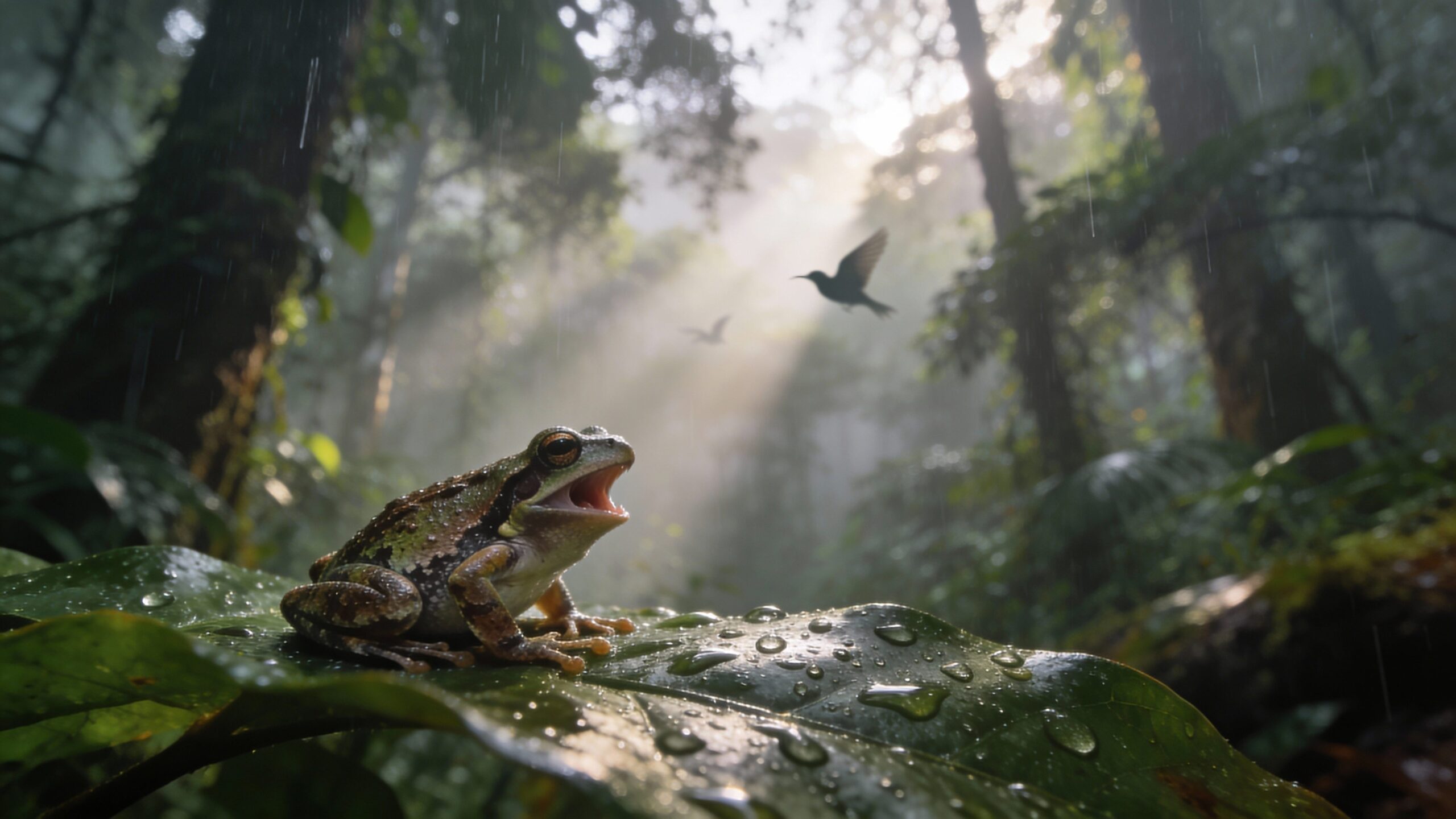
Welcome to Creature Sounds & Voices—where the wild gets loud, weird, and wonderfully expressive. Every hiss, chirp, bellow, click, and rumble is a living language shaped by survival: a frog calling for a mate in moonlit wetlands, a raven tossing out clever notes across a windy ridge, a gecko “talking” from a cave wall, or a crocodilian sending low vibrations through dark water. Here, sound isn’t background—it’s behavior you can hear. This page gathers articles that decode how creatures make noise, why they do it, and what those signals mean in real life. Explore courtship songs, alarm calls, territorial duels, nighttime soundscapes, and the surprising science of hearing, resonance, and vibration. Whether you’re into rainforest dawn choruses, desert night clicks, or the tiny squeaks of the unseen, you’ll find stories that turn the volume up on nature’s hidden conversations—and teach you how to listen like a field biologist.
A: Cooler temps, calmer air, and daily routines make signaling efficient—plus fewer visual cues.
A: Not always—many are courtship, territory “advertising,” or group coordination.
A: Focus on rhythm, pitch, repetition, and habitat—then compare similar species in the same area.
A: Often yes—through vibrations, body movement, and subtle clicks or breathing sounds.
A: Warnings deter threats; alarm calls alert others—sometimes with threat-specific meaning.
A: Trees scatter high notes; lower, slower tones can travel cleaner through dense vegetation.
A: No—some signals are ultrasonic, infrasonic, or primarily vibrational.
A: It’s more common than most people think—used for deception, defense, or social advantage.
A: Wind, rain, and temperature change how far sound travels and how active animals are.
A: Stand still, listen in layers (near/mid/far), and note repeating patterns over 2–3 minutes.