
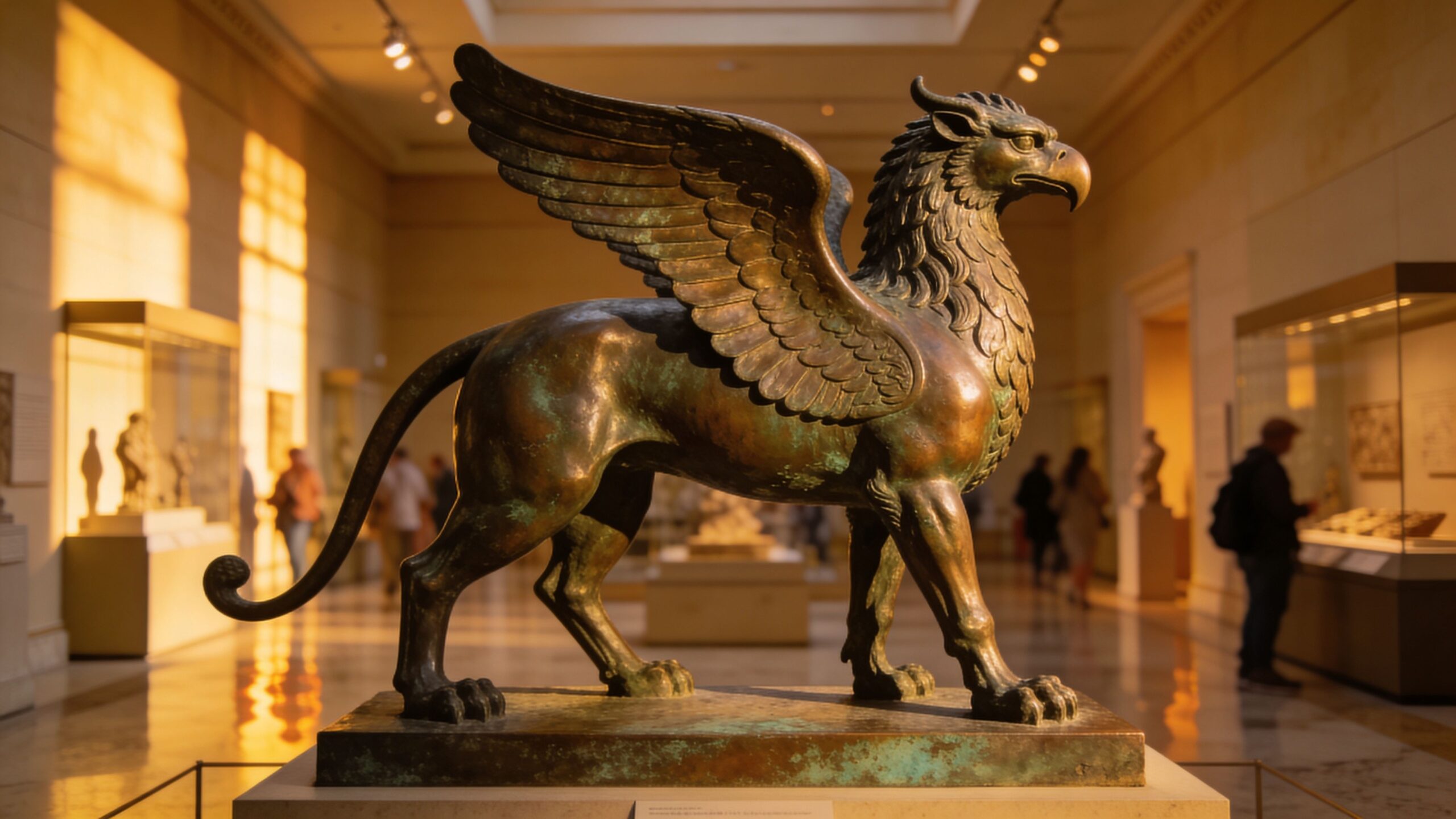
In every culture, creatures leave tracks in the imagination—and artists follow them into stone, metal, clay, glass, and wood. Creatures in Art & Sculpture explores the wild intersection where anatomy meets myth, and where a single carved claw or cast wing can carry a whole story. Here you’ll find guardian beasts perched on ancient thresholds, sea monsters curling through relief panels, and modern public sculptures that turn city corners into mini legends. Some works aim for scientific realism, capturing muscle, fur, and movement with breathtaking precision. Others chase symbolism: serpents as rebirth, owls as wisdom, wolves as loyalty, dragons as power. Across time, artists have used creatures to honor nature, warn of chaos, celebrate identity, and invent worlds that feel strangely familiar. This sub-category gathers articles that look behind the surfaces—into materials, techniques, cultural meaning, and the creative choices that make a creature feel alive even when it’s perfectly still. Step closer. The details bite back.
A: Relief projects from a background surface; in-the-round is fully 3D and viewable from all sides.
A: They’re universal symbols—instantly readable, memorable, and often tied to local identity or legend.
A: Strong silhouette, believable weight, expressive focal points (often the head/eyes), and purposeful texture.
A: Bronze, stone, and stainless steel are common; finishes and anchoring matter as much as the material.
A: Often, yes—but some are playful world-building or purely aesthetic hybrids.
A: A surface coloration from oxidation or applied chemicals that protects metal and sets the mood.
A: Pedestals control viewing height, protect the work, and frame the creature as an “icon.”
A: By varying size, overlap, and direction—uniform scales tend to look artificial.
A: Clear forms, strong negative space, and details that hold up from both near and far.
A: Yes—modern themes can use classical methods like carving, casting, and ceramic glazing.