
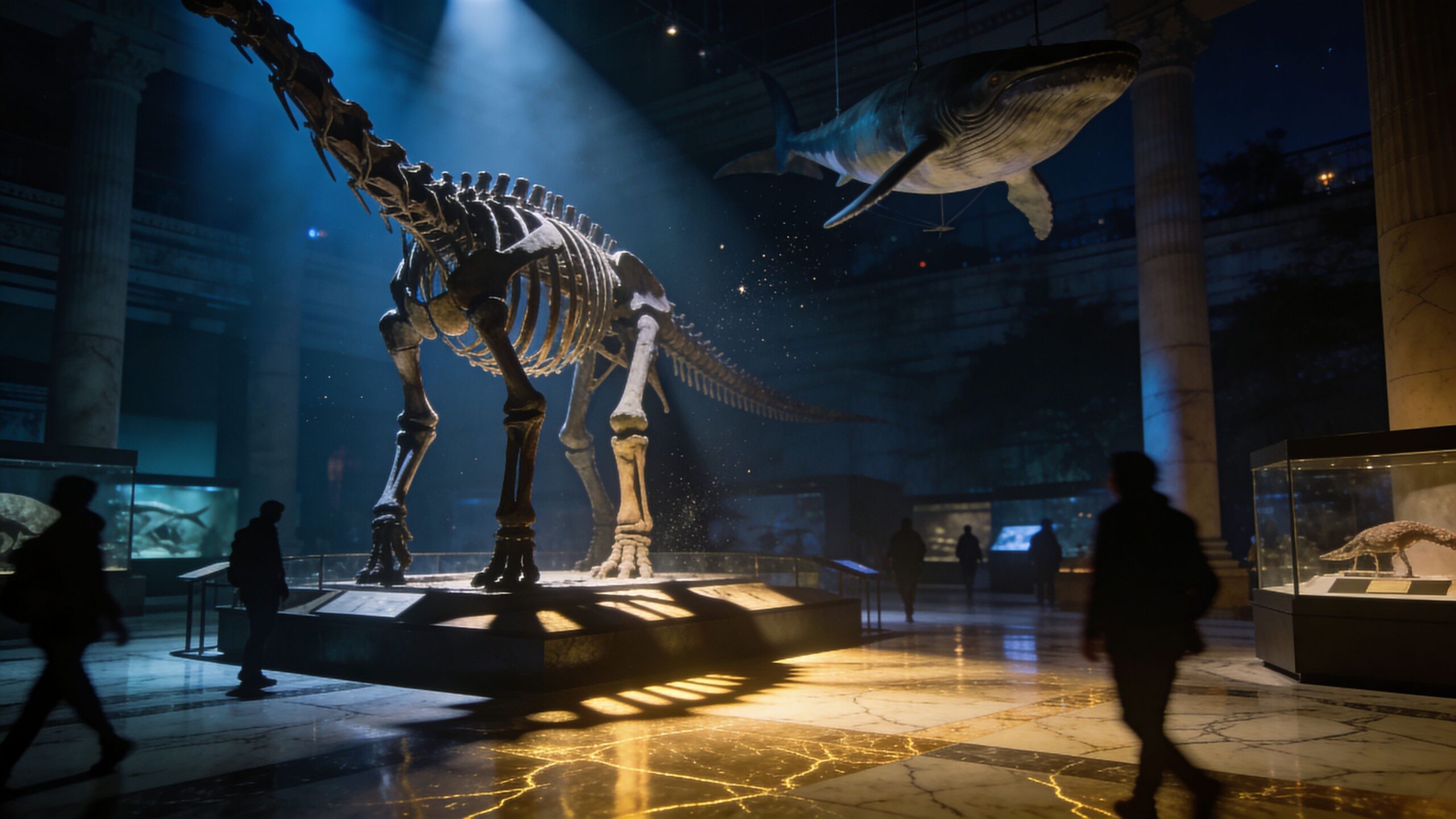
Museums are where creatures become close enough to study—and strange enough to wonder at. Creatures in Museums explores the halls where skeletons tower like architecture, dioramas freeze a hunt mid-breath, and specimen drawers reveal colors nature keeps hidden in the wild. Some displays are pure science: bones, skins, casts, and careful labels that map evolution, habitats, and behavior. Others lean into storytelling—mythic beasts carved into ancient artifacts, ceremonial masks that blur human and animal, or maritime legends that cling to old navigational lore. This sub-category gathers articles that look behind the glass: how taxidermy is preserved, why lighting and angles matter, what museum practices have changed over time, and how ethical collecting shapes what we see today. You’ll also find practical guides for visitors—what to look for in a gallery, how to read a diorama like a scene, and how a single tooth, feather, or footprint can unlock an entire ecosystem. Step in quietly. The exhibits are alive with meaning.
A: Sometimes—many are real specimens, while others are casts, replicas, or reconstructions for education and safety.
A: To protect fragile originals, fill missing fossil parts, and allow hands-on learning without risk.
A: A staged scene combining specimens/models with environmental art to represent a habitat and behavior.
A: Many do, but practices vary and are shaped by permits, ethics, conservation, and research needs.
A: Lower light helps protect sensitive materials and reduces long-term fading and deterioration.
A: With engineered armatures, hidden supports, and secure anchors designed for stability and vibration control.
A: Often yes, but policies vary—some areas restrict flash to protect objects and visitor experience.
A: Teeth, hands/feet, tiny specimens, and labels about habitat—details often hold the best stories.
A: Climate control, sealed cases, pest monitoring, careful handling, and conservation-grade materials.