
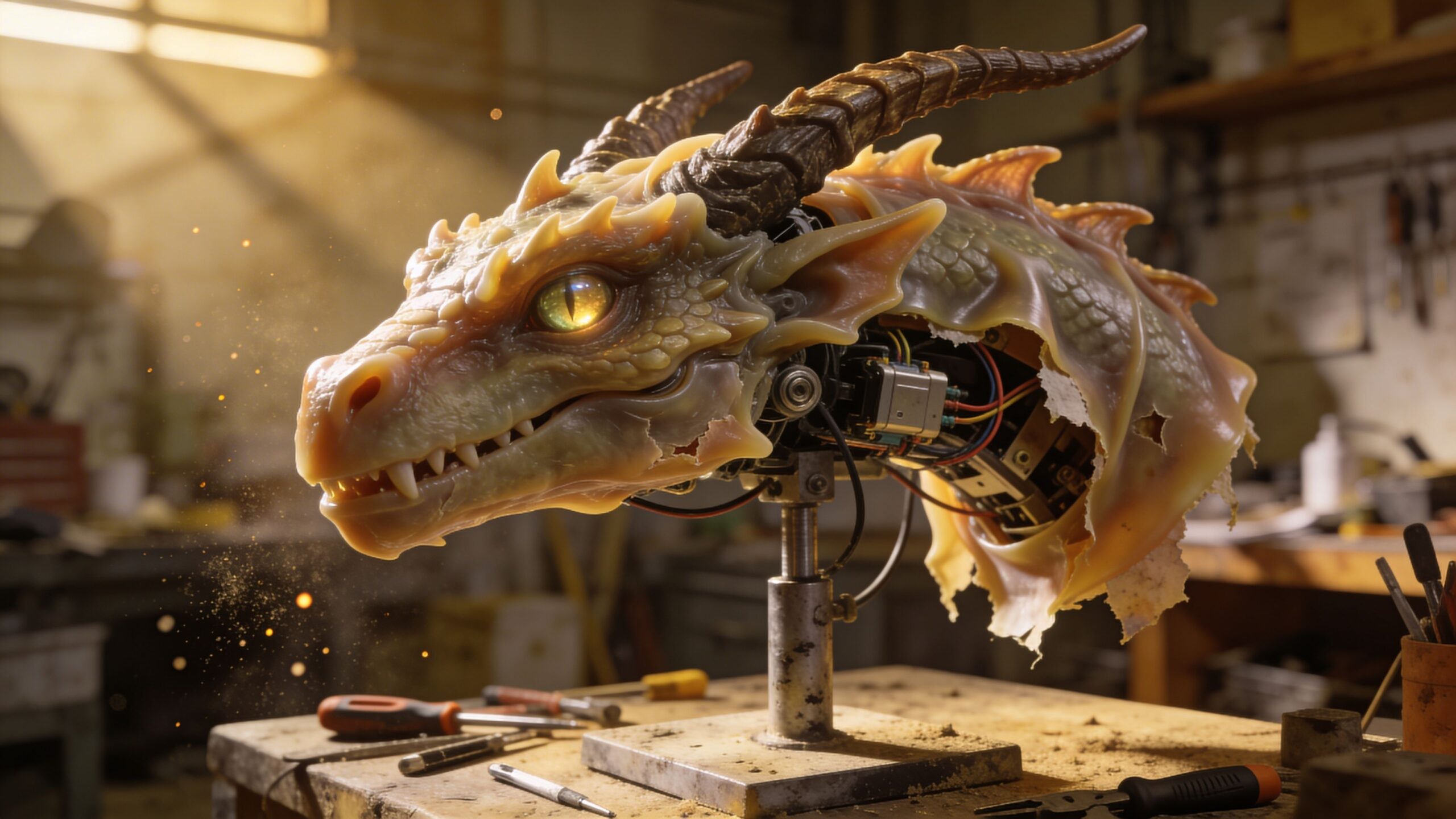
Animatronic Creatures is where Creature Street’s legends gain a pulse—where gears, cables, and clever illusion turn folklore into something that blinks back. This category dives into the craft of building moving myth: animatronic lake monsters that ripple beneath black water, towering forest giants that breathe in the shadows, winged omens that ruffle and fold, and dragons whose jaws open with a slow, believable weight. Here, motion is storytelling. A head tilt can feel like intelligence. A pause can feel like a warning. We’ll explore how creators translate cryptid reports and ancient descriptions into mechanics that read as alive, from silhouette-first design and skin textures to sound cues, mist, lighting, and timed reveals. Expect articles that break down movement styles, staging tricks, safety considerations, and the art of keeping seams hidden while leaving just enough “unexplained” for the imagination to finish. Whether you’re building a traveling show, an encounter room, or a pop-up exhibit, these guides celebrate the engineered magic that makes a legend step forward—and stay in your head long after the lights come up.
A: A mechanical creature build designed to move—often paired with lore, atmosphere, and staged reveals.
A: Not always—strong silhouette, believable motion, and lighting can outperform perfect detail.
A: Breath and blink—small cues that instantly signal life.
A: Use scrims, terrain covers, low light, fog, and short reveal windows.
A: Depends—animatronics excel at scale and repeatability; performers excel at improvisation and chase pacing.
A: Head tracking, pauses, micro-tilts, and reactions to sound or visitor movement.
A: Wakes, bubbles, shadowed neck arcs, and shoreline movement effects.
A: Far enough to protect guests and the build, close enough to feel presence—barriers and clear zones help.
A: Add randomized timing, alternate motions, and occasional “stillness” beats.
A: How engineered motion can honor lore while keeping the unknown mysterious and thrilling.