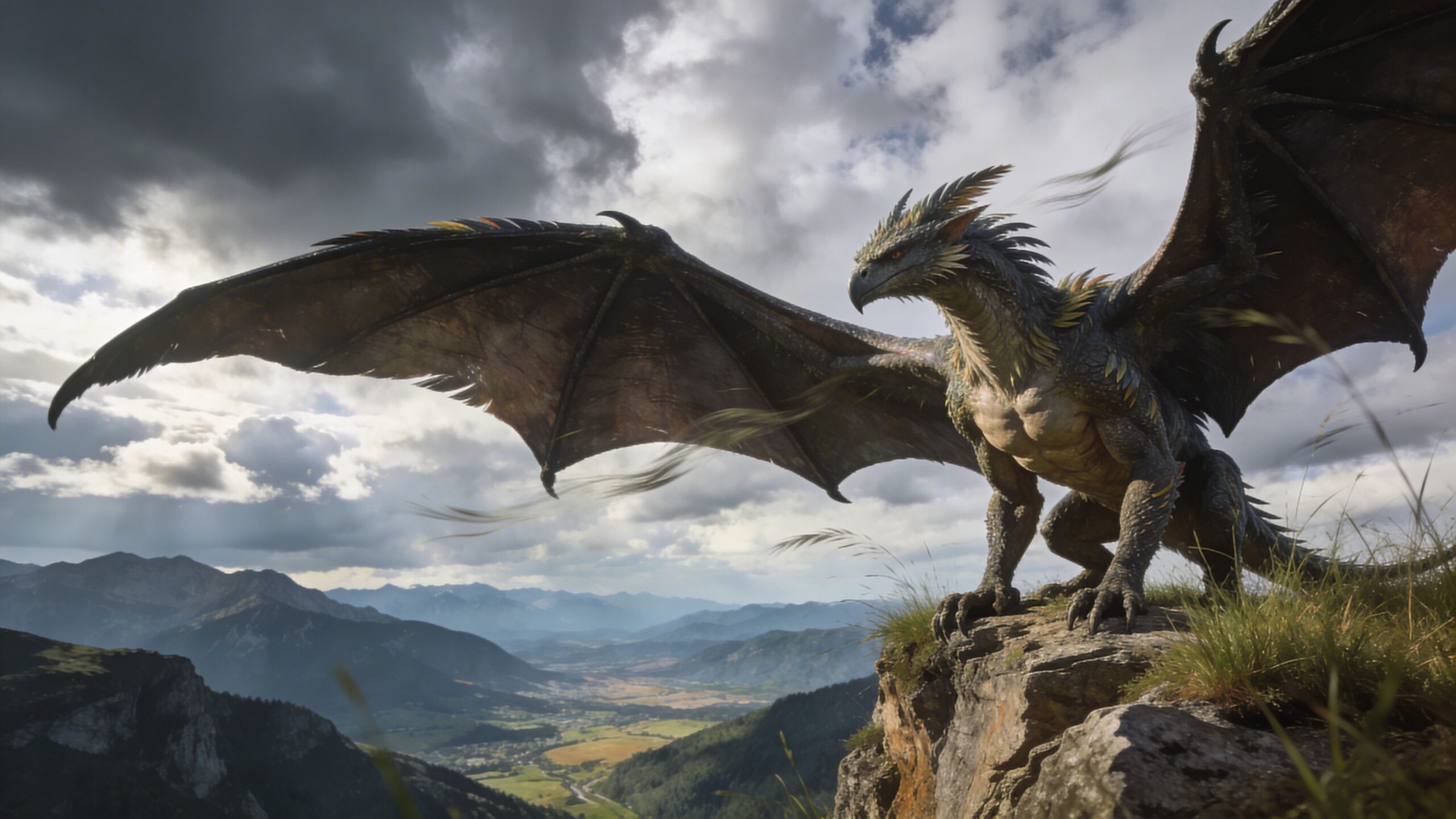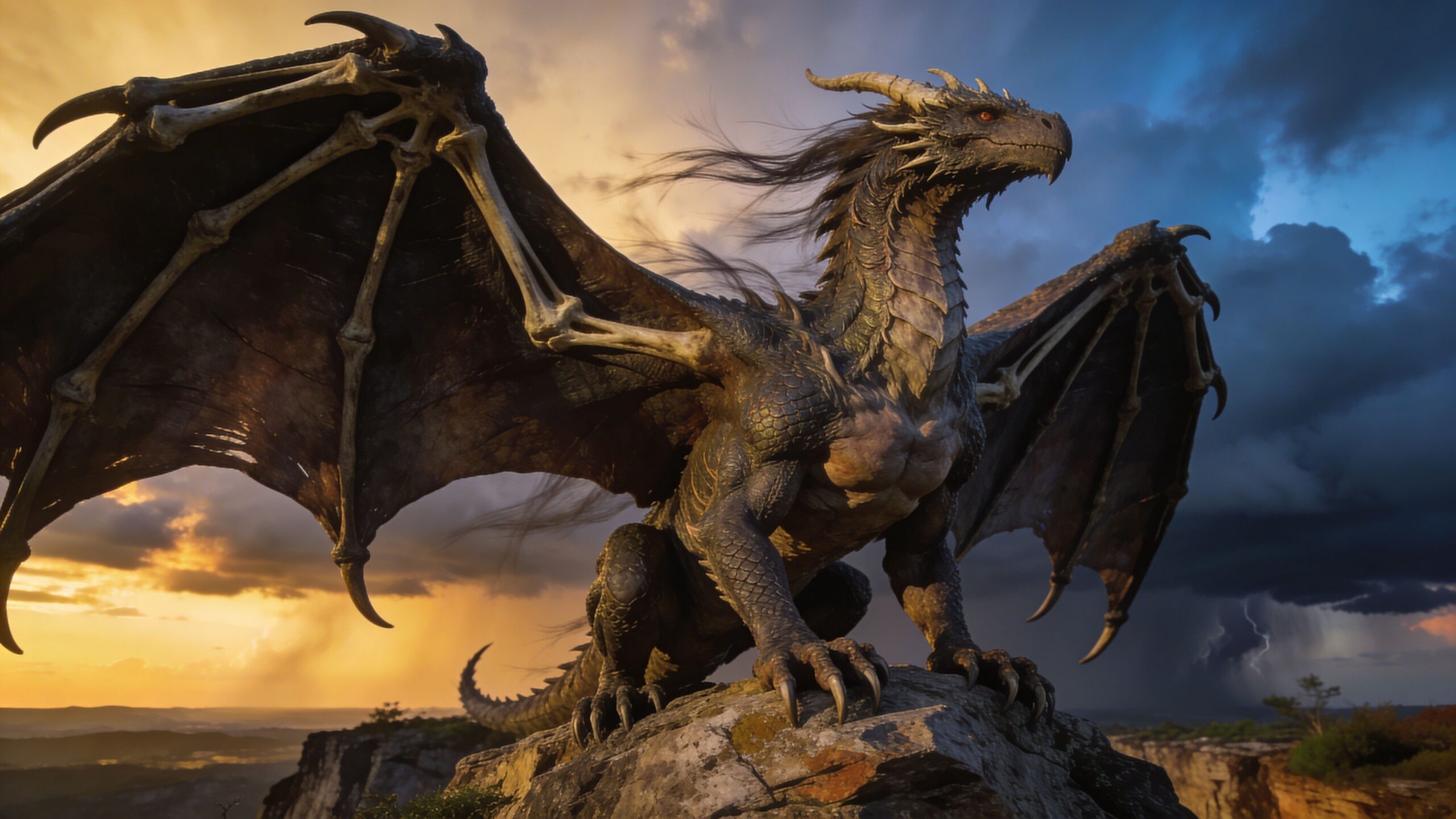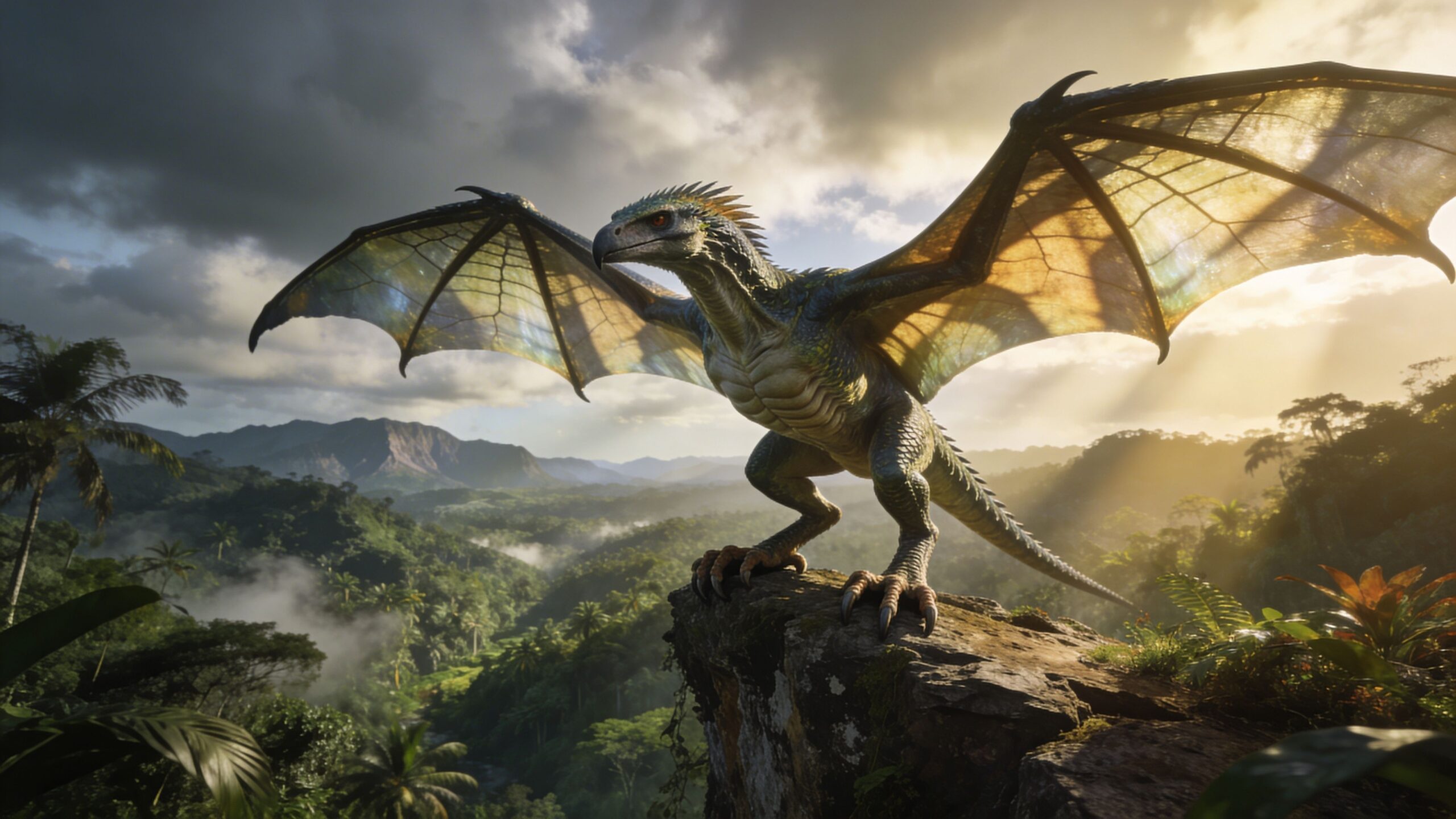
Why Believable Creatures Matter
The most unforgettable imaginary creatures are rarely the ones that look random. They are the ones that seem possible. Even in the most fantastical worlds, audiences respond most strongly to creatures that appear to obey some kind of natural logic. A beast with convincing anatomy, sensible movement, and clear biological purpose feels alive in a way that a purely decorative monster never can. That sense of realism gives a design weight, mystery, and staying power. Designing creatures that could exist is not about limiting creativity. It is about giving imagination a foundation. Real biology offers endless inspiration because life on Earth has already solved extraordinary problems through evolution. There are animals that glide, burrow, camouflage, regenerate, electrify prey, survive freezing temperatures, and communicate through color, sound, scent, and movement. When creature design draws from these truths, even the most unusual invention starts to feel believable. This approach also strengthens worldbuilding. A creature that feels biologically grounded automatically raises fascinating questions. What does it eat? How does it defend itself? Where does it sleep? How does it reproduce, migrate, or avoid predators? Once those answers begin to emerge, the creature stops being a concept and starts becoming a species.
A: Consistent anatomy, logical movement, environmental adaptation, and believable biological function.
A: No. Starting with skeleton, posture, and movement usually creates stronger designs.
A: Habitat shapes body structure, camouflage, diet, senses, and survival strategies.
A: Yes, as long as the combined traits work together biologically and mechanically.
A: Their size, limbs, balance, or abilities may ignore anatomy and physics too much.
A: It is essential because body design should always support believable locomotion.
A: Ideally yes, because function makes anatomy feel natural and memorable.
A: Absolutely. Some of the strangest real animals on Earth already prove that.
A: Yes, because size changes balance, energy needs, structural support, and movement limits.
A: Use imagination boldly, but anchor every major feature in anatomy and biology.
The Power of Skeletal Logic
Bones define the basic story of a creature’s body. Thick leg bones suggest weight and power. Hollow or lightweight structures hint at speed or flight. A long spine may suggest flexibility, while a short, compact torso might indicate brute strength. Even before skin and color are added, the skeleton communicates function.
Predators and prey often reveal themselves through skeletal design. Predators typically have forward-facing eyes, jaws built for gripping or tearing, and neck structures that support fast strikes or strong bites. Prey animals often have wider fields of vision, more defensive body positioning, and limb structures better suited to speed or endurance. These patterns are not strict rules, but they are useful guides.
A believable creature also needs the right center of gravity. If the body mass sits far forward, the limbs and spine must compensate. If the creature stands upright, its hips, tail, or torso must support that posture. When the balance feels wrong, the audience senses it immediately, even if they cannot explain why. Good creature anatomy often succeeds because it quietly respects physics.
Muscles Create Motion and Personality
If bones provide architecture, muscles create life. Muscles explain how a creature moves, how powerful it feels, and even what kind of personality it seems to have. A heavy creature with thick shoulders and a dense neck appears imposing. A lean animal with long hind limbs feels quick, nervous, and reactive. Body design communicates behavior before the creature does anything at all.
Muscle groups should reflect function. A creature that leaps between rocks would likely need strong hindquarters and a flexible lower spine. A burrowing animal might have dense forelimb muscles and reinforced shoulders. A flying predator would need massive chest muscles to power wingbeats. Even fantastical creatures should carry this internal logic. When muscle placement supports movement style, the design becomes far more convincing. This also matters in still imagery. A creature standing on a page or screen should feel as though it could move naturally the moment it is animated. Tension in the limbs, weight distribution in the torso, and the relationship between shoulder, hip, and spine all help create that illusion. Realistic anatomy is not just about looking correct. It is about implying motion, behavior, and energy.
Locomotion Shapes the Entire Body
How a creature moves may be the single most important question in believable design. Locomotion affects everything from limb length to joint structure to overall body plan. A creature that swims, climbs, glides, sprints, stalks, or tunnels will have a body shaped around those demands.
Running animals often have efficient, spring-like limb mechanics. Climbers need flexible shoulders, gripping feet, and often tails or counterbalancing structures. Swimmers tend to be streamlined, reducing drag while maximizing propulsion. Flyers face even greater design challenges because flight is expensive and anatomically demanding. Wings need enough surface area to generate lift, the body needs to stay light enough to leave the ground, and the muscles powering flight must be substantial.
Designers often make the mistake of giving creatures every ability at once. A monster that is huge, heavily armored, lightning-fast, silent, and fully capable of powered flight may sound exciting, but the design can become biologically incoherent. The strongest creatures usually specialize. They may have secondary abilities, but their anatomy should clearly favor one primary movement strategy. Specialization feels real because evolution tends to reward efficiency.
Skin, Covering, and External Features
The surface of a creature should tell the story of its environment and lifestyle. Skin, scales, fur, feathers, shells, and armor are not just visual flavor. They are adaptive tools. They regulate temperature, defend against injury, help with camouflage, attract mates, or support movement through particular habitats.
A creature in a cold alpine region might have dense insulating fur, compact ears, and broad feet for snow. A desert predator might display heat-resistant skin, muted coloration, and features that reduce water loss. A swamp creature may have slick, moisture-retaining skin and coloration that blends into muddy vegetation. Surface detail becomes much more powerful when it reflects ecological need. Decorative features should also have purpose. Horns can be for defense, competition, or display. Crests may regulate heat or communicate status. Bioluminescent markings could attract prey, confuse enemies, or help with mating rituals. The best fantasy details usually feel like extensions of biology rather than random additions. When every feature answers a survival question, the creature gains depth.
Environment Is a Silent Designer
No creature evolves in a vacuum. Habitat shapes anatomy as powerfully as any internal trait. If a creature is meant to feel like it could truly exist, its body should reflect the pressures of its world. This is where biology becomes especially exciting, because environmental adaptation can produce strange and beautiful forms.
Forest creatures may evolve camouflage, climbing claws, stealth-oriented movement, and acute hearing. Open-plain animals might favor speed, long sightlines, and herd or pack behaviors. Cave dwellers could lose pigmentation, develop sensitive touch systems, and rely less on vision. Coastal predators may blend terrestrial and aquatic traits. Even in speculative worlds, the same principle applies. A volcanic environment, low-gravity moon, toxic atmosphere, or giant fungal jungle would shape species in distinct ways.
This ecological thinking also prevents thin content in creature design. Instead of creating one cool beast in isolation, you begin imagining a whole network of pressures and responses. What hunts it? What does it avoid? What season is hardest for survival? Suddenly the creature belongs to a world instead of simply occupying one.
Senses, Feeding, and Survival Strategy
Believable creatures do more than move well. They must sense the world and interact with it in practical ways. Vision, hearing, smell, vibration detection, electroreception, thermal sensing, and echolocation are all examples of how real animals gather information. Creature design becomes richer when sensory systems feel purposeful rather than generic.
Eye placement alone says a great deal. Forward-facing eyes imply depth perception and focused tracking. Side-facing eyes suggest vigilance and a wider field of view. Large pupils hint at nocturnal activity. Reduced or hidden eyes may indicate underground or deep-water living. Sensory whiskers, antennae, pits, membranes, and enlarged ears all suggest different survival strategies. Feeding anatomy matters just as much. Teeth should match diet. Beaks, crushing jaws, filter-feeding structures, venom delivery systems, and grasping limbs all imply different ecological roles. A creature’s mouth is not just a threat display. It is a biological clue. The more precisely the feeding system matches the animal’s environment and prey, the more believable the creature becomes.
Reproduction, Growth, and Life Cycle
A creature feels even more real when it seems to have a life beyond its adult form. This is where many imaginative designs can become truly special. Thinking about reproduction, infancy, maturity, and aging adds a dimension that is often missing from surface-level monster design.
Does the species lay eggs, bear live young, or reproduce in some stranger but biologically coherent way? Do juveniles occupy a different niche from adults to reduce competition? Are young brightly colored for warning or hidden by camouflage? Does the species undergo dramatic physical changes with maturity, like antlers, crest growth, or a shift in diet and habitat? These questions help transform a creature from a static image into a living organism.
Life cycle design also affects anatomy. A flying adult might begin as an aquatic juvenile. A massive predator might spend its first years as a scavenger. A creature may develop defensive structures only after reaching a certain size. These stages create storytelling possibilities and strengthen realism because real biology is full of transformation.
Evolution Makes the Impossible Feel Possible
One of the best tools in creature design is evolutionary thinking. Instead of asking only what looks impressive, ask how a trait could have emerged over generations. What pressure favored it? What problem did it solve? What tradeoffs came with it? This mindset naturally filters out weak ideas and strengthens strong ones.
A long neck is not just elegant. It may help reach food, scan terrain, or display dominance. Armor is protective, but it adds weight and may reduce speed. Wings provide mobility, but they demand energy and structural compromise. Venom is useful, but producing it carries biological cost. Evolution is rarely about perfection. It is about workable advantage. That tension is exactly what makes creatures feel alive. When a design includes tradeoffs, it becomes much more convincing. A creature can be fearsome and still have limitations. In fact, limitations often make it more compelling. Audiences believe in creatures that seem adapted rather than invincible.
Blending Real Animals Into New Possibilities
Many successful imaginary creatures are built by recombining patterns from real animals. This does not mean simply attaching wolf legs to a lizard body and adding wings. It means understanding the functions behind those real traits and then combining them with care.
A creature inspired by big cats may inherit shoulder flexibility, stalking posture, and explosive sprint mechanics. Borrowing from birds may influence respiratory efficiency, lightweight frames, or display feathers. Reptilian influence may shape skin texture, jaw articulation, or egg-laying biology. Insect traits can inspire exoskeletal protection or unusual sensory adaptations. The trick is not to mix randomly, but to merge systems that could plausibly work together.
This is where creativity and realism meet beautifully. You are not copying nature. You are using its logic to extend beyond what exists. That is often the true secret behind creatures that feel original and possible at the same time.
Designing Wonder With Biological Truth
Designing creatures that could exist is ultimately an exercise in respect for life’s complexity. The more closely creators observe anatomy, ecology, and evolution, the more freedom they gain to invent with confidence. Realism does not shrink imagination. It gives imagination something solid to stand on.
A believable creature is not memorable just because it looks dramatic. It stays with us because it feels like it has a pulse, instincts, history, and a place in the world. We can imagine its tracks in mud, the sound of its breathing, the way it hunts at dusk or disappears into dense foliage. That sensory and biological credibility creates wonder. The best creature design lives in that space between science and myth. It uses anatomy to ground the impossible, biology to explain the extraordinary, and imagination to push beyond the familiar. When all three work together, a creature no longer feels invented. It feels discovered.