Tyrannosaurus rex is the dinosaur that needs no introduction. Even people who cannot name a single fossil site or geological period instantly recognize the heavy skull, thick teeth, powerful legs, and thunderous reputation of the creature called the “king of the dinosaurs.” T. rex has become more than a prehistoric animal. It is a symbol of ancient power, a centerpiece of museum halls, a star of films and books, and one of the most searched-for dinosaurs in the world. Yet the real Tyrannosaurus rex is even more fascinating than the monster of popular imagination. This was not simply a giant lizard stomping through the past. T. rex was a highly specialized predator shaped by millions of years of evolution. Its skull was built for crushing force. Its senses were sharp. Its growth was dramatic. Its environment was filled with dangerous prey, rival predators, changing landscapes, and the final chapter of the Age of Dinosaurs. To understand Tyrannosaurus rex, we have to go beyond the roar. We have to explore the world it ruled, the body it used to dominate, the prey it hunted, the fossils it left behind, and the scientific mysteries that still surround it.
A: It means “tyrant lizard king,” a fitting name for one of Earth’s most famous predators.
A: T. rex lived during the Late Cretaceous, roughly 68–66 million years ago.
A: Fossils show it lived in western North America.
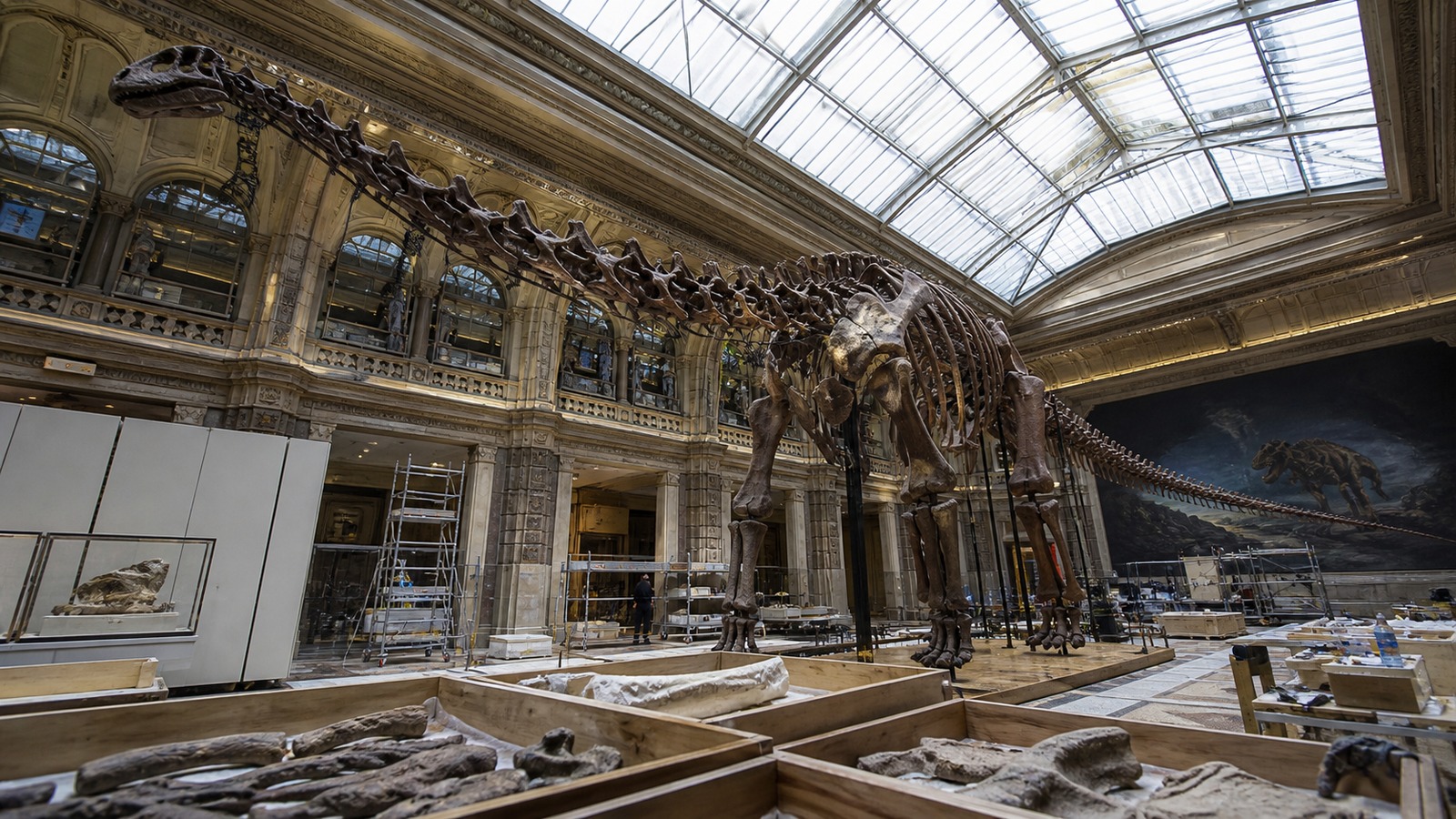
A: No. Many plant-eating sauropods were much bigger, but T. rex was one of the largest land predators.
A: It likely did both, like many powerful predators today.
A: Estimates suggest it had one of the strongest bites of any land animal.
A: Scientists debate this, but the arms were still muscular and may have helped with gripping or rising.
A: Direct evidence is uncertain, though some tyrannosaur relatives had feather-like coverings.
A: Triceratops, Edmontosaurus, Ankylosaurus, and other Late Cretaceous creatures shared its world.
A: It vanished during the end-Cretaceous mass extinction about 66 million years ago.
What Was Tyrannosaurus Rex?
Tyrannosaurus rex was a massive meat-eating dinosaur that lived during the Late Cretaceous Period, roughly 68 to 66 million years ago. Its name means “tyrant lizard king,” a title that has helped cement its royal status in prehistoric history. It belonged to a group of two-legged carnivorous dinosaurs called theropods, the same broad group that includes everything from small feathered hunters to some of the largest predators ever to walk on land.
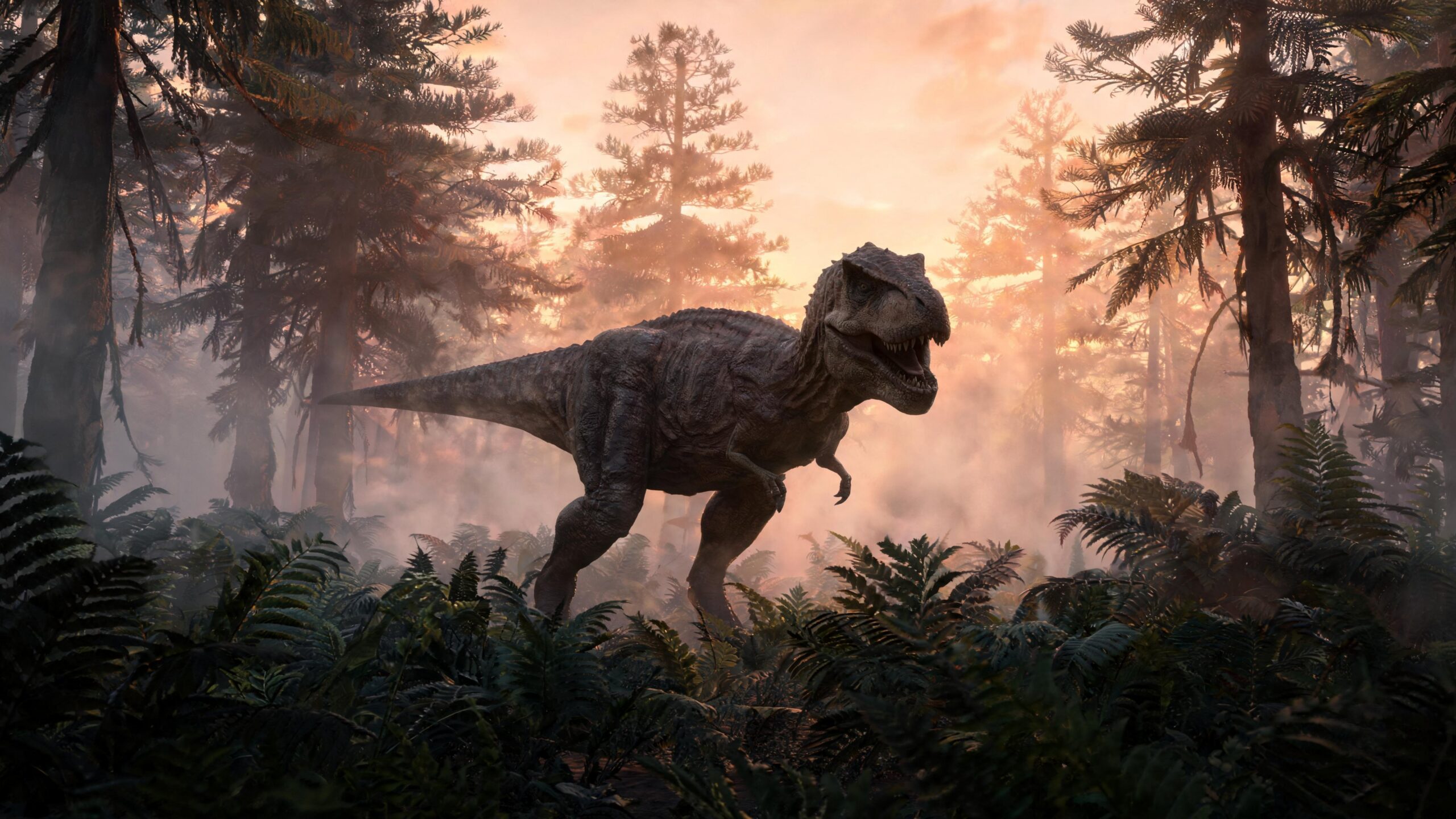
T. rex lived in what is now western North America. During its time, this region was part of a landmass known as Laramidia, separated from eastern North America by a vast inland sea. The world of T. rex was not a barren wasteland. It was a rich landscape of rivers, floodplains, forests, coastal lowlands, and seasonal habitats filled with life. Herds of plant-eating dinosaurs moved through these environments, and where there were large herbivores, there was room for a predator like T. rex.
Although many dinosaurs were bigger in total size, especially long-necked sauropods, few land predators matched the overall intimidation of Tyrannosaurus rex. It combined length, weight, bite force, sensory ability, and evolutionary timing into one unforgettable animal.
How Big Was T. Rex?
A large adult Tyrannosaurus rex could reach around 40 feet long and stand about 12 to 13 feet tall at the hips. Its head alone could approach five feet in length, making the skull one of the most impressive weapons in the dinosaur world. Estimates of its weight vary by specimen and method, but many adult individuals likely weighed several tons, with some estimates placing large T. rex specimens in the range of 6 to 9 tons.
Unlike the older image of T. rex standing upright like a kangaroo, modern science shows the animal in a more horizontal posture. Its head and torso stretched forward while its long tail balanced the body behind the hips. This posture made T. rex look less like a lumbering movie monster and more like a gigantic predatory bird with a wrecking-ball skull. Size mattered, but it was not the only reason T. rex was so successful. A huge animal still needs balance, movement, senses, feeding tools, and survival strategy. T. rex had all of them.
The Skull: A Bone-Crushing Weapon
The skull of Tyrannosaurus rex was its signature feature. Deep, broad, and heavily reinforced, it was built to handle enormous stress. While some large carnivorous dinosaurs had narrower skulls better suited for slicing, T. rex had a skull designed for crushing. Its jaws could deliver one of the most powerful bites known from any land animal.
The teeth were just as remarkable. T. rex teeth were not delicate knives. They were thick, curved, serrated spikes, often compared in shape to bananas. This design helped them puncture deeply, grip flesh, crack bone, and resist breaking under pressure. When teeth did break or wear down, new teeth grew in to replace them.
A bite from T. rex was not a clean little slash. It was catastrophic trauma. The animal could bite, clamp, twist, and pull with enough force to tear away flesh and damage bone. Fossil evidence from prey animals shows tooth marks that match tyrannosaur jaws, giving scientists direct clues about how this predator interacted with the animals around it.
Did T. Rex Hunt, Scavenge, or Both?
For years, people debated whether Tyrannosaurus rex was an active hunter or mostly a scavenger. Today, the best answer is that it was likely both. In nature, the line between hunter and scavenger is not as strict as people sometimes imagine. Lions scavenge. Hyenas hunt. Bears do both. A giant predator with a powerful nose, huge jaws, and massive energy needs would not ignore a free meal.
T. rex almost certainly scavenged when it had the chance. A carcass on the floodplain would have been too valuable to waste. But the idea that T. rex was only a scavenger does not fit the full picture. Its forward-facing eyes helped with depth perception. Its powerful legs allowed it to move across large territories. Its jaws were capable of attacking and disabling large prey. Fossil evidence also suggests encounters with living animals, including injuries that healed after bites. The most realistic image is a flexible apex predator. T. rex may have stalked young, old, injured, or isolated prey. It may have ambushed from cover near forest edges or river corridors. It may have bullied smaller predators away from carcasses. It did not need to be one thing. Its success came from being adaptable, opportunistic, and terrifyingly well equipped.
What Did Tyrannosaurus Rex Eat?
Tyrannosaurus rex lived alongside some of the most famous dinosaurs of all time. Its potential prey included Triceratops, Edmontosaurus, and possibly armored dinosaurs such as Ankylosaurus. Each of these animals presented a different challenge.
Triceratops was not helpless. With three horns, a massive skull, and a muscular body, it could have been dangerous even to T. rex. Edmontosaurus, a duck-billed dinosaur, lacked horns but could grow large and may have traveled in groups. Ankylosaurus was covered in armor and carried a tail club capable of delivering serious damage. The world of T. rex was not filled with easy targets.
This makes the predator’s adaptations even more impressive. To survive, T. rex needed to judge risk. It had to choose when to attack, when to back away, when to scavenge, and when to use its size to intimidate competitors. Its diet was shaped not just by hunger, but by strategy.
The Senses of a Super Predator
T. rex was not just strong. It was aware. Studies of its skull and braincase suggest it had powerful senses that helped it locate food and navigate its environment. Its sense of smell appears to have been especially strong, which would have helped it detect carcasses, track prey, or sense other animals over distance. Its eyes faced forward more than those of many animals, supporting good binocular vision. This would have helped with depth perception, especially when judging distance during an attack. For a predator with a massive head and bone-crushing jaws, knowing exactly where to bite mattered.
Hearing may also have played an important role. T. rex likely detected low-frequency sounds, the kind that could travel through dense landscapes. Instead of imagining a creature that only roared, it may be better to picture one that listened, smelled, watched, and waited.
How Fast Could T. Rex Run?
The speed of Tyrannosaurus rex is one of the most debated questions in dinosaur science. Older portrayals sometimes imagined T. rex sprinting after vehicles at high speed, but modern research tends to be more cautious. A creature weighing several tons faced serious physical limits. Running too fast could risk dangerous falls or bone stress.
That does not mean T. rex was slow in a useless way. It was a powerful walker and likely capable of quick bursts or determined pursuit over short distances. Juveniles, which were lighter and more slender, may have been much faster than adults. This difference may have allowed young and adult tyrannosaurs to hunt different kinds of prey, reducing competition within the same species.
An adult T. rex did not need to be the fastest animal in its ecosystem. It needed to be fast enough, strong enough, and smart enough to use terrain, surprise, and power to its advantage.
Why Were T. Rex Arms So Small?
No feature of Tyrannosaurus rex has inspired more jokes than its arms. Compared with the enormous head and body, the arms look almost absurdly small. But small does not mean useless. T. rex arms were muscular, and each hand had two clawed fingers.
Scientists have proposed several possibilities. The arms may have helped the animal grip during feeding or mating. They may have assisted a resting T. rex in pushing itself up. They may also represent an evolutionary tradeoff: as the skull became the main weapon, the arms became less important. In a predator that killed with its jaws, long grasping arms were no longer necessary. The tiny arms are funny to us, but evolution is not interested in comedy. If a body part remains, it usually has a reason, even if that reason is not obvious at first glance.
Did T. Rex Have Feathers?
The question of feathers is one of the most exciting modern dinosaur topics. Some tyrannosaur relatives had feather-like coverings, especially smaller species or earlier members of the broader tyrannosaur family tree. This raises an obvious question: did Tyrannosaurus rex have feathers too?
The answer is still uncertain. Some skin impressions from tyrannosaur fossils suggest scaly skin on parts of the body. However, that does not completely rule out feathers elsewhere. T. rex may have had mostly scales, patches of feathering, or different coverings at different life stages. Juveniles, for example, may have benefited more from insulation than huge adults.
For now, the safest view is that T. rex was not the fully naked reptilian monster of older artwork, nor can we confidently cover every adult in thick feathers. The truth may have been more complex, and future fossils could change the picture again.
Growth: From Young Hunter to Giant Ruler
Tyrannosaurus rex did not hatch as a giant. Like all dinosaurs, it began life small and vulnerable. Young T. rex individuals were likely leaner, quicker, and built differently from adults. As they grew, their skulls became deeper, their bodies heavier, and their bite more devastating. This transformation may have allowed T. rex to occupy different roles during its lifetime. A juvenile might have chased smaller, faster prey, while an adult targeted larger animals or dominated carcasses. In this way, one species could fill multiple predator niches as it aged.
Growth was also risky. A young T. rex had to survive disease, injury, starvation, larger predators, environmental change, and competition. Reaching adulthood meant entering the top tier of the ecosystem, but getting there was a brutal journey.
Fossils That Made T. Rex Famous
Tyrannosaurus rex is one of the best-known large theropod dinosaurs because of its fossil record. Famous specimens have helped scientists study its size, growth, injuries, bite mechanics, and anatomy. Museum displays have also made T. rex the public face of paleontology.
One reason T. rex captures attention is that its fossils feel personal. A skull full of teeth is not just a scientific object; it is a direct encounter with an animal that once breathed, hunted, fought, aged, and died. Bite marks, healed injuries, broken bones, and tooth wear all turn fossils into biographies written in stone.
Every specimen adds detail. Some reveal how big T. rex could become. Others show how individuals grew. Some preserve signs of violent lives. Together, they build a more complete portrait of a creature that was once known only from fragments.
T. Rex and Its Prehistoric Neighbors
The world of Tyrannosaurus rex was full of drama. Triceratops grazed or browsed with horns ready for defense. Edmontosaurus moved through floodplains in large numbers. Ankylosaurus carried heavy armor and a dangerous tail club. Smaller animals lived in the shadows of giants, including mammals, turtles, crocodile relatives, birds, fish, insects, and other reptiles.
This ecosystem was not static. Rivers shifted. Seasons changed. Storms reshaped landscapes. Carcasses attracted scavengers. Herds migrated across open areas and wooded edges. T. rex lived in a world of opportunity and danger, not a simple arena built for battles. Understanding this environment helps us see T. rex as a real animal. It was not just waiting to fight another famous dinosaur. It was surviving day after day in a complex Cretaceous world.
Why Is T. Rex Called the King of the Dinosaurs?
Tyrannosaurus rex earned its royal nickname through a combination of science, spectacle, and storytelling. Its name literally includes “king.” Its skull looks like a crown of teeth. Its size places it among the most formidable land predators ever discovered. Its fossil record is strong enough to support serious scientific study. Its cultural presence is unmatched.
But the title also comes from timing. T. rex lived at the very end of the dinosaur age, just before the mass extinction that wiped out all non-avian dinosaurs. It was one of the last great apex predators of the Mesozoic Era. In a sense, T. rex stood on the throne as the curtain fell.
That final chapter adds power to its legend. T. rex was not an early experiment or a forgotten side branch. It was a late-stage masterpiece of predatory evolution.
How Did T. Rex Go Extinct?
Tyrannosaurus rex disappeared around 66 million years ago during the end-Cretaceous mass extinction. This extinction event is widely associated with a massive asteroid impact, along with intense environmental disruption. Firestorms, darkness, cooling, food web collapse, and long-term climate stress devastated ecosystems around the world. For a large predator like T. rex, the collapse of plant communities and herbivore populations would have been disastrous. Apex predators depend on everything below them. When the base of the food chain fails, the top falls too.
Although T. rex vanished, its broader evolutionary story did not completely end. Birds are living dinosaurs, descended from theropod ancestors. T. rex itself left no living descendants, but it belonged to the same grand evolutionary branch that ultimately gave rise to modern birds.
The Real T. Rex vs the Movie Monster
Movies made Tyrannosaurus rex roar, chase, and smash its way into global fame. Those portrayals are thrilling, but the real animal was more interesting than a simple monster. It may not have sounded like a Hollywood roar. It may not have sprinted endlessly at high speeds. It may have had more complex skin or feather coverings than older artwork suggested. It almost certainly behaved with more caution and intelligence than a nonstop killing machine.
Real predators do not waste energy for drama. They calculate risk. They rest. They follow scent. They avoid unnecessary injury. They feed when they can and fight when they must. T. rex was terrifying not because it was reckless, but because it was adapted.
The true Tyrannosaurus rex was not less exciting than fiction. It was more believable, more complex, and more powerful because it was real.
Why T. Rex Still Matters
Tyrannosaurus rex remains one of the most important dinosaurs because it sits at the crossroads of science and imagination. For children, it is often the first dinosaur that sparks curiosity. For scientists, it remains a subject of serious research. For museums, it is a centerpiece. For storytellers, it is the ultimate prehistoric predator.
New discoveries continue to reshape what we know. Scientists still study how T. rex moved, how it grew, how strong its bite was, whether it had feathers, how it used its senses, and how it interacted with other dinosaurs. Even after more than a century of fame, T. rex is not finished revealing secrets. That is part of its magic. The king of the dinosaurs is familiar enough to feel legendary, but mysterious enough to keep surprising us.
Final Thoughts on Tyrannosaurus Rex
Tyrannosaurus rex deserves its crown, not because it was the biggest dinosaur of all, but because it represents one of the most extraordinary predator designs in Earth’s history. It combined a reinforced skull, bone-crushing teeth, strong senses, massive size, and a flexible survival strategy in a world filled with dangerous prey and fierce competition.
It was a hunter, a scavenger, a survivor, and a symbol of the final age of non-avian dinosaurs. From fossil halls to scientific debates, from childhood fascination to professional paleontology, T. rex continues to dominate the imagination.
The king of the dinosaurs ruled for only a short slice of deep time, but its legacy has lasted for millions of years. Tyrannosaurus rex is gone, yet its shadow still stretches across the modern world, reminding us that Earth was once home to giants beyond imagination.