Why Movie Creatures Become Legends
Movie creatures are more than impressive designs, jump scares, or special effects showcases. The most iconic ones become part of culture because they give shape to something audiences already feel: fear of the unknown, awe at the impossible, curiosity about ancient worlds, or wonder at creatures that could never exist outside imagination. A truly great movie creature does not simply appear on screen; it transforms the mood of the entire film around it. Ranking the most iconic movie creatures of all time means looking beyond size, popularity, or visual spectacle alone. Impact comes from design, storytelling, influence, memorability, and the creature’s ability to outlive the movie itself. Some creatures became horror legends. Others changed fantasy cinema, launched franchises, or pushed visual effects into new territory. Together, they show how deeply creatures have shaped film history.
A: A memorable design, strong story role, emotional impact, and lasting cultural recognition.
A: No. Some are guardians, companions, ancient beings, machines, or misunderstood creatures.
A: They create awe, destruction, scale, and symbolic power in ways few characters can.
A: Both work well. Practical effects add texture, while CGI adds scale and impossible movement.
A: Water hides movement, depth, and danger, making the creature feel unpredictable.
A: Animal-like movement, believable weight, sound design, and environmental interaction.
A: Their design, scenes, and symbolism can outlast the original story.
A: Roars, breathing, footsteps, and silence all shape how audiences feel the creature.
A: Yes. Wonder, emotion, and personality can be just as powerful as fear.
A: More advanced CGI, motion capture, virtual production, and deeper creature-driven world-building.
1. The Xenomorph: The Perfect Nightmare
Few movie creatures have had the lasting impact of the Xenomorph from the Alien franchise. Its biomechanical body, eyeless head, inner jaw, and predatory movement created a design that felt both biological and unnatural. It was not just a monster hiding in the dark; it was an entire nightmare ecosystem built around survival, reproduction, and terror.
The Xenomorph changed science fiction horror by proving that a creature could be terrifying because of what it implied as much as what it showed. Its design influenced decades of alien monsters, video games, comics, creature features, and horror visuals. Even today, it remains one of cinema’s most recognizable and frightening creations.
2. Godzilla: The King of Giant Creatures
Godzilla is not just a movie monster. Godzilla is a cinematic monument. Born from postwar anxiety and nuclear fear, this towering creature evolved into a global symbol of destruction, resilience, environmental warning, and blockbuster spectacle. Few creatures have carried so much cultural weight for so many decades. What makes Godzilla iconic is the creature’s flexibility. Godzilla can be terrifying, tragic, heroic, or mythic depending on the film. Whether presented through suit performance, miniatures, animatronics, or modern CGI, Godzilla’s impact remains colossal. The creature helped define the kaiju genre and continues to dominate giant-monster storytelling around the world.
3. King Kong: The Tragic Giant
King Kong endures because he is not only a beast but a character. Since his earliest screen appearances, Kong has represented the collision between wild nature and human ambition. His size creates awe, but his emotion creates sympathy. That combination makes him one of the most powerful creatures in movie history.
Kong’s impact reaches across adventure, fantasy, horror, romance, and spectacle filmmaking. He helped establish the cinematic language of giant creatures, from city destruction to emotional creature close-ups. Audiences remember the power, but they also remember the sadness. That emotional depth is why Kong remains unforgettable.
4. The T. Rex: Prehistoric Cinema Reborn
The Tyrannosaurus rex in Jurassic Park changed how audiences saw prehistoric creatures on screen. It was not just a dinosaur; it felt like a living animal. The combination of animatronics, CGI, sound design, and suspense created one of the most breathtaking creature reveals in film history. The T. rex brought prehistoric creatures into modern blockbuster culture with unmatched force. It made dinosaurs feel majestic, dangerous, and believable all at once. Its impact on visual effects, creature animation, and audience expectations cannot be overstated. After Jurassic Park, movie creatures were judged by a new standard of realism.
5. The Predator: The Ultimate Hunter
The Predator became iconic because of its perfect concept: a technologically advanced alien hunter that treats humans as worthy prey. Its design blends tribal warrior imagery, science fiction armor, stealth technology, and brutal physicality. The result is a creature that feels intelligent, ritualistic, and terrifyingly capable.
Unlike many monsters, the Predator has a code. That sense of culture gives the creature depth beyond its violence. Its mask, dreadlock-like features, thermal vision, and weaponry became instantly recognizable. The Predator’s influence can be seen across action horror, sci-fi combat, gaming, and creature design.
6. The Shark: Simple, Silent, Unstoppable
The shark from Jaws became one of cinema’s most impactful creatures because it turned a real animal into a mythic force of fear. The genius of the creature lies in its simplicity. It does not need elaborate lore, magical powers, or supernatural abilities. It only needs water, silence, and the audience’s imagination. Jaws changed summer blockbusters, ocean thrillers, and creature suspense forever. The shark became a symbol of unseen danger, proving that what stays beneath the surface can be more frightening than what appears clearly on screen. Its impact remains enormous because it made everyday nature feel suddenly hostile.
7. The Balrog: Ancient Darkness Given Form
The Balrog stands as one of fantasy cinema’s most memorable creatures because it embodies ancient power. With fire, shadow, horns, wings, and overwhelming scale, it feels less like an animal and more like a forgotten catastrophe awakened. Its presence transforms the scene around it into myth.
The Balrog’s impact comes from the way it communicates history without lengthy explanation. Viewers understand instantly that this is something old, dangerous, and beyond ordinary strength. It helped set a high standard for fantasy creature design, showing how visual scale and mythic weight can merge into one unforgettable screen presence.
8. The Rancor: Practical Creature Power
The Rancor became iconic through physicality. Its lumbering body, huge claws, expressive mouth, and pit-dwelling presence made it one of the most memorable creatures in space fantasy cinema. Even with limited screen time, it left a lasting mark because it felt dangerous, strange, and tangible. The Rancor’s legacy is tied to the power of practical creature effects. Its weight and movement gave it a texture digital monsters sometimes struggle to match. It also showed how a supporting creature can become a fan favorite through design alone.
9. The Kraken: Mythic Sea Terror
The Kraken represents one of cinema’s favorite creature ideas: the ocean hiding something impossibly huge. Whether shown through tentacles, storms, ship attacks, or deep-sea mystery, the Kraken taps into ancient maritime fear. It feels like mythology rising from the depths.
Its cinematic impact comes from its scale and symbolism. The Kraken is not just a monster; it is the sea itself becoming angry. It helped cement giant aquatic creatures as essential figures in fantasy and adventure films, inspiring countless sea beasts, leviathans, and underwater nightmares.
10. The Gremlins: Chaos in Creature Form
Gremlins became iconic because they are small, strange, funny, and horrifying all at once. They are not majestic beasts or towering monsters. They are mischievous disasters with claws, teeth, and personalities. That mix of comedy and creature horror gave them a unique place in film history. Their impact comes from how strongly they blend cuteness and danger. The rules surrounding them made the creatures instantly memorable, while their chaotic behavior made them endlessly entertaining. Gremlins proved that movie creatures could be scary, marketable, and wildly fun without losing their edge.
11. The Terminator Endoskeleton: The Mechanical Creature
The Terminator endoskeleton is one of cinema’s most iconic mechanical creatures because it strips the monster down to pure function. It does not breathe, hunger, or rage. It advances. The metal skull, glowing eyes, and skeletal machine body created one of the most recognizable images in science fiction.
Its impact lies in how it transformed technology into a creature of dread. The endoskeleton feels both human-shaped and completely inhuman, which makes it deeply unsettling. It became a defining image of artificial intelligence horror and mechanical creature design.
12. The Na’vi Creatures of Pandora: Ecosystem as Wonder
The creatures of Pandora made an enormous impact because they were not designed as isolated monsters. They were part of a complete living world. From winged mounts to bioluminescent forest animals, these creatures helped build a cinematic ecosystem that felt immersive, spiritual, and visually astonishing. Their importance comes from world-building. Instead of simply frightening audiences, they invited viewers to imagine a planet where every creature had a role, relationship, and rhythm. That approach influenced modern fantasy and science fiction creature design by emphasizing ecology, movement, and environmental connection.
13. The Pale Man: Pure Visual Horror
The Pale Man is one of the most disturbing fantasy-horror creatures ever put on screen. Its loose skin, silent posture, and horrifying eye placement create an unforgettable visual concept. It is not a creature of scale but of image, tension, and nightmare logic.
Its impact comes from how deeply it unsettles viewers with design alone. The Pale Man feels like a warning from a dark fairy tale, a monster built from hunger, punishment, and forbidden curiosity. It remains a masterclass in how a single scene can make a creature legendary.
14. The Iron Giant: A Creature of Heart
The Iron Giant proves that iconic movie creatures do not have to be frightening. This mechanical giant became beloved because of its emotional depth, innocence, and moral journey. Its design is simple, memorable, and expressive, allowing audiences to connect with it as a character rather than just a machine. Its impact comes from compassion. The Iron Giant transformed a towering robot into a symbol of choice, friendship, and self-sacrifice. In doing so, it showed that mechanical creatures can be just as emotionally powerful as living ones.
15. The Sandworms: Immense and Otherworldly
The sandworms of Dune are iconic because they feel inseparable from their world. They are not random monsters placed into a story; they are the force around which an entire planet’s culture, danger, and economy revolve. Their scale is staggering, but their meaning is even larger.
Their impact lies in how they turn landscape into creature territory. The desert becomes alive because of them. Every vibration matters. Every crossing becomes a gamble. They represent one of science fiction’s greatest examples of creature-based world-building.
What These Creatures Have in Common
The most iconic movie creatures succeed because they are immediately recognizable and narratively meaningful. Their shapes, sounds, movements, and behaviors become part of the audience’s memory. A great creature does not need constant explanation. It communicates through presence. Another shared trait is emotional range. Some creatures terrify us, while others inspire wonder or sympathy. The best designs often combine multiple feelings at once. Kong is powerful and tragic. Godzilla is destructive and symbolic. The Xenomorph is horrifying and fascinating. That emotional complexity gives creatures lasting impact.
Why Creature Design Matters So Much
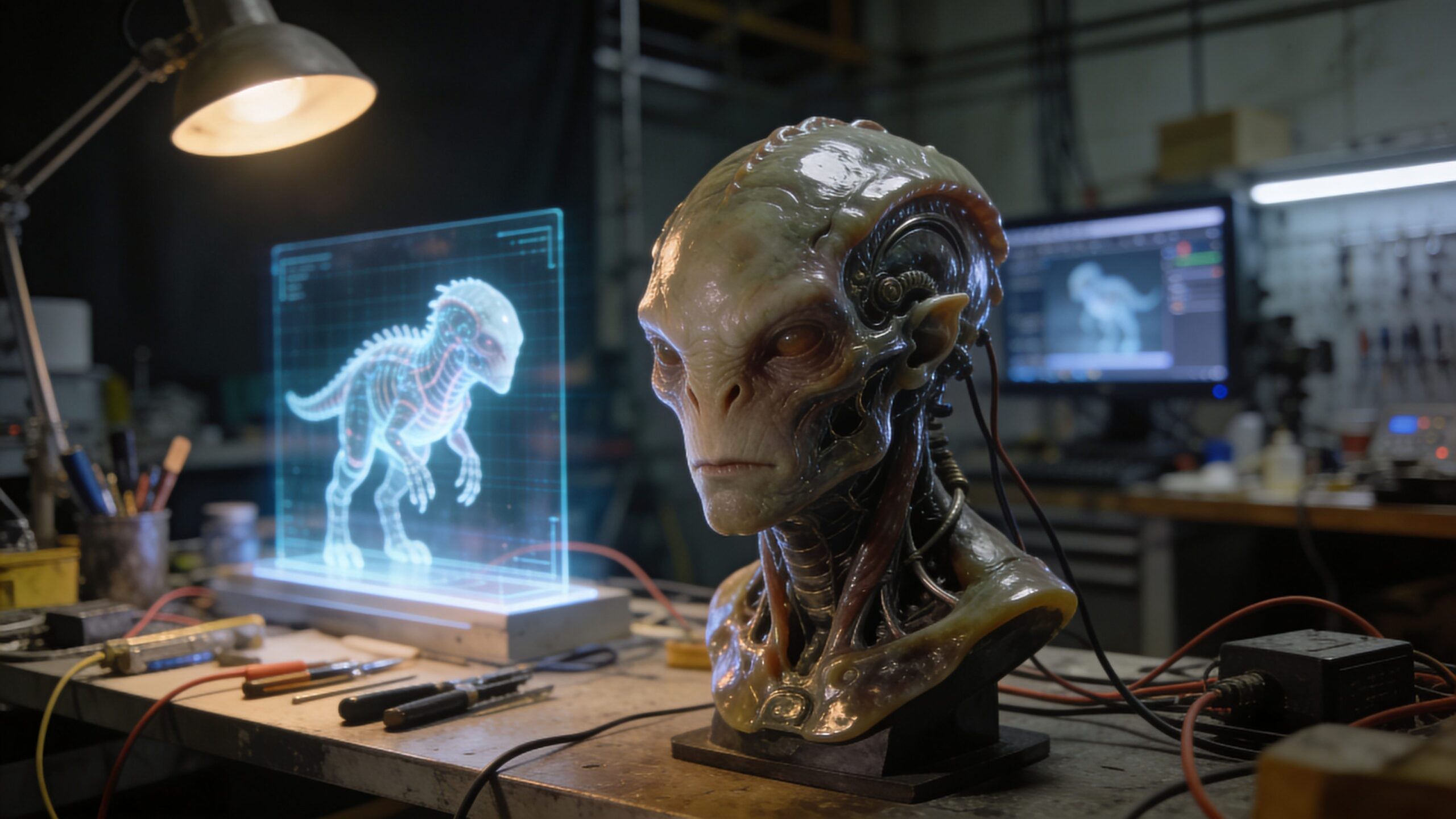
Creature design is one of cinema’s most demanding arts because it must balance imagination with believability. A creature can be impossible, but it still needs rules. It must move in a way that fits its anatomy, live in a world that supports its existence, and carry enough visual identity to stand apart from everything else.
The strongest creature designs often begin with a clear idea. Is the creature a predator, guardian, force of nature, ancient spirit, machine, or misunderstood being? Once that core identity is clear, every detail can support it. Teeth, eyes, posture, texture, sound, and movement all become storytelling tools.
Practical Effects vs CGI Icons
Classic creatures often became iconic through practical effects, puppetry, suits, makeup, and animatronics. These methods gave monsters physical presence, allowing actors to react to something real. Practical effects can create texture, weight, and imperfections that make a creature feel alive. Modern CGI, however, allows filmmakers to create creatures of impossible scale and movement. Dragons can soar naturally, kaiju can tower over cities, and alien ecosystems can teem with life. The most successful modern creatures often blend practical foundations with digital enhancement, using technology to amplify rather than replace strong design.
The Future of Iconic Movie Creatures
The future of movie creatures will likely combine artificial intelligence, advanced motion capture, virtual production, and hyper-realistic rendering. But technology alone will not create icons. A creature becomes legendary when it has a powerful concept, a memorable design, and a story that gives it meaning.
As audiences continue seeking fantasy, horror, science fiction, and mythic spectacle, movie creatures will remain central to cinematic imagination. The next great icon may be a dragon, a machine, a deep-sea beast, a prehistoric predator, or something entirely new. What matters is not just how it looks, but how deeply it stays with us after the screen goes dark.
Why Movie Creatures Will Always Captivate Us
Movie creatures endure because they let cinema do what it does best: make the impossible feel real. They bring nightmares into focus, give legends bodies, and turn imagination into spectacle. They remind us that stories are not limited by the human form. From classic horror monsters to modern CGI legends, iconic movie creatures continue to shape how audiences experience fear, wonder, adventure, and awe. Their impact reaches beyond film into art, gaming, toys, books, fan culture, and everyday language. As long as people gather to watch stories unfold, there will always be creatures waiting in the shadows, beneath the waves, above the clouds, and beyond the stars.