Few creatures have captured the human imagination as completely as dragons. They appear in some of the oldest stories ever told, carved into temple walls, painted across scrolls, whispered through folktales, and reborn again and again in modern books, films, and games. In one culture, a dragon is a terrifying beast that hoards treasure, destroys villages, and tests the courage of heroes. In another, it is a sacred force of wisdom, rain, strength, and imperial power. Sometimes dragons live in mountains, sometimes beneath the sea, and sometimes in the heavens themselves. No matter where they appear, they rarely feel small. Dragons are creatures of scale, mystery, and meaning. Understanding dragons in mythology is about more than tracing a famous monster through old legends. It is about exploring how different civilizations imagined power, chaos, protection, nature, and the unknown. Dragons have endured because they can contain contradictions. They are beautiful and terrifying, noble and destructive, divine and monstrous. Their bodies often combine the most impressive features of multiple animals, and their stories often gather the deepest fears and boldest dreams of human cultures. For beginners, dragons are one of the best entry points into mythology because they reveal how stories travel, evolve, and reflect the worlds that create them.
A: No. Many dragons are tied to water, storms, wind, or spiritual power instead of fire.
A: Each culture shaped dragons around its own beliefs, geography, animals, and storytelling traditions.
A: No. Some are destructive monsters, but others are wise, protective, royal, or divine beings.
A: Western dragons are often monstrous and winged, while eastern dragons are usually serpentine and more benevolent.
A: Treasure-hoarding dragons often symbolize greed, power, danger, and the cost of desire.
A: Possibly. Ancient people may have interpreted large bones as evidence of giant legendary beasts.
A: In many mythological systems, sea serpents and dragons belong to the same broad legendary family.
A: Power, chaos, protection, kingship, wisdom, and the forces of nature are among the most common meanings.
A: Their scale, mystery, symbolism, and flexibility make them perfect for modern fantasy and storytelling.
A: Compare European, Chinese, and Norse dragon traditions to see how meanings change across cultures.
What Is a Dragon in Mythology?
A dragon in mythology is usually a legendary reptilian or serpent-like creature with extraordinary strength and supernatural qualities. While the exact appearance changes from region to region, dragons are typically larger than life and tied to forces beyond ordinary nature. Some have wings and breathe fire. Others are long, serpentine beings that fly without wings. Some guard treasure or sacred places, while others command weather, rivers, oceans, or cosmic order. In nearly every tradition, dragons stand apart from normal animals because they symbolize power in a heightened, almost elemental form.
The most important thing for beginners to understand is that dragons are not one single creature with one global meaning. The dragon of medieval Europe is not the same as the dragon of China, Japan, or Mesoamerica. Even within the same broad region, dragons can vary dramatically in behavior and symbolism. That flexibility is one reason the dragon has lasted so long in mythology. It can adapt to the fears, hopes, geography, and spiritual worldview of any culture that adopts it.
The Origins of Dragon Myths
The origins of dragon mythology are complex, and there is no single explanation for why so many cultures developed dragon-like creatures. One theory is that dragons emerged from humanity’s encounters with dangerous animals such as snakes, crocodiles, large cats, birds of prey, and predatory reptiles. A dragon can feel like a fusion of everything early humans feared in the natural world. It may have the strike of a serpent, the claws of a great cat, the wings of an eagle, and the raw scale of something ancient and unstoppable.
Another possibility is that fossils and ancient bones helped inspire dragon legends. Imagine a civilization uncovering the enormous skeleton of a dinosaur or prehistoric mammal without modern science to explain it. A giant rib cage or skull could easily become evidence of a forgotten beast. Mountains, caves, volcanoes, storms, and deep bodies of water also encouraged dragon imagery. These landscapes felt mysterious and dangerous, and dragons became powerful ways to personify them.
There is also the power of shared storytelling. Human beings across distant regions may have imagined dragon-like beings independently because we respond to similar fears and wonders. At the same time, trade routes and cultural exchange allowed myths to move and transform. As stories traveled, dragons changed shape, gained new meanings, and merged with local beliefs. The result is a global family of creatures connected by power, awe, and mystery.
Why Dragons Appear in So Many Cultures
Dragons appear across cultures because they are remarkably effective mythological symbols. They can embody chaos when a story needs a villain, but they can also embody protection when a culture wants a guardian spirit. They are large enough to represent natural disasters, mysterious enough to reflect the unknown, and flexible enough to carry spiritual meaning. A dragon can stand for drought, flood, greed, kingship, wisdom, death, fertility, or cosmic balance depending on the story being told. Their popularity is also tied to geography. Civilizations shaped by rivers, monsoons, oceans, mountains, deserts, or dense forests interpreted power differently. In some regions, a dragon became a bringer of rain and agricultural blessing. In others, it became a predator lurking in caves and wastelands. Because dragons could be adapted to local conditions, they became ideal vessels for myth-making. That is why the dragon is not just famous. It is nearly universal.
Dragons in European Mythology
In European mythology, dragons are often portrayed as dangerous and destructive. They tend to be winged, scaled, fire-breathing, and heavily associated with greed, ruin, or spiritual evil. These dragons frequently dwell in caves, mountain lairs, or ruined places, guarding treasure that heroes must reclaim. In many medieval stories, slaying a dragon is not merely a physical victory but a moral one. The hero defeats chaos, restores order, and proves worthiness through courage and sacrifice.
This image became especially powerful in Christian-influenced storytelling, where dragons were sometimes linked to sin, temptation, or the devil. The famous legend of Saint George and the Dragon helped establish the dragon as a symbol of evil overcome by holy bravery. Earlier European traditions also gave dragons a strong presence. In Norse legend, Fafnir is one of the most famous examples. Once a dwarf, he becomes a dragon through greed and obsession with cursed treasure. That transformation adds another important layer to dragon mythology: dragons are not always born monsters. Sometimes they become monstrous through moral corruption. European dragons are often solitary, territorial, and hostile. They are creatures to be confronted, survived, or slain. This image strongly shaped modern fantasy, especially in Western literature and film.
Dragons in Chinese Mythology
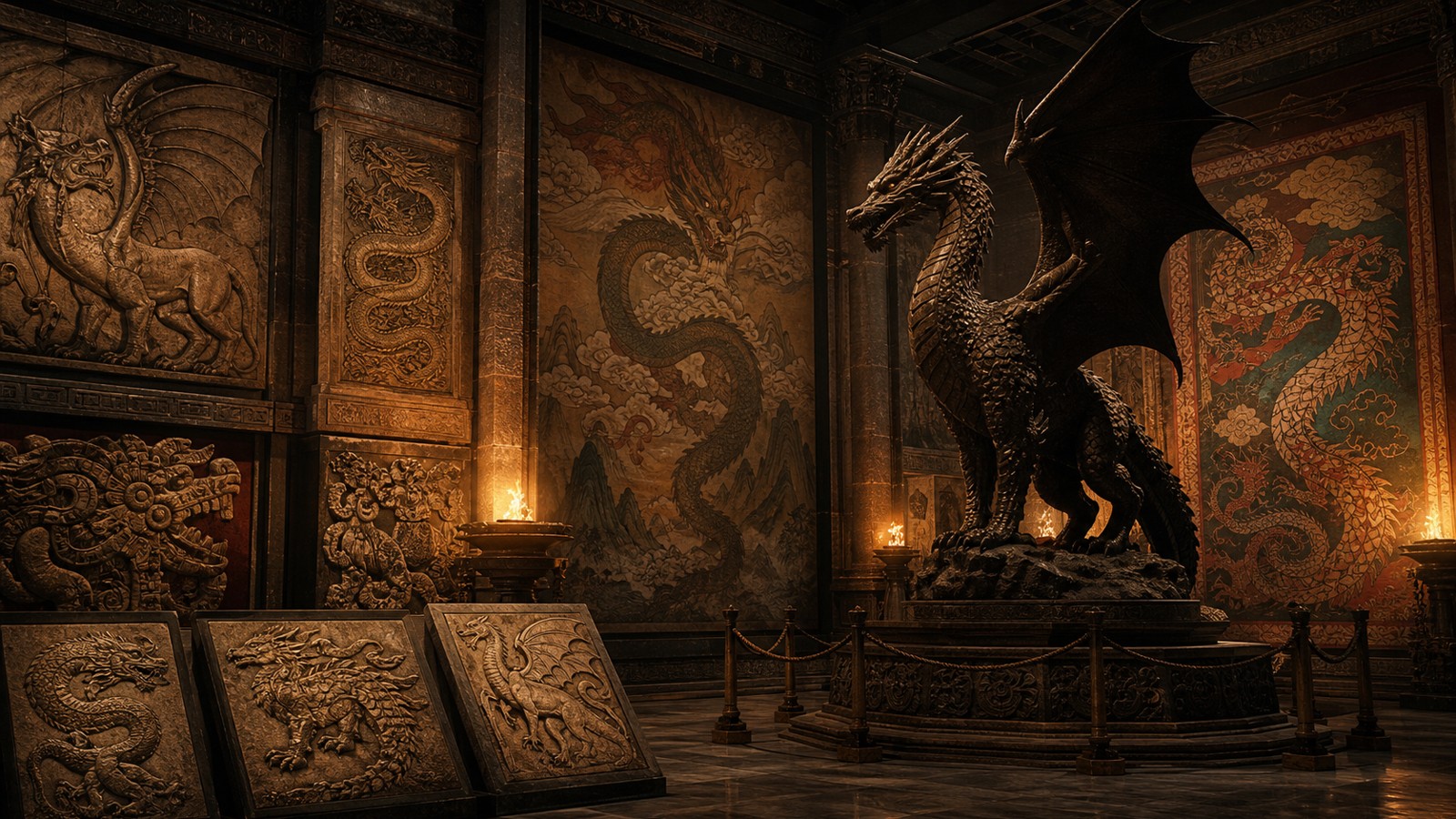
Chinese dragons are among the most influential and distinctive dragons in world mythology. Unlike the typical European dragon, the Chinese dragon is usually benevolent, noble, and deeply tied to cosmic harmony. It is often long, serpentine, antlered, and wingless, yet still capable of flight. Rather than hoarding treasure in dark caves, Chinese dragons are often associated with rain, rivers, seas, imperial authority, and heavenly power.
In Chinese tradition, the dragon is a symbol of strength, luck, vitality, wisdom, and prosperity. It can control water and weather, making it especially important in agricultural societies that depended on rain. Dragons were also linked with emperors and dynastic power. Their image conveyed legitimacy, majesty, and the mandate of heaven. Instead of being monsters to destroy, these dragons were often forces to respect, honor, and celebrate.
This difference is crucial for anyone studying dragons across cultures. It shows how the same broad creature type can evolve into almost opposite meanings. In Europe, the dragon often threatens civilization. In China, it can uphold order and bless the land.
Dragons in Japanese, Korean, and Other Asian Traditions
Across Asia, dragon mythology includes both shared ideas and important local distinctions. Japanese dragons are often connected to water, storms, and the sea, and many have serpentine forms similar to Chinese dragons. They may appear as divine beings, local guardians, or creatures tied to shrines and sacred landscapes. Some legends portray them as protective and wise, while others emphasize danger or supernatural strangeness.
Korean dragons are also commonly associated with water and heavenly authority. They are often seen as more positive than destructive, linked with rain, agriculture, and blessing. In many traditions across East and Southeast Asia, dragons are less likely to be simple villains and more likely to be powerful beings within a balanced spiritual universe. These traditions remind us that dragons do not always serve the same role. Some cultures see them as rulers of invisible forces. Others treat them as ancestral beings, protectors, or natural spirits. This wider perspective helps beginners avoid reducing all dragons to the familiar fire-breathing monster image.
Dragons in the Middle East and Ancient Near East
Dragon-like beings also appear in some of the oldest mythologies in the world. In Mesopotamian and Near Eastern traditions, serpentine chaos creatures often play major roles in creation stories and divine battles. These beings are not always called dragons in the modern sense, but they clearly belong to the same mythic family.
One recurring theme is the dragon or sea serpent as a force of primordial chaos. Gods battle these creatures to create or preserve order in the universe. This pattern would echo across later mythologies. In such stories, the dragon is more than a beast. It is the embodiment of disorder itself, a cosmic threat that must be subdued so the world can exist in stability.
This ancient pattern is one reason dragons feel so foundational in mythology. They are not just obstacles in adventure tales. They often stand near the beginning of the world, where order and chaos are first defined.
Dragons in Mesoamerican Mythology
Mesoamerican traditions add another fascinating dragon-like dimension through feathered serpent figures such as Quetzalcoatl. While not identical to the dragons of Europe or East Asia, these beings combine serpent imagery with divine power, wisdom, and cosmic significance. The feathered serpent is not usually a treasure-hoarding monster. Instead, it represents creation, knowledge, wind, fertility, and sacred kingship.
This shows again how dragon-like forms can carry very different meanings. A serpent with supernatural status may become feared in one culture and revered in another. The combination of flight, reptilian power, and divine symbolism is one of the features that keeps dragon mythology so broad and adaptable across the world.
Common Types of Dragons in Mythology
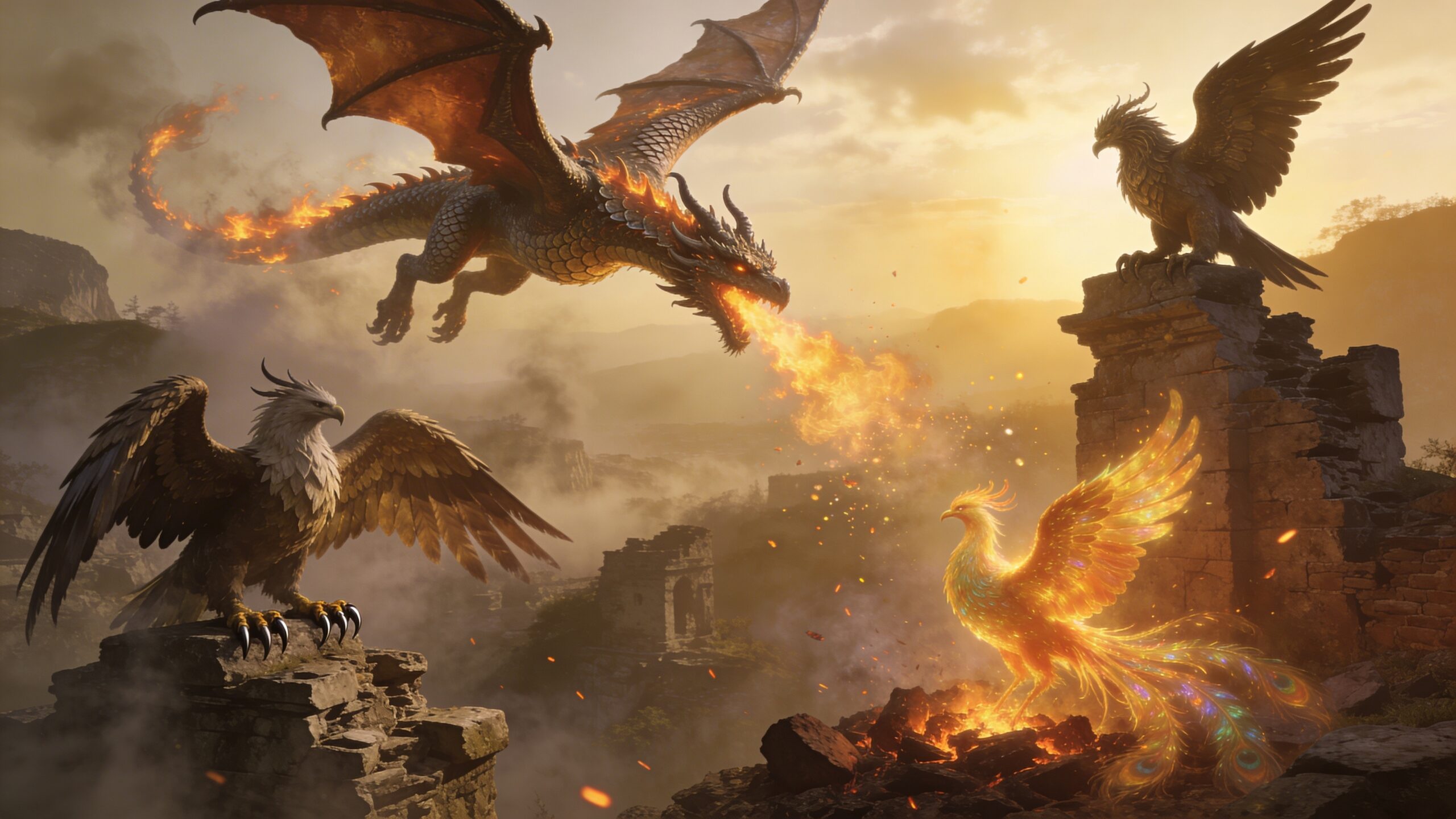
Although dragons vary widely, several broad dragon types appear repeatedly in myths and legends. The first is the classic western dragon, a winged and often fire-breathing beast associated with treasure, destruction, or hero quests. This is the dragon most familiar to modern fantasy audiences.
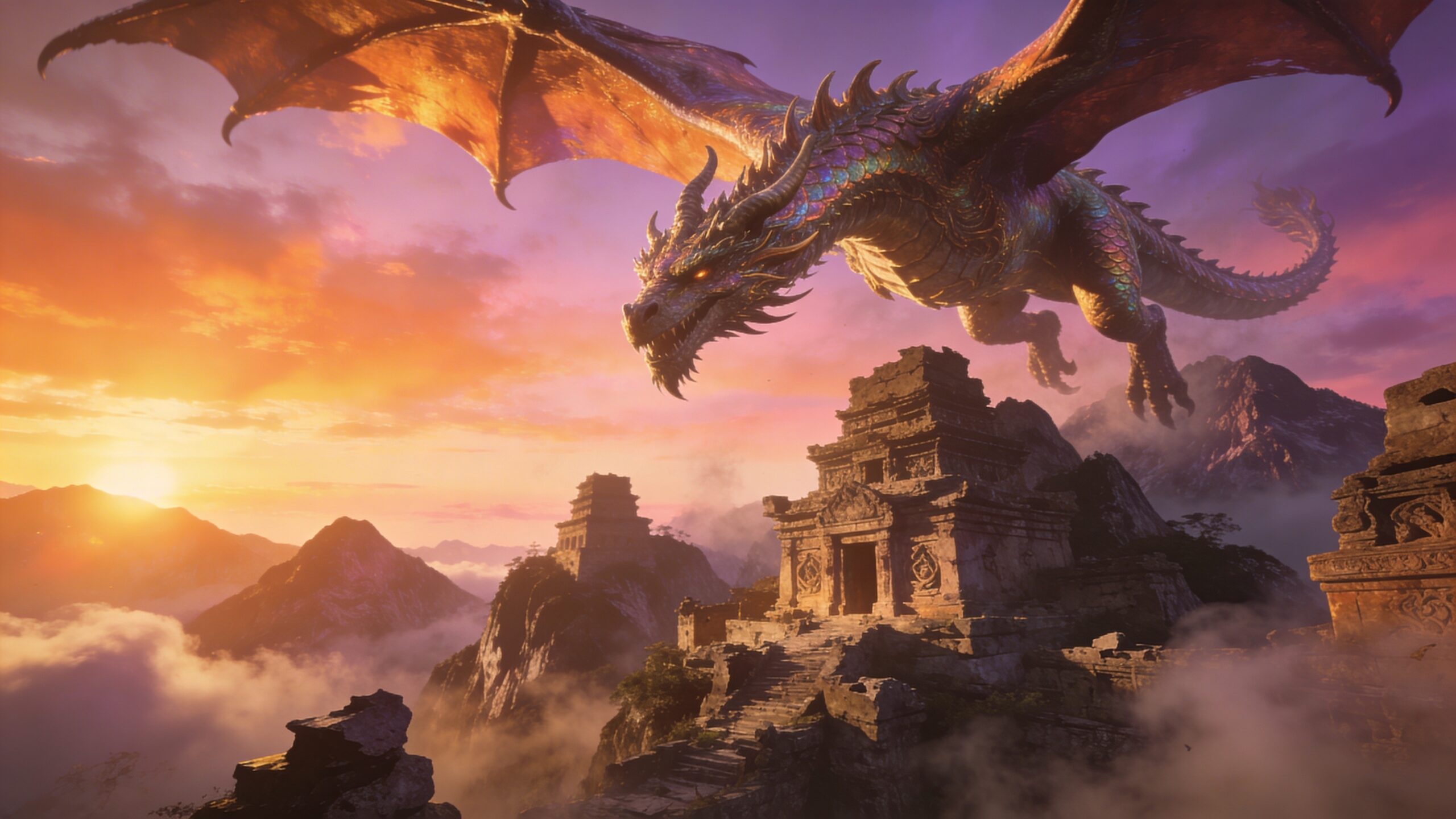
The second is the eastern serpent dragon, long-bodied and often wingless, connected to weather, rivers, heaven, and spiritual authority. These dragons move with grace rather than brute force and are often revered instead of hunted.
A third type is the sea dragon or world serpent, a creature of deep water, storms, or cosmic boundaries. These dragons often symbolize danger, mystery, and the ancient fear of what lies beneath the surface. There are also underworld dragons, guardian dragons, celestial dragons, and transformation dragons. Some stand watch over sacred knowledge. Others mark the edge of human reach. Some represent corruption and greed, while others represent power aligned with nature or the divine.
Dragon Symbolism and Meaning
Dragon symbolism is one of the richest subjects in mythology. In many traditions, dragons symbolize raw power. That power may be destructive, protective, royal, spiritual, or natural. Dragons can also symbolize the untamed world, especially forces that humans cannot easily control. Fire, storms, floods, mountains, and oceans all find expression in dragon imagery.
In moral storytelling, dragons often symbolize greed, pride, and excess. A dragon sitting on treasure becomes a vivid image of wealth without wisdom. In spiritual traditions, dragons may symbolize hidden knowledge, cosmic energy, or the link between heaven and earth. Some dragons represent change itself, especially when they guard thresholds, caves, gates, or sacred waters. Their symbolism is so enduring because dragons combine fear and admiration. We are supposed to be awed by them even when we are afraid. That emotional complexity gives dragons unusual staying power in storytelling.
Famous Dragon Legends
Some dragon legends have become iconic because they capture universal themes. Saint George and the Dragon remains famous because it turns the dragon into a test of bravery and faith. Fafnir remains powerful because he is not just a monster but a warning about greed and transformation. The Chinese dragon legends endure because they connect the dragon to prosperity, weather, and celestial order rather than only violence.
The many-headed Hydra of Greek mythology is not always described as a dragon in the narrowest sense, but it belongs to the broader family of serpentine mythic monsters. Slaying it becomes a test of endurance and ingenuity. Jormungandr, the great world serpent of Norse mythology, coils around the earth itself, transforming dragon imagery into something cosmic and apocalyptic.
These stories matter because they reveal how dragons can fit into hero myths, creation myths, royal myths, and moral tales. The dragon is never stuck in one narrative role for long.
Dragons in Modern Imagination
Modern culture has not diminished dragons. It has expanded them. Today, dragons appear in novels, films, television, games, and visual art with incredible variety. Some are wise companions. Some are ancient tyrants. Some are tragic beings misunderstood by the world. Others remain embodiments of terror. Much of this modern diversity comes directly from the mythological traditions that shaped them.
Western fantasy still borrows heavily from European dragon imagery, but global storytelling has broadened public understanding of dragons. More audiences now recognize eastern dragons, sea dragons, spirit dragons, and serpentine divine beings. The result is a richer, more layered dragon tradition than ever before.
Final Thoughts
Dragons in mythology are far more than giant reptiles with wings and fire. They are living symbols of the human imagination, shaped by geography, religion, fear, wonder, and cultural memory. Across Europe, Asia, the Middle East, and the Americas, dragons have served as monsters, guardians, divine messengers, cosmic serpents, rulers of rain, and mirrors of human ambition.
For beginners, dragons offer one of the best ways to understand mythology itself. They reveal how stories change from culture to culture while still preserving shared human themes. They show how the same creature can represent destruction in one tradition and blessing in another. Most of all, they prove that mythology is not random fantasy. It is a language of symbols, and dragons are among its most powerful words.
Whether soaring above imperial skies, sleeping beneath cursed treasure, or coiling through the oldest stories of creation, dragons continue to rule myth because they speak to something ancient in us. They are the shape of power when imagination has no limits.