Entering Worlds That Shouldn’t Exist
There are places on Earth where the boundary between imagination and reality dissolves. These are not traditional museums or static exhibits. They are environments designed to be walked through, explored, and experienced as if they were living ecosystems filled with creatures that once ruled the planet—or never existed at all. In these spaces, dragons breathe illusionary fire overhead, dinosaurs move with startling realism, and monsters lurk just beyond the edge of perception. The rise of walk-through creature worlds represents a shift in how people interact with storytelling. Instead of observing from a distance, visitors become participants inside carefully constructed environments. Sound, movement, lighting, and scale work together to create something far more powerful than visual spectacle alone. These are not just attractions; they are experiences that reshape how the human mind perceives possibility.
A: They are designed to feel real through advanced technology.
A: Modern designs achieve highly convincing movement and detail.
A: Yes, all environments are carefully controlled.
A: Some experiences include responsive behaviors.
A: Through robotics, hydraulics, and digital systems.
A: Most are, but some may include intense elements.
A: Many are updated or enhanced over time.
A: It varies depending on the attraction.
A: Many combine learning with entertainment.
A: Multi-sensory design and environmental storytelling.
Dinosaur Worlds That Bring Prehistory to Life
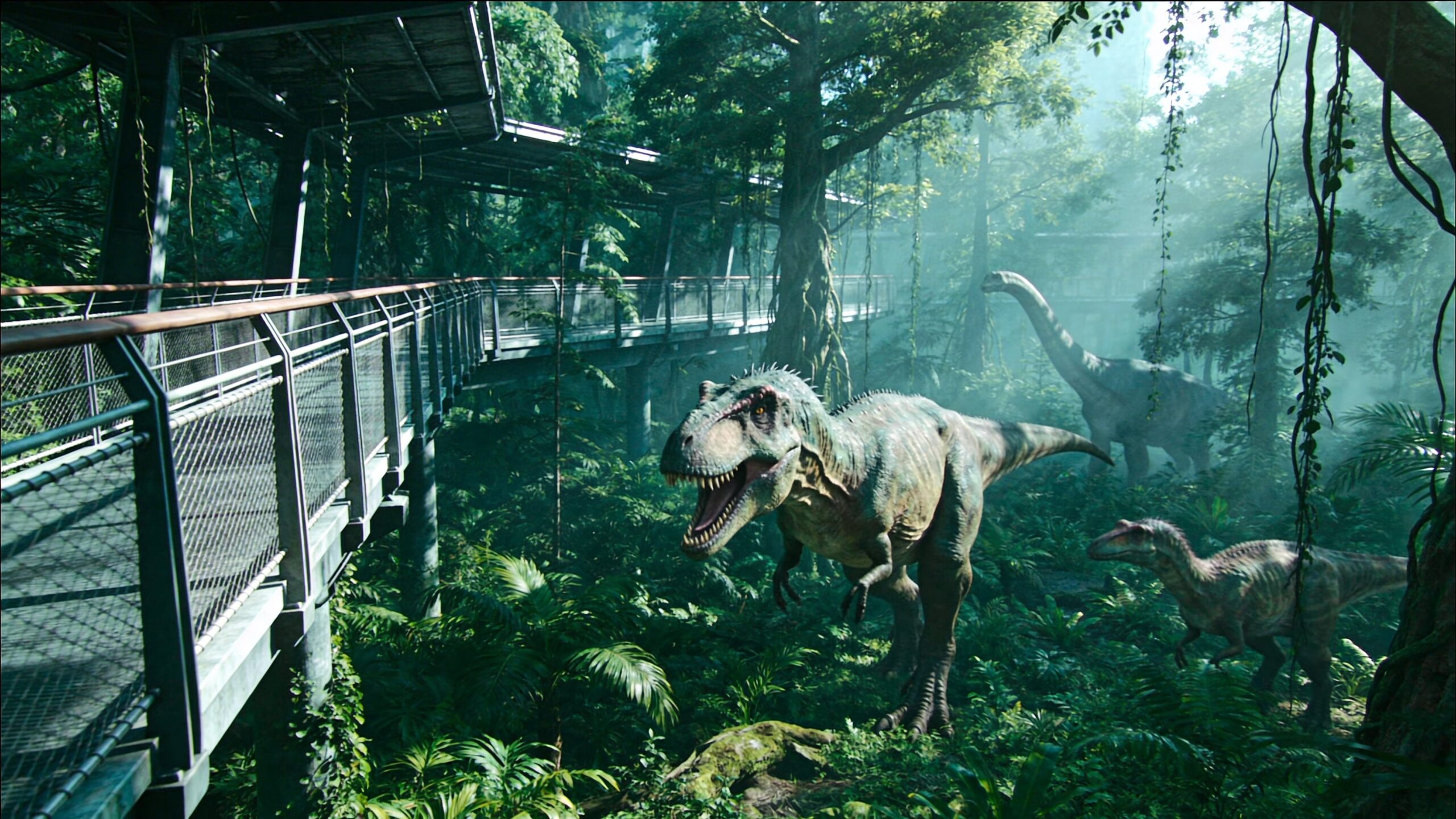
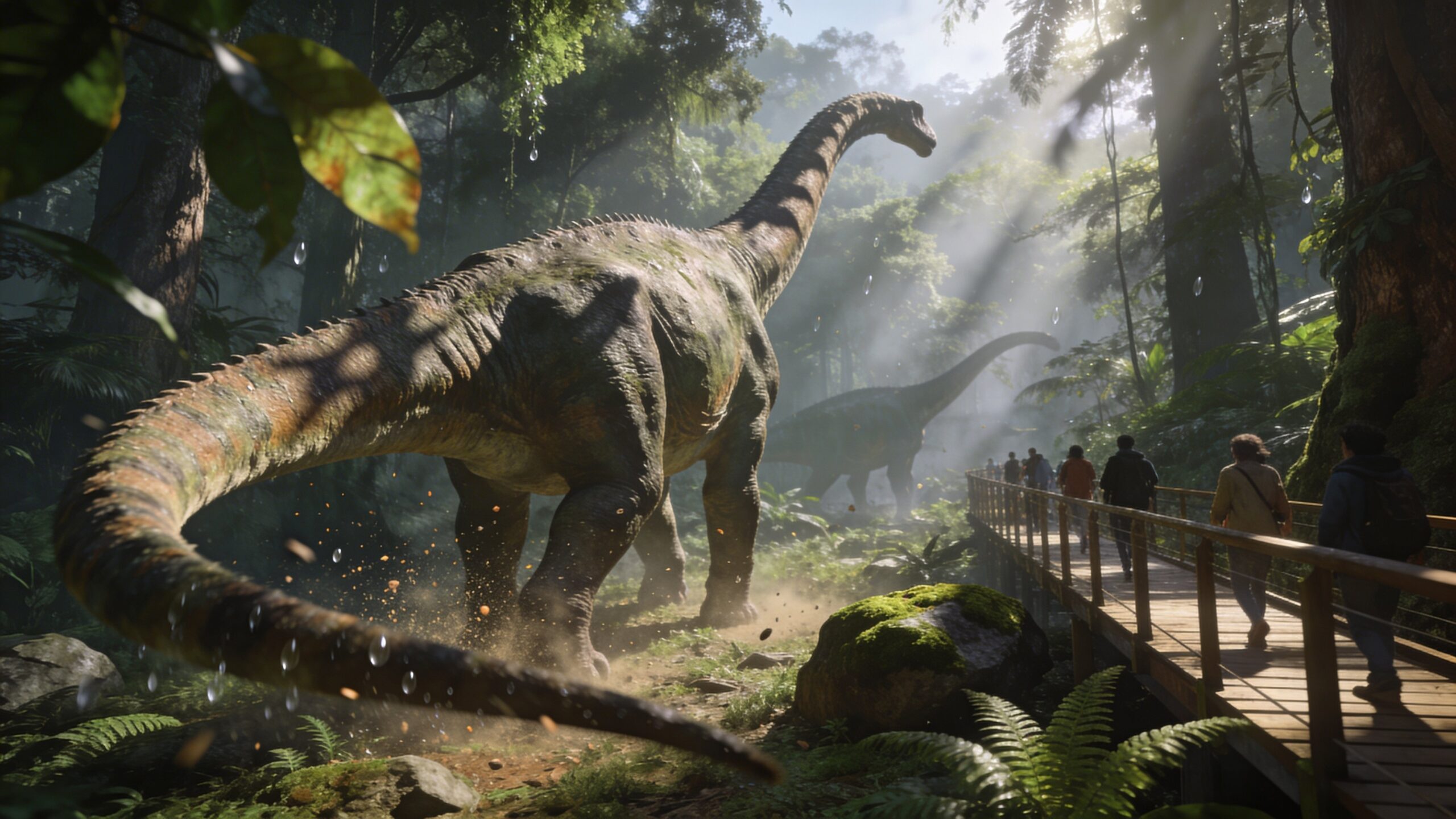
Few creature experiences rival the sheer impact of stepping into a world filled with dinosaurs. Walk-through prehistoric parks have evolved far beyond simple animatronic displays. Today’s environments are built to mimic entire ecosystems, with dense vegetation, layered terrain, and carefully designed pathways that guide visitors through scenes of ancient life.
What makes these experiences so compelling is the sense of scale. A towering sauropod looming overhead or a predatory theropod stalking through undergrowth triggers a deeply instinctive reaction. Designers use subtle movement patterns, realistic textures, and synchronized environmental effects to simulate life. Even the ground beneath your feet can feel different, engineered to echo the imagined terrain of prehistoric Earth.
The most advanced dinosaur walkthroughs rely on a combination of robotics and environmental storytelling. Creatures are placed within narrative contexts—hunting, migrating, or interacting with their surroundings—creating the illusion that you are witnessing a moment frozen in time. The result is not just visual realism, but emotional immersion.
Walking Among Dragons in Fantasy Realms
Dragon-themed environments take a different approach, blending myth with architectural design. These spaces are often built as fantasy landscapes, where towering stone structures, cavern systems, and elevated pathways create a sense of verticality. The dragon is rarely just an object; it is integrated into the environment as a dominant presence.
The illusion of life is achieved through motion, sound, and perspective. Wings shift subtly, chests rise as if breathing, and low-frequency vibrations simulate the power of a creature that could take flight at any moment. Lighting plays a critical role, casting shadows that move independently of the physical structure, enhancing the sense that something alive occupies the space. Unlike prehistoric exhibits, dragon worlds lean heavily into atmosphere. Fog, ambient soundscapes, and controlled lighting conditions create environments that feel otherworldly. Visitors are not simply observing a creature; they are entering its domain. The experience becomes less about realism and more about presence—what it feels like to stand near something legendary.
Monster Worlds Built on Fear and Mystery
Monster-focused walkthroughs tap into a different aspect of human psychology. Instead of awe, they evoke tension and curiosity. These environments are often darker, more enclosed, and intentionally unpredictable. Paths twist and narrow, visibility is limited, and sound design becomes a primary tool for immersion.
What sets these experiences apart is their use of uncertainty. Creatures are not always visible. Instead, they are suggested through movement, shadows, and environmental changes. A distant growl, a shifting silhouette, or a sudden change in lighting can create the impression that something is watching or approaching.
Designers carefully control pacing within these environments. Moments of quiet are followed by sudden intensity, creating a rhythm that keeps visitors engaged. The monsters themselves are often revealed gradually, allowing anticipation to build before a full encounter. This approach transforms the walkthrough into a narrative journey rather than a sequence of displays.
The Technology Behind Living Creatures
The realism of modern creature worlds is driven by advancements in technology that go far beyond traditional animatronics. Robotics now allows for multi-axis movement, enabling creatures to mimic organic motion with remarkable accuracy. Skin materials have evolved to replicate texture, elasticity, and even subtle color variations. Sound design has become equally sophisticated. Directional audio systems can place sounds precisely within a space, making it feel as though a creature is moving around you rather than simply producing noise. Combined with environmental effects such as wind, heat, or vibration, these elements create a multi-sensory experience.
Projection mapping and augmented overlays are increasingly used to enhance realism. Instead of relying solely on physical structures, designers can add layers of visual detail that respond dynamically to the environment. This allows creatures to appear more lifelike without increasing physical complexity. The most advanced systems integrate all of these elements into a unified experience. Movement, sound, lighting, and environmental effects are synchronized in real time, creating the illusion of a living ecosystem rather than isolated attractions.
Why These Experiences Feel So Real
The human brain is highly responsive to environmental cues. When multiple senses are engaged simultaneously, the line between reality and simulation becomes blurred. Walk-through creature worlds take advantage of this by layering sensory inputs in a way that feels cohesive and believable.
Scale plays a critical role. Large creatures trigger instinctive responses that are difficult to suppress. When combined with realistic movement and environmental context, the brain begins to accept the illusion as plausible, even if only for a moment.
Another key factor is agency. Unlike passive experiences, walkthrough environments allow visitors to choose their path, control their pace, and explore at their own rhythm. This sense of control enhances immersion, making the experience feel personal rather than scripted.
The Global Rise of Immersive Creature Parks
Around the world, immersive creature experiences are becoming more ambitious and more diverse. Some focus on education, recreating prehistoric ecosystems with scientific accuracy. Others lean into fantasy, building entire worlds inspired by mythology and folklore. Still others explore horror and mystery, creating environments designed to challenge perception.
What unites these experiences is a commitment to immersion. They are not defined by individual creatures, but by the worlds those creatures inhabit. The environment itself becomes part of the story, shaping how visitors interact with what they encounter. As technology continues to evolve, these experiences are becoming more accessible and more refined. New materials, improved robotics, and advanced design techniques are enabling creators to build environments that were previously impossible. The result is a growing network of destinations where visitors can step into worlds that once existed only in imagination.
Blending Real and Fictional Creatures
One of the most interesting developments in creature walkthrough experiences is the blending of real and fictional elements. Some environments combine scientifically accurate recreations with imaginative interpretations, creating a spectrum that spans from reality to fantasy.
This approach allows for greater storytelling flexibility. Visitors might begin in a realistic ecosystem before transitioning into a more fantastical environment. The shift is often subtle, guided by changes in lighting, sound, and environmental design. By the time the transition is complete, the visitor has moved seamlessly from one world to another.
The blending of real and fictional creatures also reflects a broader cultural interest in exploration and discovery. It taps into the same curiosity that drives interest in both science and mythology, creating experiences that appeal to a wide audience.
Designing Worlds You Can Walk Through
Creating a successful creature walkthrough experience requires more than just impressive visuals. It involves careful planning of movement, pacing, and interaction. Pathways must be designed to guide visitors without restricting exploration, creating a balance between structure and freedom.
Environmental design is equally important. Every element, from terrain to lighting, contributes to the overall experience. Even small details, such as the texture of a wall or the sound of footsteps, can influence how the environment is perceived. The most effective designs create a sense of continuity. Instead of feeling like a series of separate scenes, the environment flows naturally from one area to the next. This continuity helps maintain immersion, allowing visitors to remain engaged throughout the experience.
The Future of Walking Among Creatures
The future of walk-through creature worlds is defined by increasing interactivity and adaptability. Emerging technologies are enabling environments that respond to visitor behavior, creating experiences that change in real time. Creatures may react differently depending on movement, proximity, or even group dynamics.
Artificial intelligence is also beginning to play a role, allowing for more complex and unpredictable behavior. Instead of repeating the same motions, creatures can exhibit patterns that feel more organic and less scripted. This adds a new layer of realism, making each visit unique.
As these technologies continue to develop, the line between simulation and reality will become even more blurred. Walk-through creature worlds will not just replicate environments—they will create entirely new ones, expanding the boundaries of what is possible.
A New Way to Experience the Impossible
Walking among dragons, dinosaurs, and monsters is no longer confined to imagination. It is something that can be experienced, explored, and remembered. These environments represent a new form of storytelling, one that places the visitor at the center of the narrative. The appeal lies in the combination of realism and wonder. It is the feeling of standing in a place that should not exist, yet does. It is the moment when a creature seems to look back at you, and for a brief second, the impossible feels real.
As immersive design continues to evolve, these experiences will only become more powerful. They will push the limits of perception, challenge expectations, and redefine what it means to explore a world filled with creatures.