The Magic Behind Movie Creatures
The creatures that captivate audiences on screen are far more than visual spectacles—they are the result of intricate collaboration between artists, engineers, performers, and storytellers. Whether it’s a towering monster, a mythical beast, or a subtle alien presence, every creature begins as an idea and evolves through a structured, multi-stage pipeline. This process blends imagination with technical precision, transforming abstract concepts into believable, living entities. Modern filmmaking has expanded the boundaries of what’s possible, allowing creators to merge practical craftsmanship with cutting-edge digital tools. Yet despite technological advancements, the core goal remains the same: to make audiences believe that these creatures truly exist within the world of the film. Achieving that level of realism requires careful attention to design, movement, texture, and emotional expression.
A: No. Many use a mix of CGI, prosthetics, puppetry, animatronics, and creature suits.
A: Story purpose usually comes first, then concept design, anatomy, build planning, and performance development.
A: Animal reference helps create believable anatomy, movement, instinct, and texture.
A: Rigging is the process of building a digital skeleton and control system so animators can move the creature.
A: Usually because the motion, weight, lighting, or interaction with the environment feels off.
A: Yes. Actors, stunt performers, puppeteers, and motion capture artists often shape the final movement and behavior.
A: Strong design, expressive movement, believable eyes, and consistent behavior all help audiences connect.
A: Practical effects provide real lighting, texture, and on-set presence that can make scenes feel more grounded.
A: Extremely important. Sound gives creatures scale, mood, identity, and screen presence.
A: Making design, performance, animation, sound, and visual integration feel like one living being.
Concept Development: Where Creatures Begin
Every creature starts as a concept rooted in storytelling. Before any sketches are drawn, filmmakers define the creature’s purpose within the narrative. Is it meant to inspire fear, curiosity, or empathy? Its role influences every decision that follows, from its anatomy to its behavior.
Concept artists translate these ideas into visual form through sketches and digital paintings. They explore variations in shape, proportion, and texture, often drawing inspiration from real-world animals, biology, and natural environments. This phase is highly iterative, with multiple designs tested and refined until the creature aligns perfectly with the film’s tone and vision.
The most successful designs balance familiarity with originality. By incorporating recognizable traits—such as the movement of a predator or the structure of a known species—artists create creatures that feel grounded in reality, even when they are entirely fictional.
Anatomy and Believability: Designing for Realism
Once a concept is approved, the next step is to build a believable anatomy. This involves more than just aesthetics; it requires an understanding of how the creature would function in a real environment. Artists and designers consider skeletal structure, muscle distribution, and how the creature’s body supports movement.
Biomechanics play a crucial role in this stage. If a creature is large and heavy, its movements must reflect weight and inertia. If it is agile and fast, its design must support flexibility and speed. These decisions ensure that the creature behaves in a way that feels consistent and natural. Environmental context also shapes the design. A creature living in water will have different features than one adapted to deserts or forests. By aligning anatomy with habitat, filmmakers create a cohesive world where creatures feel like they truly belong.
Sculpting and Modeling: From 2D to 3D
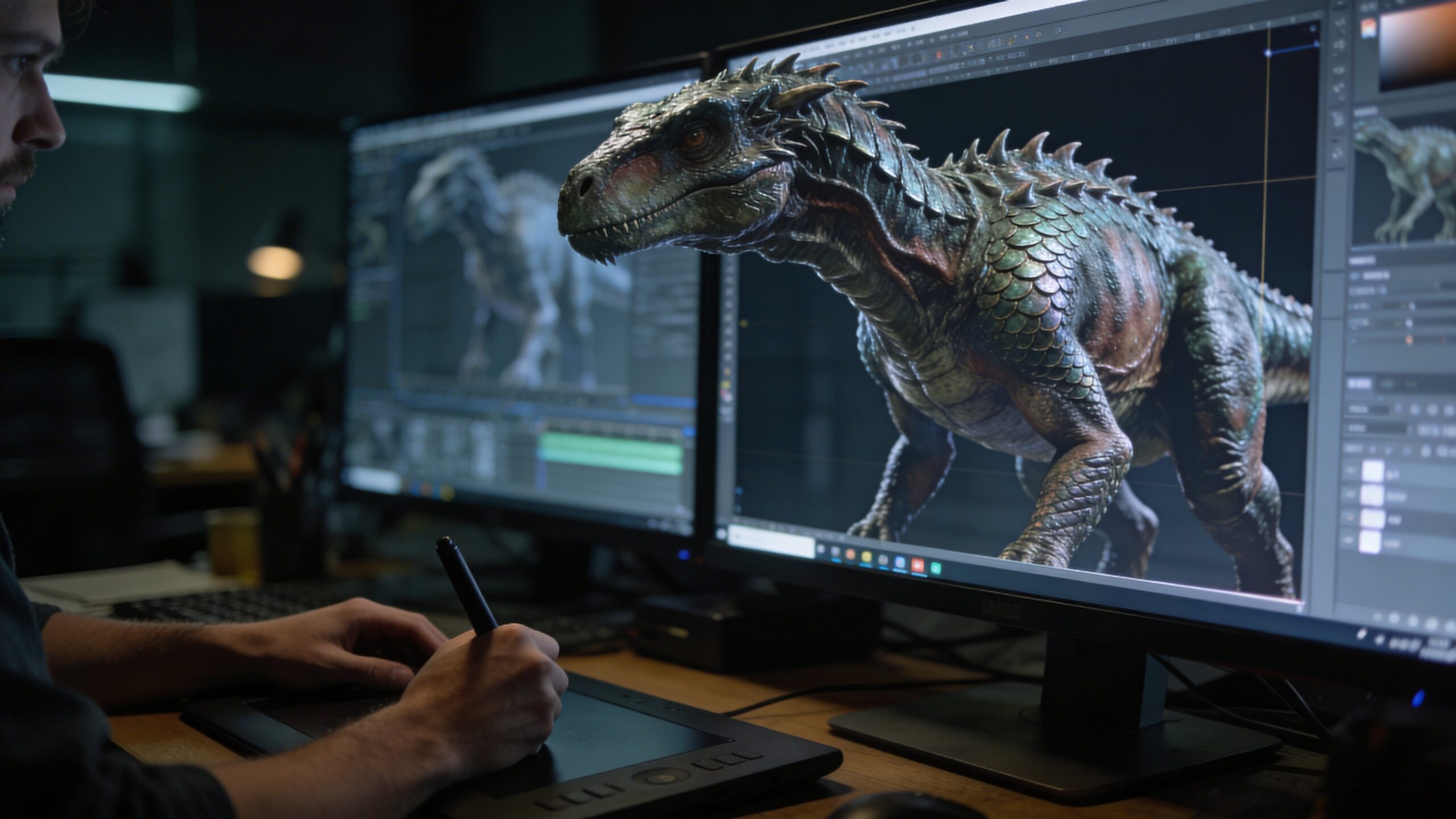
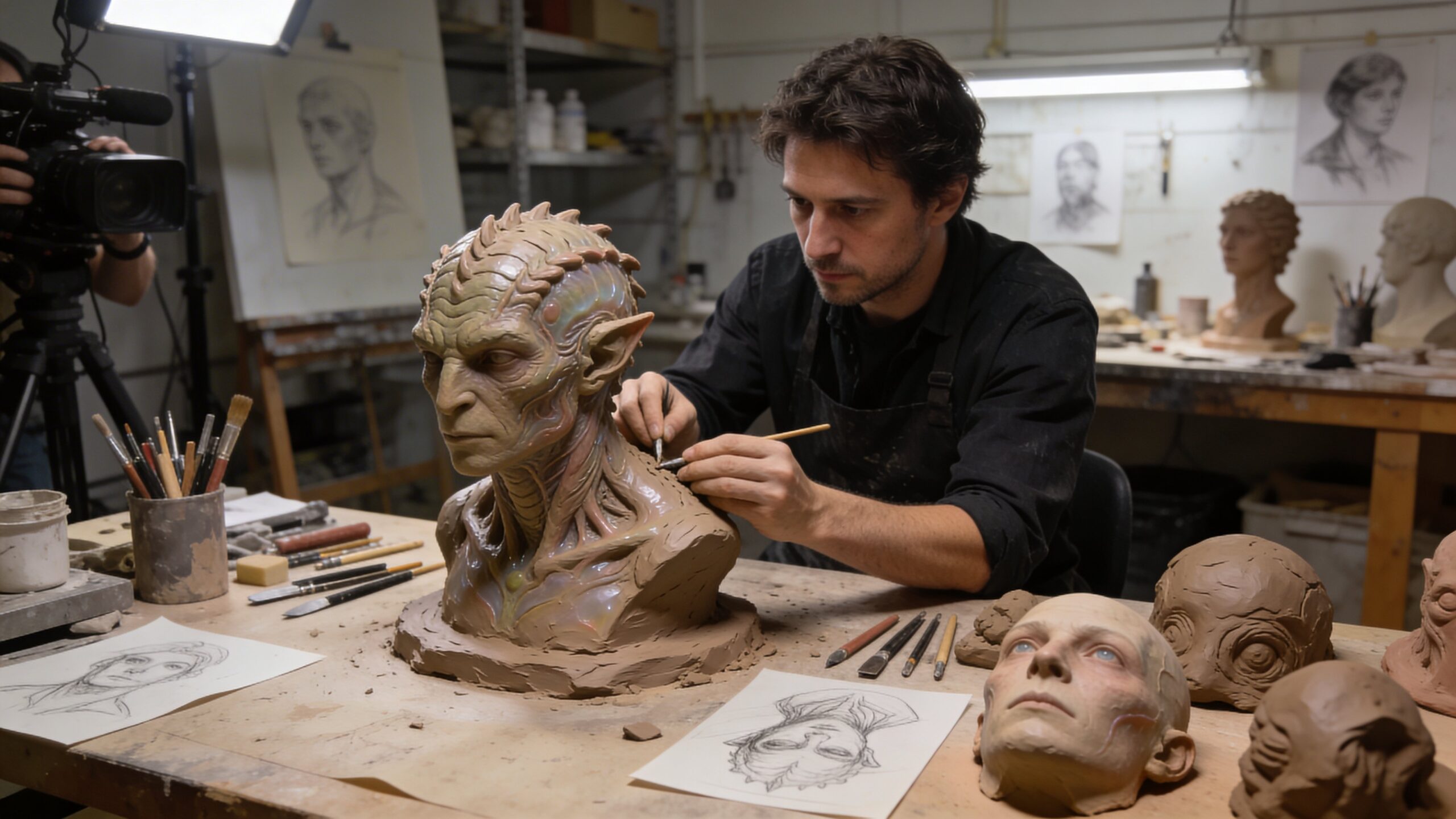
After the design is finalized, artists begin translating the creature into a three-dimensional form. This can happen through digital sculpting software or traditional physical sculpting using materials like clay. Both approaches aim to capture the fine details that bring the creature to life.
Digital sculpting allows for precise control over textures, such as skin folds, scales, or fur patterns. Artists can zoom in to refine minute details, ensuring that the creature holds up under close scrutiny on screen. Physical sculpting, on the other hand, provides a tangible reference that can be used for practical effects or scanning into digital environments.
This stage bridges the gap between imagination and reality. The creature is no longer just an idea—it becomes something that can be viewed from every angle, lit, and tested for visual impact.
Rigging and Animation: Creating Movement
Movement is one of the most critical aspects of making a creature believable. Even the most detailed design can feel lifeless if it doesn’t move convincingly. To address this, digital creatures are rigged with virtual skeletons that allow animators to control their motion.
Animators study real-world references, such as animals or human movement, to create natural motion patterns. They consider factors like balance, timing, and weight distribution, ensuring that every step, gesture, and reaction feels authentic. Subtle details, such as breathing or muscle tension, add layers of realism. In many cases, motion capture technology is used to record human performances that can be translated into creature movement. This approach captures nuanced expressions and physicality, allowing creatures to convey emotion and personality in ways that feel deeply human.
Practical Effects: Tangible Realism on Set
While digital effects dominate modern filmmaking, practical effects remain an essential part of creature creation. These include animatronics, puppetry, and prosthetic makeup, all of which provide a physical presence on set.
Animatronic creatures are built with mechanical components that allow them to move in real time. Puppetry techniques enable performers to control creatures with precision, bringing them to life during filming. Prosthetics transform actors into creatures, allowing for direct interaction with other characters.
The advantage of practical effects lies in their realism. Because they exist physically, they interact naturally with light and surroundings, creating a level of authenticity that can be difficult to replicate digitally. Many films combine practical and digital techniques to achieve the best of both worlds.
Texturing, Lighting, and Rendering
Once a creature is modeled and animated, the next step is to refine its visual appearance. Texturing adds surface details, such as skin patterns, scars, or color variations, giving the creature depth and complexity. These textures are often based on real-world references to enhance realism.
Lighting plays a crucial role in how the creature is perceived on screen. The way light interacts with its surface—whether reflecting off scales or diffusing through fur—can dramatically affect its believability. Artists carefully match lighting conditions to the film’s environment, ensuring seamless integration. Rendering is the final step in this stage, where all elements are combined into a finished image. Advanced rendering techniques simulate real-world physics, producing shadows, reflections, and subtle details that make the creature appear truly lifelike.
Sound Design: Giving Creatures a Voice
Visuals alone are not enough to bring a creature to life. Sound design adds another layer of realism, shaping how audiences perceive the creature’s presence. From growls and roars to subtle breathing and movement noises, sound helps define the creature’s personality. Sound designers often blend recordings from real animals with synthetic elements to create unique audio signatures. The goal is to produce sounds that feel organic while still being distinct and memorable. Timing and synchronization with movement are critical, ensuring that every sound aligns perfectly with the creature’s actions.
Integration with Live Action
One of the greatest challenges in creature creation is integrating digital or practical elements with live-action footage. This requires careful coordination between departments, including cinematography, visual effects, and editing.
On set, filmmakers use reference markers, stand-ins, or partial models to guide interactions between actors and creatures. These references help ensure accurate positioning and lighting. In post-production, visual effects artists seamlessly blend the creature into the scene, matching color, perspective, and motion.
The success of this integration determines whether the creature feels like a natural part of the film or an artificial addition. When done correctly, the line between reality and illusion disappears.
Collaboration Across Departments
Bringing a creature to life is not the work of a single individual but a collaborative effort involving multiple disciplines. Concept artists, modelers, animators, engineers, sound designers, and directors all contribute their expertise to the process.
Communication and coordination are essential. Each department must align with the overall vision while addressing technical challenges. This collaborative approach ensures that every aspect of the creature—from design to performance—works together cohesively.
The Future of Creature Creation
As technology continues to evolve, the process of creating film creatures is becoming more advanced and accessible. Real-time rendering, artificial intelligence, and virtual production are transforming how creatures are designed and integrated into films. These innovations allow filmmakers to experiment with new ideas and workflows, pushing the boundaries of what is possible. However, the foundation remains rooted in creativity and storytelling. No matter how advanced the tools become, the goal is always to create creatures that resonate with audiences and enhance the narrative.
Why Creature Creation Matters
Creatures play a vital role in shaping the emotional and visual impact of a film. They can symbolize fears, embody imagination, or bring entirely new worlds to life. The process of creating them is a testament to the power of collaboration and innovation.
By understanding how creatures are brought to life, audiences gain a deeper appreciation for the artistry and effort behind the scenes. Each creature represents countless hours of design, experimentation, and refinement, all working together to create something unforgettable.