When Imagination Becomes a Physical Monster
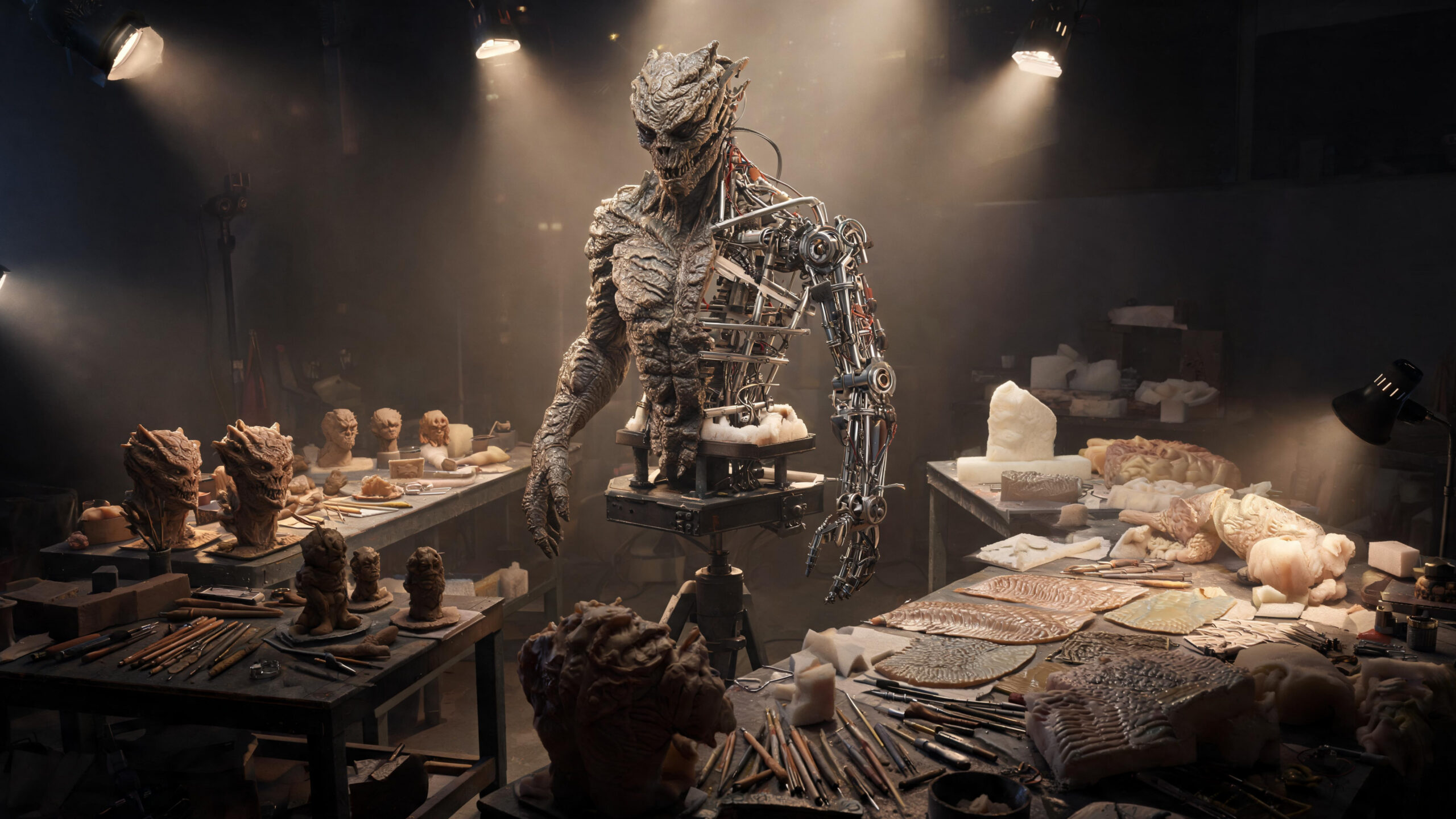
Practical creature builds are where movie monsters stop being drawings, ideas, or digital concepts and become something real enough to step onto a set. They are the physical creatures built for cameras, actors, lighting crews, stunt teams, and directors who need a monster that can be touched, filmed, chased, fought, feared, and believed. A practical creature may be a full-body suit, an animatronic head, a cable-operated puppet, a massive physical prop, a prosthetic transformation, or a hybrid build designed to work alongside digital effects. Whatever form it takes, the goal is the same: turn imagination into a screen-ready being with presence. That presence matters. A creature on a real set interacts with the world in ways audiences instinctively recognize. It catches light. It casts shadows. Its feet touch the floor. Its claws scrape a wall. Its skin folds when it turns. Actors can stare into its eyes instead of looking at an empty marker. Practical creature builds bring monsters into the same physical reality as the rest of the film, and that reality is one of the reasons handmade monsters continue to hold such powerful appeal in horror, fantasy, science fiction, and adventure cinema.
A: It is a physical movie monster made with suits, puppets, animatronics, prosthetics, props, or hybrid effects.
A: They give actors something physical to react to and provide real texture, shadows, weight, and presence.
A: Yes. Many productions use them alone or combine them with CGI for stronger realism.
A: A hero creature is a highly detailed version built for close-ups, major scenes, and strong camera scrutiny.
A: A stunt creature is a tougher or lighter version made for action, falls, impacts, and physical scenes.
A: Common materials include silicone, foam latex, urethane, resin, fabric, fur, armatures, cables, and specialty paints.
A: Animatronics add mechanical expression such as blinking, breathing, jaw motion, snarling, eye movement, and facial reactions.
A: Puppeteers give creatures timing, movement, emotion, and behavior that may be impossible for a suit performer alone.
A: Not always. The best results often come from using practical builds as a physical foundation with digital enhancement.
A: Strong design, believable movement, expressive detail, physical texture, and a clear role in the story make it unforgettable.
What Practical Creature Builds Actually Include
A practical creature build is not one single discipline. It is a combination of sculpture, costume design, engineering, anatomy, materials science, painting, performance, puppetry, mold making, and filmmaking strategy. A movie monster may begin as a sketch, but it becomes real through a long chain of creative and technical decisions. Artists must decide how the creature moves, what it is made from, how heavy it can be, how close the camera will get, whether an actor will wear it, whether puppeteers will operate it, and how much punishment it must survive during filming.
Some builds are designed for beauty and wonder. Others are built for terror, disgust, speed, violence, or mystery. A practical dragon head, alien diplomat, swamp beast, mutated predator, haunted creature, or fantasy animal all require different solutions. The materials, mechanics, textures, and movement style must support the story. A monster built for a dark hallway reveal does not need the same engineering as one that must run, roar, fight, and appear in bright close-up. Practical creature builds are always shaped by the scene they must perform.
Starting With Story, Silhouette, and Purpose
Before clay is sculpted or silicone is poured, the creature team must understand what the monster is supposed to do emotionally. Is it meant to terrify the audience instantly? Should it feel tragic and misunderstood? Is it an ancient guardian, a violent predator, a strange pet, a cosmic invader, or a natural animal from an invented world? These questions shape the creature’s body language, face, eyes, proportions, color palette, surface detail, and movement. Silhouette is especially important. A strong creature design should be recognizable even in shadow. The curve of a back, the shape of a head, the length of arms, the spread of wings, or the angle of horns can tell the audience what kind of being they are facing before details are visible. Practical creature builders think about how the monster will read from across a set, through fog, in partial light, or during fast action. A successful movie monster often begins with a simple, powerful shape that can survive the chaos of production.
Concept Art and Creature Maquettes
Concept art gives the creature its first visual identity, but a drawing alone cannot answer every practical question. A design that looks dramatic on paper may be impossible to wear, too heavy to move, too fragile for filming, or too stiff to perform. That is why creature shops often create maquettes, which are small three-dimensional models used to test proportions, anatomy, and personality. A maquette reveals the monster’s form from every angle and helps filmmakers decide whether the design truly works in space.
These small models can become important creative tools. They allow directors, production designers, cinematographers, and effects teams to discuss the creature as an object rather than an abstract image. They can test where light hits the face, how the body balances, whether the mouth looks expressive, and whether the creature has enough visual character. A maquette may also guide the full-scale sculpt, helping the team preserve the design’s strongest features as it grows into a life-size build.
Sculpting the Monster in Full Scale
Sculpting is one of the most exciting stages of a practical creature build because it is where the monster gains character. Artists shape clay, foam, or digitally milled forms into heads, torsos, hands, feet, claws, armor, scales, wrinkles, wounds, and skin textures. Every detail affects the final impression. A heavy brow can make the monster look aggressive or ancient. A narrow mouth can feel cruel. A soft facial structure may create sympathy. A jagged asymmetrical body can suggest mutation, damage, or survival. Full-scale sculpting also reveals the physical demands of the build. If a performer will wear the creature, the sculpt must respect the performer’s body while transforming it into something nonhuman. If the creature needs to blink, snarl, or roar, the sculpt must leave room for mechanisms beneath the skin. If it needs to bend, crawl, or twist, the joints and flexible areas must be planned carefully. Practical creature sculpting is not only about making a monster look impressive; it is about making it possible.
Mold Making and Casting the Creature
Once the sculpt is approved, the team must create molds that allow the creature to be reproduced in final materials. Mold making is a precise and demanding process because every texture, wrinkle, pore, scar, and scale must transfer cleanly. These molds become the bridge between the fragile sculpt and the durable creature pieces that will appear on camera. Depending on the size and complexity of the build, a creature may require many molds for the head, hands, feet, body sections, teeth, claws, armor plates, or prosthetic appliances.
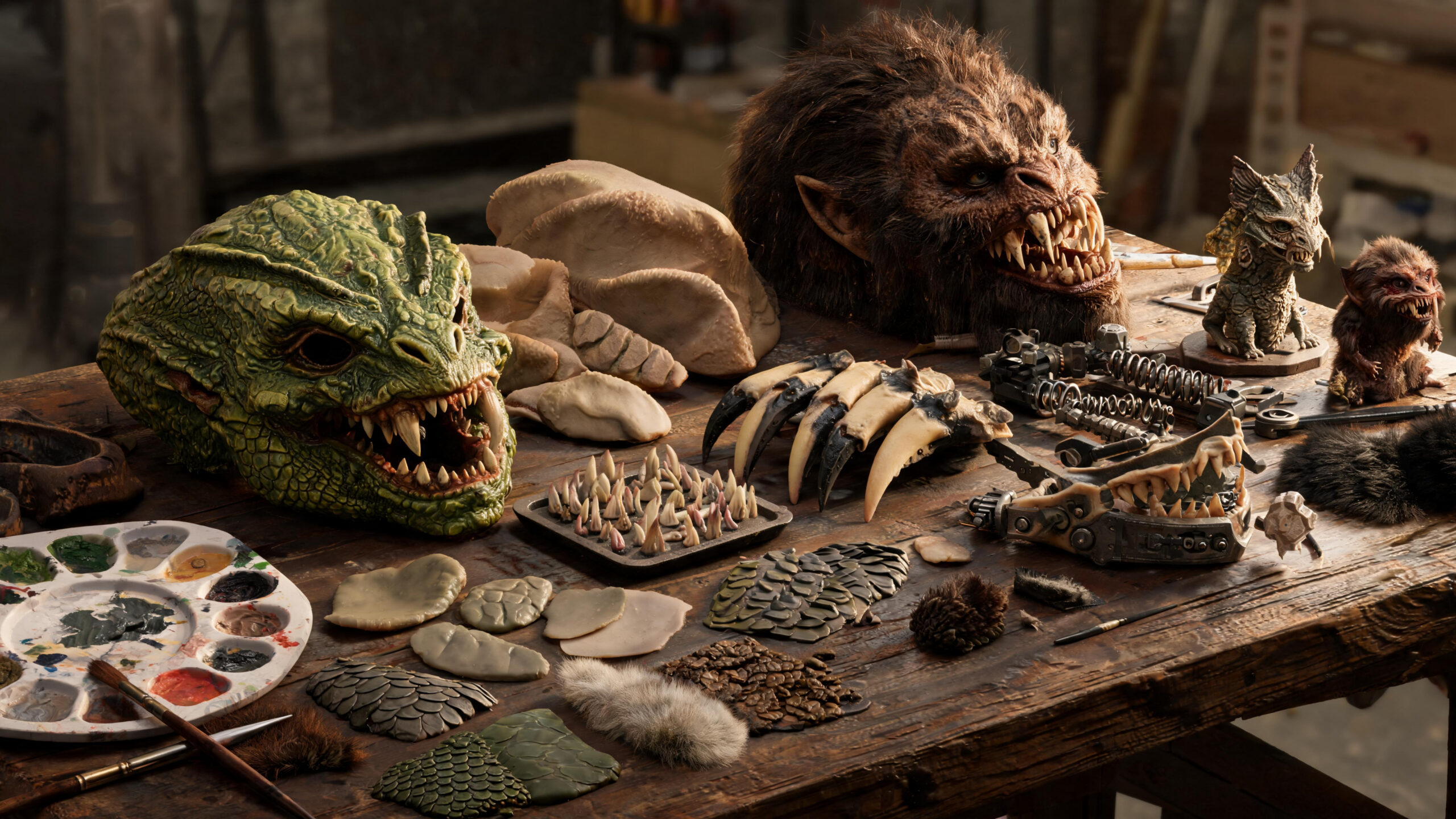
Casting transforms the design into performance-ready components. Silicone may be used for realistic skin, foam latex for lightweight flexibility, urethane for durable pieces, resin for teeth or claws, and specialized foams for body padding. Each material is chosen for a reason. Some must stretch. Some must hold sharp detail. Some must survive stunt work. Some must look wet, translucent, leathery, furry, scaly, or decayed. The success of a practical creature often depends on matching the right material to the right part of the monster.
Creature Suits Built for Performance
A creature suit is one of the most recognizable practical monster builds, but it is far more complex than a costume. A good suit must transform a human performer while still allowing them to breathe, see, move, balance, act, and stay safe. The suit may include foam muscle forms, flexible skins, mechanical extensions, hidden zippers, cooling systems, reinforced joints, gloves, feet, masks, helmets, and internal harnesses. Every part must work together without breaking the illusion. Creature suit performers are essential to the final result. They do not simply wear the monster; they perform it. They study posture, rhythm, breathing, weight, and intention. A predator may move with patience and precision. A wounded monster may drag one side of its body. A fantasy beast may need to feel noble rather than savage. Even the best-built suit can look lifeless without a skilled performer inside. Practical creature builds succeed when fabrication and physical acting become one performance.
Animatronic Heads and Mechanical Expression
Animatronics bring mechanical life to creatures that need facial expression, breathing, or nonhuman movement. An animatronic head may include moving eyes, eyelids, brows, nostrils, lips, jaws, tongues, ears, necks, or throat mechanisms. These movements can be controlled by cables, rods, servos, radio controls, pneumatics, or a combination of techniques. In close-up scenes, animatronics can make a monster seem aware, intelligent, angry, curious, hungry, or afraid.
Expression is especially powerful because audiences naturally search faces for emotion. A slow blink can make a creature feel alive. A slight head tilt can suggest thought. A twitching lip can signal threat. A widening eye can create fear or vulnerability. When actors perform opposite a creature head that moves and reacts in real time, the scene gains an energy that is difficult to fake. Animatronics make the monster a scene partner, not just an object.
Puppets, Rods, Cables, and Hidden Hands
Puppetry is another major part of practical creature building. Some creatures are too small, too strange, too flexible, or too impossible for a human performer to wear. Puppets allow filmmakers to create beings that crawl, slither, flutter, snap, coil, or stretch in ways a suit cannot. A puppet may be operated by one artist or by a full team controlling separate body parts. One puppeteer might move the head, another the arms, another the eyes, and another the body. The audience never sees the coordination behind the illusion, but they feel it when the movement is right. Puppetry gives practical creatures timing and personality. A monster hand can slowly enter frame. A tentacle can curl around an object. A tiny creature can glance nervously toward a sound. A giant head can turn with the slow weight of something ancient. These hidden performances are part of what makes practical creature builds so magical.
Skin, Fur, Scales, Teeth, and Claws
Surface detail is where a practical movie monster becomes believable at close range. Creature builders must think about what the monster’s body says about where it lives, how it hunts, how old it is, and what it has survived. A cave creature might have pale translucent skin. A swamp monster might be slick, mossy, and stained. A desert beast might be cracked, dusty, and scarred. A fantasy predator might have layered scales, worn claws, and old battle damage.
Teeth and claws require special attention because they define danger. They must look sharp, strong, and threatening, but they also need to be safe for performers and actors during controlled scenes. Fur and hair can be punched, glued, layered, trimmed, dirtied, or styled to create age and texture. Scales may be sculpted into the skin or added as individual pieces. These details build the creature’s history. They suggest that the monster existed before the scene began and will continue to exist after it ends.
Painting a Monster for the Camera
Paint turns a raw creature build into something cinematic. Real skin, hide, shell, and fur rarely have one flat color, so creature painters create depth through layers. They may use airbrushing, hand painting, speckling, washes, mottling, translucent tones, dry brushing, stains, and gloss effects. The goal is to make the surface feel organic rather than manufactured. A monster’s color can suggest biology, environment, mood, and story. Camera lighting changes everything. A paint job that looks perfect in the workshop may appear too bright, too dull, too clean, or too artificial under set lights. Creature painters often coordinate with cinematographers to make sure highlights, shadows, and skin details hold up on screen. Gloss can make a creature look wet or freshly emerged. Matte texture can make it feel dry, old, dusty, or reptilian. Paint is not an afterthought. It is one of the final layers of storytelling.
Building for Real Sets and Real Conditions
A practical creature must survive the set. That means it must work under bright lights, in tight spaces, around cameras, through repeated takes, and sometimes in smoke, rain, mud, dust, fake blood, water, firelight, or stunt action. A creature that looks beautiful in a workshop is not finished until it can perform under production conditions. Practical builds must be durable, repairable, and adaptable.
This is why creature shops often create multiple versions of the same monster. A hero head may be used for close-up emotion. A stunt suit may be built for rough movement. A lightweight puppet may be created for a specific action beat. A damaged version may be used after a fight. Background creatures may have less detail but stronger silhouettes. Real sets demand flexibility, and successful creature builds are planned with filming realities in mind.
The Role of the Creature Effects Team on Set
The creature effects team does not disappear after the build is delivered. On set, they maintain, repair, operate, clean, adjust, and protect the monster. They may repaint worn areas, replace claws, reset mechanisms, apply slime, fix seams, help performers enter and exit suits, coordinate puppeteers, and advise the director on how to shoot the creature at its best. Their work continues between takes, often under pressure. On-set creature work is part craft and part problem-solving. A jaw might need adjustment. A cable may loosen. A paint area may scuff. A performer may need better ventilation. A puppet might require repositioning for the lens. The team must preserve the illusion while keeping the production moving. Practical creature builds are living systems during filming, and the crew behind them is essential to their success.
How Camera Work Sells the Creature
Practical monsters are made for the camera, not just the workshop. Cinematography can make a creature terrifying, majestic, mysterious, or disappointing depending on how it is revealed. Lighting, lens choice, framing, movement, and editing all influence how the audience reads the build. A creature may look strongest in partial shadow, with light catching its eyes and skin texture. Another may need a slow full-body reveal to show scale and power.
Filmmakers often use practical creatures strategically. They may show a claw first, then a silhouette, then a breathing face, then the full body. This staged reveal gives the audience time to imagine the monster before seeing it clearly. Practical builds benefit from this kind of suspense because they are tangible. When the full reveal finally arrives, the creature has already occupied the viewer’s imagination.
Practical Builds and Digital Enhancement
Modern movie monsters often use a hybrid approach. A practical creature may provide the physical body, texture, lighting reference, and actor interaction, while digital effects remove rods, erase seams, extend limbs, enhance facial motion, add background creatures, or support impossible movement. This combination can create a creature that feels real but is not limited by physical mechanics alone. The best hybrid work respects the practical foundation. Digital effects should enhance the monster without erasing its weight and texture. A practical suit can anchor a scene, while CGI adds a tail, extra facial movement, or a more dangerous leap. A puppet can provide close-up realism, while digital cleanup hides the operators. When practical and digital teams work together, the audience does not notice the boundary. They simply believe the creature.
Why Practical Creature Builds Still Matter
Practical creature builds still matter because they create a kind of cinematic trust. Audiences can sense when something has physical presence. Even viewers who do not know how effects are made often respond to the weight, texture, and imperfection of a real build. Practical monsters have tiny irregularities that make them feel alive. Their movement may be slightly unpredictable. Their surfaces catch light in complex ways. Their interaction with actors feels grounded.
They also carry the romance of filmmaking craft. Practical creatures are handmade illusions built by people who understand both fantasy and function. They are sculptures that perform, costumes that become characters, machines that breathe, and puppets that frighten. In a world full of limitless digital imagery, practical creature builds stand out because they are physical achievements. They make movie magic feel touchable.
Practical Monsters as Storytelling Tools
A strong practical creature is not only an effect. It is a storytelling tool. Its design can reveal where it lives, what it eats, how it moves, how old it is, whether it is intelligent, and whether it should be feared or understood. The audience reads these clues instantly. A torn ear, cloudy eye, broken horn, scarred jaw, or worn claw can suggest a past without a single line of exposition. The best movie monsters are memorable because they feel like characters. They have presence, behavior, and visual identity. Practical creature builds help create that identity by giving the monster a body that actors and audiences can believe in. Whether the creature appears for two minutes or dominates an entire film, its physical design can define the mood of the story.
From Workshop Legend to Screen Icon
The journey from concept sketch to screen monster is long, technical, messy, and thrilling. It involves sculpting, molding, casting, painting, testing, performing, repairing, and filming. It requires imagination, patience, engineering, and trust between departments. A creature may be redesigned many times before it works. Materials may fail. Movement may need adjustment. Paint may need revision. But when everything comes together, the result can become unforgettable.
Practical creature builds turn movie monsters into real set-ready beings. They give filmmakers something physical to shoot and actors something real to face. They transform fantasy into craft and craft into cinema. That is why practical monsters continue to inspire fans, filmmakers, collectors, artists, and effects creators. They remind us that some of the most powerful illusions are not born only inside computers. They are built by hand, brought to set, placed under lights, and made to breathe.