The Magic of Monsters You Can Touch
Practical creature effects have a special kind of power because they make the impossible physically present. A monster built from foam, silicone, latex, fur, metal, paint, puppetry, and performance does not simply appear on a screen; it occupies space. It casts shadows. It bumps into furniture. It breathes beside actors. It gives the camera something real to discover, and that reality is one of the reasons practical movie monsters continue to fascinate audiences across horror, fantasy, science fiction, adventure, and creature-feature storytelling. In a digital age, practical creature effects remain essential because they offer texture, weight, and unpredictability. A handmade monster has tiny imperfections that make it feel alive: wrinkles that fold differently when it moves, glossy eyes that catch the light, claws that scrape against a surface, and skin that stretches with physical tension. These details help sell the illusion before a single line of dialogue is spoken. When practical effects are done well, viewers are not just watching a design. They are reacting to a living presence.
A: They are physical movie effects used to create creatures through suits, puppets, animatronics, prosthetics, masks, and props.
A: They have physical texture, weight, lighting interaction, and real presence beside actors and sets.
A: Not always. The strongest results often come from combining practical builds with digital enhancement.
A: It is a wearable monster build designed for performance, movement, safety, comfort, and camera believability.
A: Animatronics create mechanical movement such as blinking, breathing, snarling, jaw motion, and facial expression.
A: Puppeteers give creatures timing, rhythm, emotion, and movement that may be impossible for a suit performer alone.
A: Common materials include silicone, foam latex, urethane, resin, latex, fur, fabric, metal, cable systems, and paints.
A: A hero creature is a highly detailed version built for close-ups, major scenes, and strong audience scrutiny.
A: Actors can react to a real presence, touch it, fight it, fear it, and share the scene with it physically.
A: Yes. Modern productions still use them often, especially when physical texture, close-up realism, and actor interaction matter.
What Practical Creature Effects Really Are
Practical creature effects are physical techniques used to create nonhuman characters, monsters, animals, aliens, mutants, demons, hybrids, and fantasy beings for film, television, theater, attractions, and live experiences. These effects can include creature suits, animatronic heads, cable-controlled puppets, mechanical limbs, prosthetic makeup, masks, miniature monsters, full-scale props, and blended effects that combine physical builds with digital enhancement. The goal is not always to avoid CGI completely. The goal is to create a believable foundation that helps the creature feel real.
A practical creature may be worn by a performer, operated by puppeteers, mounted on a rig, controlled remotely, or built as a static prop for close-up shots. Some creatures are designed for quick flashes in dark scenes, while others must survive long, emotional close-ups under bright lighting. That difference changes everything, from the materials used to the level of detail required. A background beast might need a strong silhouette and good movement. A hero creature, meaning one that gets major screen time, needs expressive eyes, detailed skin, reliable mechanics, and a personality that can hold the audience’s attention.
From Concept Art to Creature Blueprint
Most practical creature builds begin with an idea, but that idea must become buildable before it can become filmable. Creature designers often start with concept art, story notes, mood boards, anatomy references, and conversations with directors. They ask what the creature is supposed to make the audience feel. Is it terrifying, tragic, majestic, disgusting, ancient, intelligent, animalistic, or strangely beautiful? The emotional purpose of the monster guides its shape, color, movement, and facial design. Once the direction is clear, the concept becomes more technical. Artists may create maquettes, which are small sculpted models that help everyone understand the creature in three dimensions. These early forms reveal problems that flat drawings can hide. A head may look frightening on paper but become too heavy when enlarged. A jaw may look dramatic but fail to open naturally. A body may look impressive but prevent a performer from walking. Practical creature design is always a balance between imagination and engineering, and the best monsters often come from solving those limitations creatively.
Sculpting the Monster’s Personality
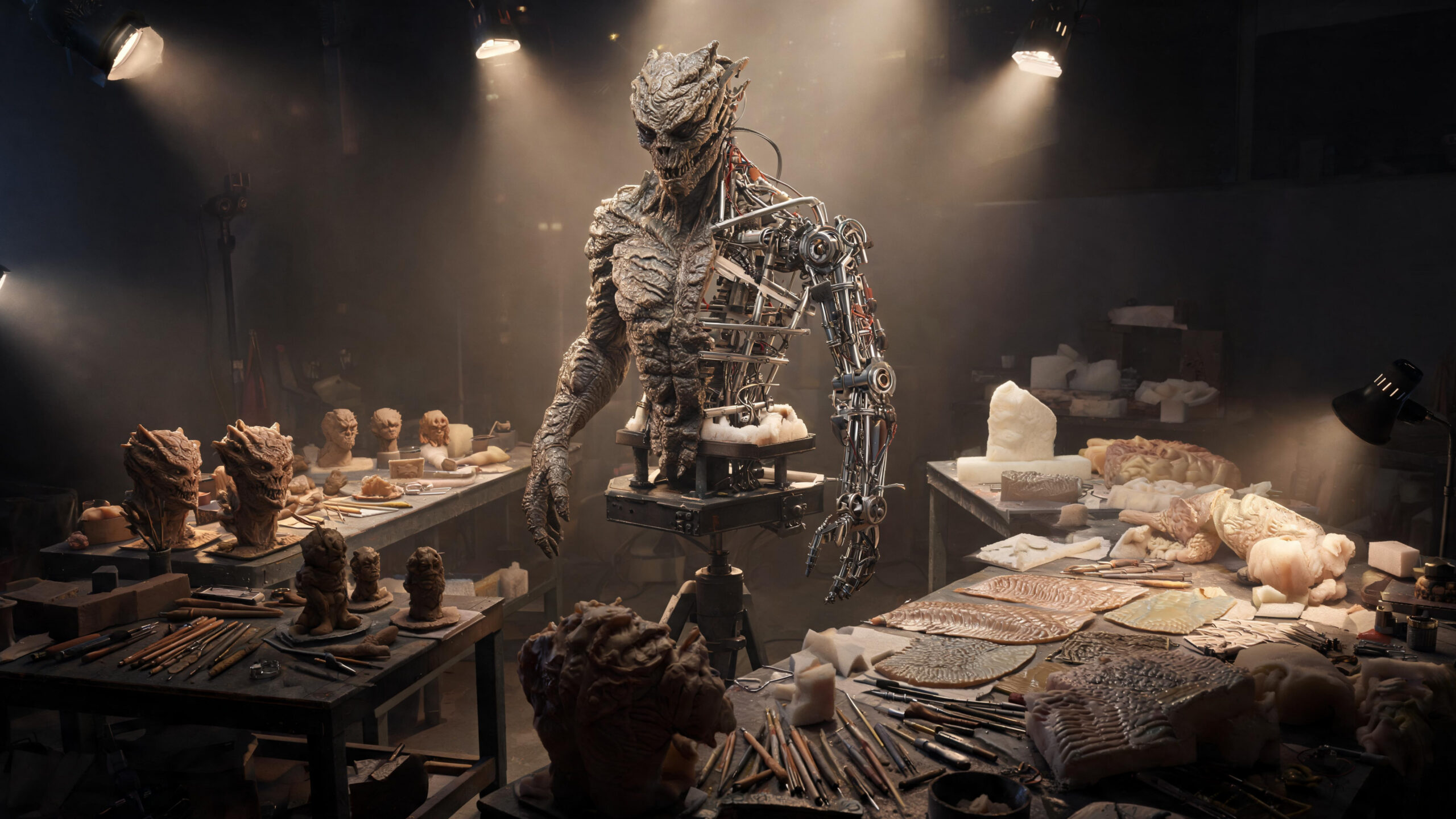
Sculpting is where many movie monsters begin to develop their soul. Artists shape clay or digital-to-physical forms into faces, bodies, hands, claws, and skin details. Every ridge, scar, wrinkle, brow line, and mouth shape influences how the audience reads the creature. A deep brow can make a monster look angry or ancient. A soft mouth can make it feel unexpectedly sympathetic. Large eyes may create vulnerability, while tiny hidden eyes can make a creature feel cold, insect-like, or unknowable.
Great creature sculpting is not just about adding detail. It is about deciding which details matter. Too much texture can make a monster visually noisy, while too little can make it look artificial. The sculptor must think about how the creature will look under lighting, how close the camera will get, and how paint and materials will change the final surface. A monster’s face has to read clearly in motion, in shadow, and in moments of stillness. That is why the sculpt is often one of the most important creative stages in practical creature effects.
Mold Making, Casting, and Creature Skin
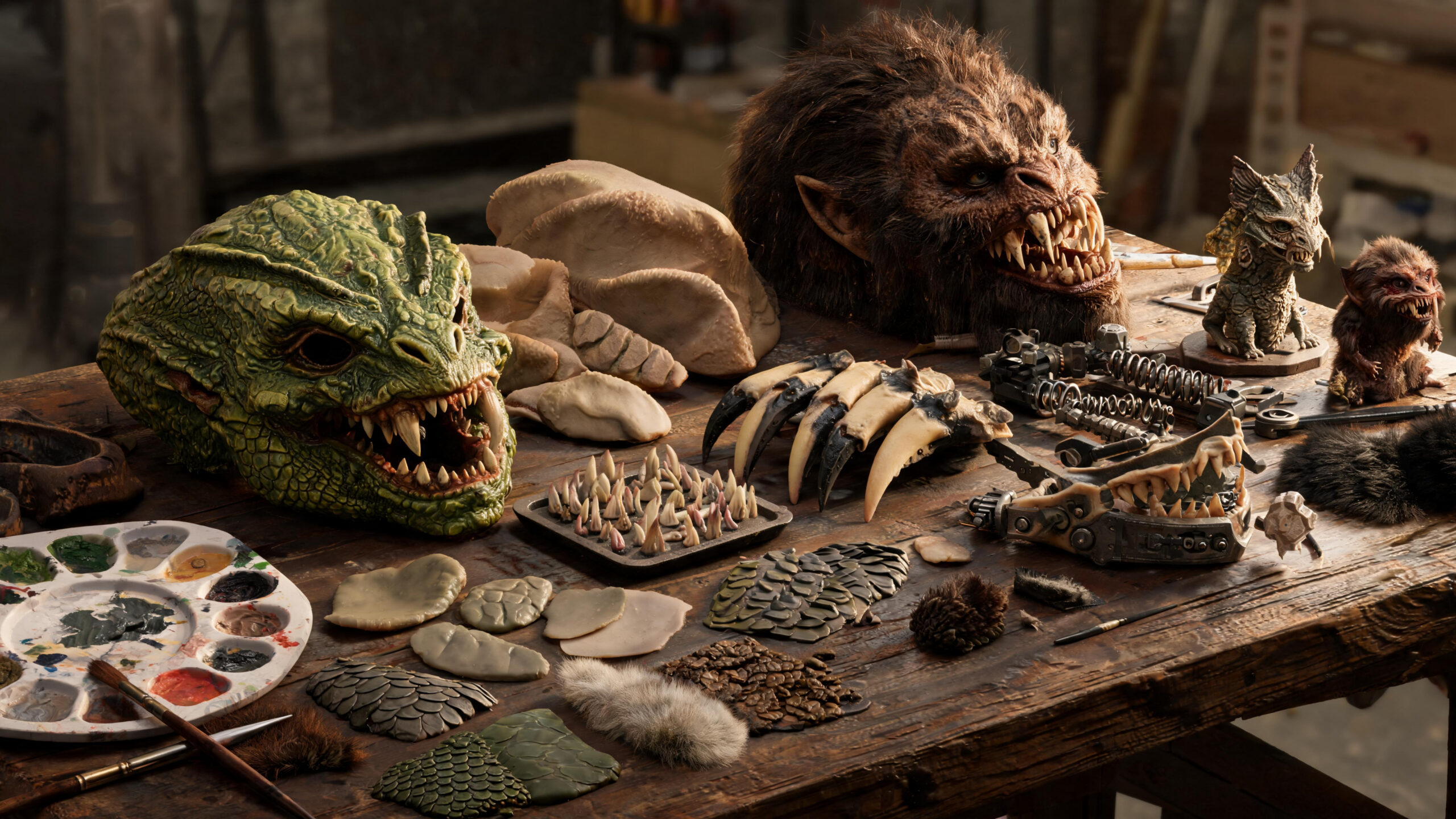
After sculpting, the creature must be transformed into durable, wearable, movable parts. Mold making allows artists to reproduce the sculpt in materials that work on set. Depending on the creature’s needs, the final skin may be made from silicone, foam latex, urethane, latex, or other specialty materials. Each option has strengths and trade-offs. Silicone can look incredibly skin-like and translucent, but it can be heavy. Foam latex is lightweight and expressive, but it requires careful handling. Urethane can be durable for props and armor-like pieces, but it may not move like flesh. Creature skin is one of the most important elements of believability. Audiences instinctively notice whether something feels too rubbery, too stiff, too clean, or too plastic. To avoid that, artists build layers of realism into the surface. They may add pores, scars, veins, mottled color, embedded fibers, slime, dirt, subtle gloss, or dry cracked textures. A creature that lives underground should not look like one that lives in the ocean. A desert monster should not have the same finish as a swamp creature. Practical effects succeed when every surface choice supports the creature’s world.
Creature Suits and the Performer Inside
Creature suits are among the most iconic forms of practical monster-making. They allow a performer to physically become the creature, giving the monster posture, timing, emotion, and instinct. A good creature suit is not simply a costume. It is a wearable machine built around movement, visibility, ventilation, weight distribution, durability, and safety. The performer must be able to act through the suit, even when covered in foam, latex, fur, armor, or extended limbs.
The best creature suits are designed with the performer’s body in mind. If the monster is tall, the suit may use stilts or extended leg structures. If it crawls, the knees, shoulders, and hands must be reinforced. If it fights, falls, or runs, the suit must survive impact without injuring the person inside. Creature performers often train extensively to make these builds believable. They learn how to move like predators, wounded beasts, insects, apes, reptiles, or beings with no real-world equivalent. Their performance turns fabrication into character.
Animatronics: Giving Monsters a Face That Thinks
Animatronics bring mechanical expression to practical creatures. They can make eyes blink, brows flex, nostrils flare, mouths snarl, lips curl, ears twitch, tongues move, and chests breathe. These movements may be controlled by cables, rods, radio controls, servos, pneumatics, or a combination of systems. In close-up scenes, animatronics can create the illusion that a creature is thinking, reacting, and feeling in real time. The face is especially important because audiences search faces for emotion. A monster does not need to speak to communicate. A slow blink can suggest intelligence. A twitching lip can suggest hunger. A slight head tilt can make an alien feel curious rather than aggressive. Practical animatronics allow these details to happen in-camera, giving actors something immediate to respond to. When a performer stands inches away from a creature head that is blinking, breathing, and staring back, the emotional energy of the scene changes.
Puppetry and the Art of Hidden Performance
Puppetry is one of the oldest and most powerful tools in practical creature effects. A puppet can be tiny or enormous, simple or highly complex. Some are operated by one puppeteer, while others require entire teams controlling separate parts of the body. One person may handle the head, another the arms, another the eyes, and another the breathing motion. When these movements are synchronized, the result can feel astonishingly alive.
The beauty of puppetry is that it allows movement that a human performer inside a suit may not be able to achieve. A creature can slither, coil, stretch, snap, float, or contort in unnatural ways. Puppetry also gives filmmakers precise control for close-up shots. A monster hand can slowly reach into frame. A tentacle can wrap around an object. A small creature can glance from side to side with perfect timing. The audience rarely thinks about the artists hidden just outside the frame, but their performance is often the heartbeat of the creature.
Materials That Make Monsters Believable
Practical creature effects depend on materials that can survive the brutal reality of production. Film sets are hot, wet, dusty, smoky, crowded, and unpredictable. Creatures may need to perform under rain machines, bright lights, fake blood, dirt, firelight, or repeated stunt action. Materials must look convincing while remaining flexible, repairable, and safe. This is why creature shops test materials carefully before filming begins. Different surfaces require different solutions. Teeth may be resin or acrylic. Claws may need to look sharp but remain safe for actors. Fur may be punched by hand or applied in sections. Scales may be sculpted, cast, painted, or individually attached. Slime may be created with special mixtures that reflect light without damaging the build. Even the inside of a mouth may receive careful paintwork, gloss, gums, tongue texture, and saliva effects. These details might appear on screen for only seconds, but they help make the monster unforgettable.
Paint, Texture, and the Final Illusion
Painting a practical creature is a highly specialized art. A creature rarely looks convincing with one flat color. Real skin, scales, shells, feathers, and fur contain variation. They shift from warm to cool tones, from dry to wet areas, from scarred surfaces to fresh tissue. Creature painters use airbrushing, hand painting, washes, speckling, layering, and translucent color effects to create depth. They must also consider how the creature will look under the cinematographer’s lighting.
Texture works with paint to create the final illusion. A sculpted wrinkle may disappear if painted incorrectly. A creature’s skin may look fake if the highlights are too uniform. Glossy areas must be chosen carefully because shine can make a surface feel wet, alive, diseased, amphibious, or freshly wounded. Matte areas can feel dusty, old, dry, or reptilian. Practical monster painting is not just decoration. It is storytelling through surface.
Working With the Camera
Practical creature effects are designed not only for the eye but for the camera. What looks incredible in person may need adjustments to look right on screen. Camera lenses, lighting, frame rate, movement, and editing all affect how the monster is perceived. A creature may be built with extra detail for close-ups or exaggerated shapes for wide shots. Sometimes multiple versions of the same creature are created: a hero head for emotional scenes, a stunt suit for action, a lightweight puppet for movement, and a damaged version for battle sequences. Filmmakers often use shadow, framing, and selective reveals to make practical creatures more powerful. Showing too much too soon can weaken the mystery. A claw in the dark, a wet breath in the foreground, or a silhouette crossing behind a character can be more frightening than a full reveal. Practical effects reward careful cinematography because the object is really there. The camera can move around it, light can skim across it, and actors can share space with it.
Practical Effects and Actor Reactions
One of the greatest advantages of practical creature effects is the reaction they create from actors. Acting opposite a tennis ball, a marker, or an empty space can work, but acting opposite a snarling animatronic monster or towering creature suit is a different experience. The actor can see its size, hear its movement, feel its presence, and respond to its timing. That physical interaction often creates more natural fear, curiosity, tension, or wonder.
Practical creatures also help with blocking and scene energy. Actors can touch them, run from them, fight them, hide behind them, or be physically carried by them when safely planned. These interactions give scenes a grounded quality. Even when digital effects are added later, the practical foundation can make the entire sequence feel more convincing. The audience senses when characters are reacting to something tangible.
Blending Practical Effects With CGI
Modern creature effects often work best when practical and digital techniques support each other. Practical builds provide real texture, lighting reference, actor interaction, and physical presence. CGI can then enhance movement, remove rods or cables, extend anatomy, add impossible details, or create shots that would be unsafe or too expensive practically. This blended approach can give filmmakers the best of both worlds. The key is balance. When digital effects erase the physical qualities that made the creature convincing, the monster can lose impact. But when CGI protects and enhances the practical build, the creature can become even more believable. A practical monster may have digital eye refinements, extended limbs, subtle breathing, or environmental interaction added in post-production. The audience does not need to know where the practical effect ends and the digital work begins. They only need to believe the creature is alive.
Why Practical Monsters Feel So Memorable
Practical monsters often remain memorable because they have a handmade identity. Their design is shaped by artists, fabricators, performers, engineers, painters, puppeteers, and filmmakers solving real problems together. The final creature carries the marks of that collaboration. It is not just an image. It is an artifact of craft.
This physicality gives practical creatures a sense of history. Audiences remember the way a monster moved, the shine of its skin, the tension in its jaw, or the strange sadness in its eyes. They remember the feeling that it could step out of the frame and into the room. Practical creature effects tap into the same fascination as masks, puppets, sculptures, haunted attractions, and ancient myths. They turn imagination into a body.
Practical Creature Effects in Horror, Fantasy, and Sci-Fi
Horror uses practical creature effects to create dread and disgust. A monster that drips, crawls, breathes, or transforms in front of the camera can feel invasive and immediate. Practical gore, prosthetics, and body-horror effects can make transformation scenes especially disturbing because viewers can sense the physical manipulation of flesh. Horror thrives on texture, and practical effects deliver texture with unforgettable force. Fantasy and science fiction use practical creatures for wonder as much as fear. A dragon head, alien diplomat, forest beast, or mythical companion can become emotionally powerful when it shares space with human characters. Practical builds help these worlds feel inhabited rather than illustrated. They give fictional cultures animals, guardians, monsters, and strange beings that feel like they belong to a living ecosystem.
The Workshop as a Place of Invention
Creature shops are part art studio, part engineering lab, part costume department, part sculpture workshop, and part emergency repair station. Inside, artists move between clay, foam, silicone, paint, mechanics, fabric, fur, electronics, and reference images. A single build may require sculptors, mold makers, painters, hair artists, animatronic designers, fabricators, costume technicians, performers, and on-set wranglers.
The work is creative, but it is also practical in the strictest sense. Deadlines are real. Budgets are limited. Materials fail. Paint reacts strangely under lights. A jaw mechanism works perfectly in the shop and then needs adjustment on set. A suit that looked manageable during a test becomes exhausting during a night shoot. Practical creature effects require adaptability. The artists must protect the illusion while solving problems quickly and safely.
The Future of Practical Creature Effects
Practical creature effects are not disappearing. They are evolving. New materials, digital sculpting tools, 3D printing, lightweight mechanisms, improved servos, better paints, and hybrid workflows are expanding what creature shops can build. Artists can now design digitally, print parts, mold refined forms, and combine traditional handcraft with modern fabrication. The result is not a replacement for old methods but a larger toolbox. Audiences continue to respond to practical monsters because physical effects offer something deeply human. They remind us that movie magic is not only created by software but also by hands, tools, performance, and invention. In an entertainment world full of limitless digital imagery, practical creature effects remain thrilling because they are limited by reality—and then somehow overcome it. That struggle is part of the magic.
Bringing Movie Monsters to Life
Practical creature effects bring movie monsters to life by giving them bodies, surfaces, movement, and presence. They turn designs into performances and performances into memories. They allow actors to face the impossible, cameras to photograph the unreal, and audiences to believe in creatures that should not exist. Whether built as a suit, puppet, animatronic head, prosthetic transformation, or hybrid effect, a practical monster carries the excitement of real craftsmanship.
The best practical creature effects do more than scare us. They invite us behind the curtain without ruining the wonder. They show that monsters are not only born from nightmares, myths, or scripts. They are sculpted, molded, painted, stitched, wired, worn, puppeteered, repaired, and performed into existence. That is why practical creature effects remain one of cinema’s most exciting forms of storytelling: they make imagination breathe.