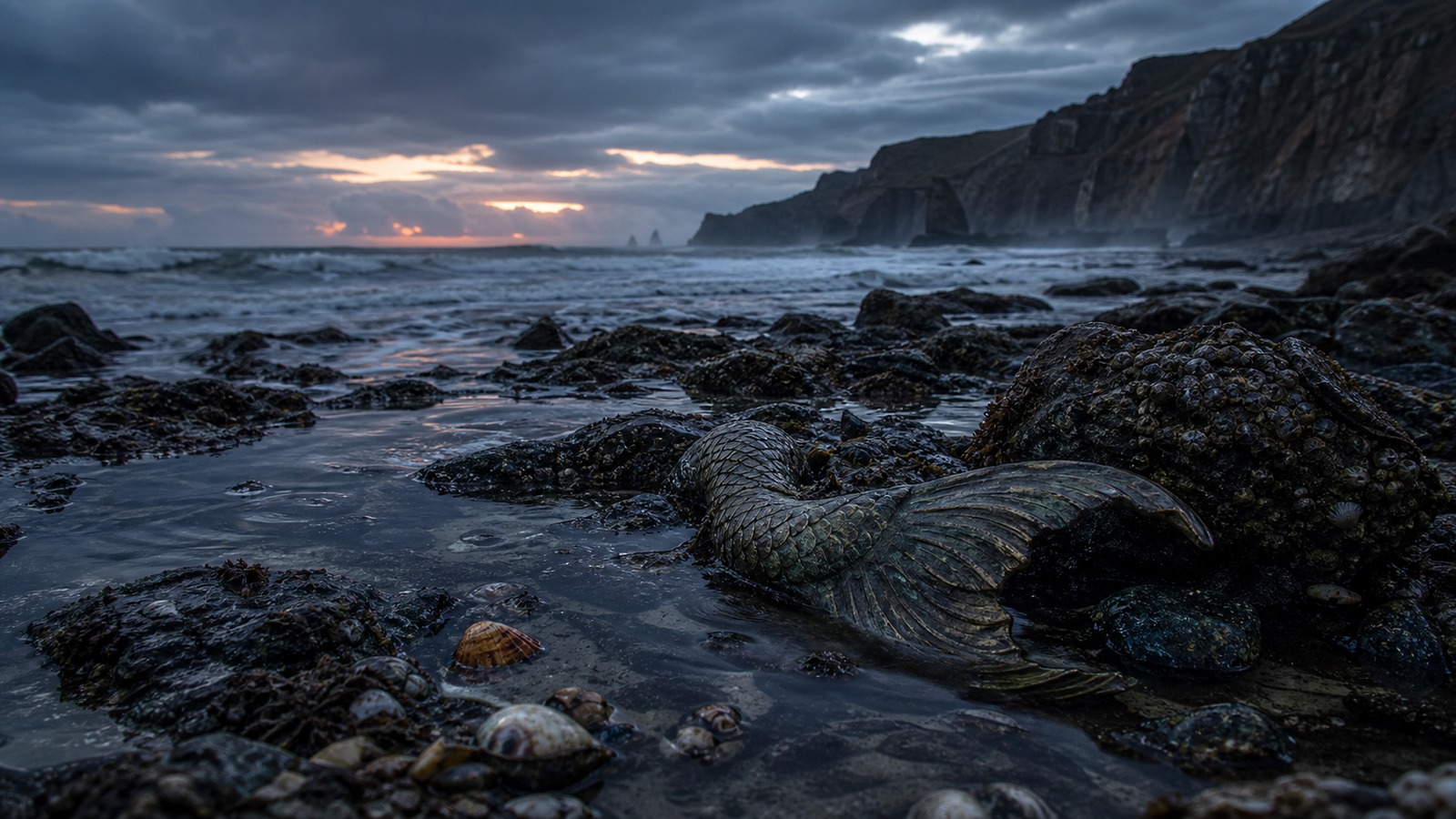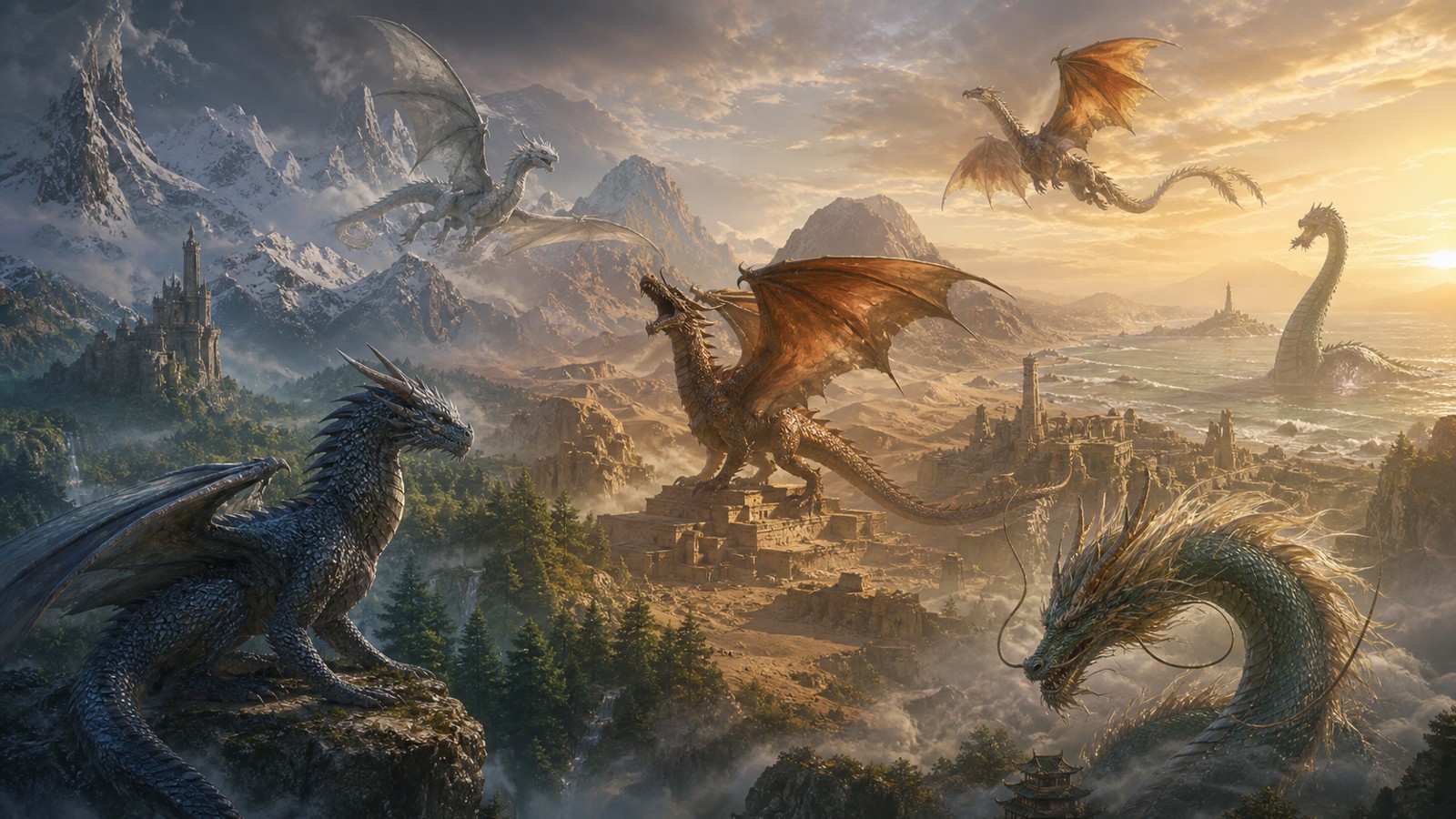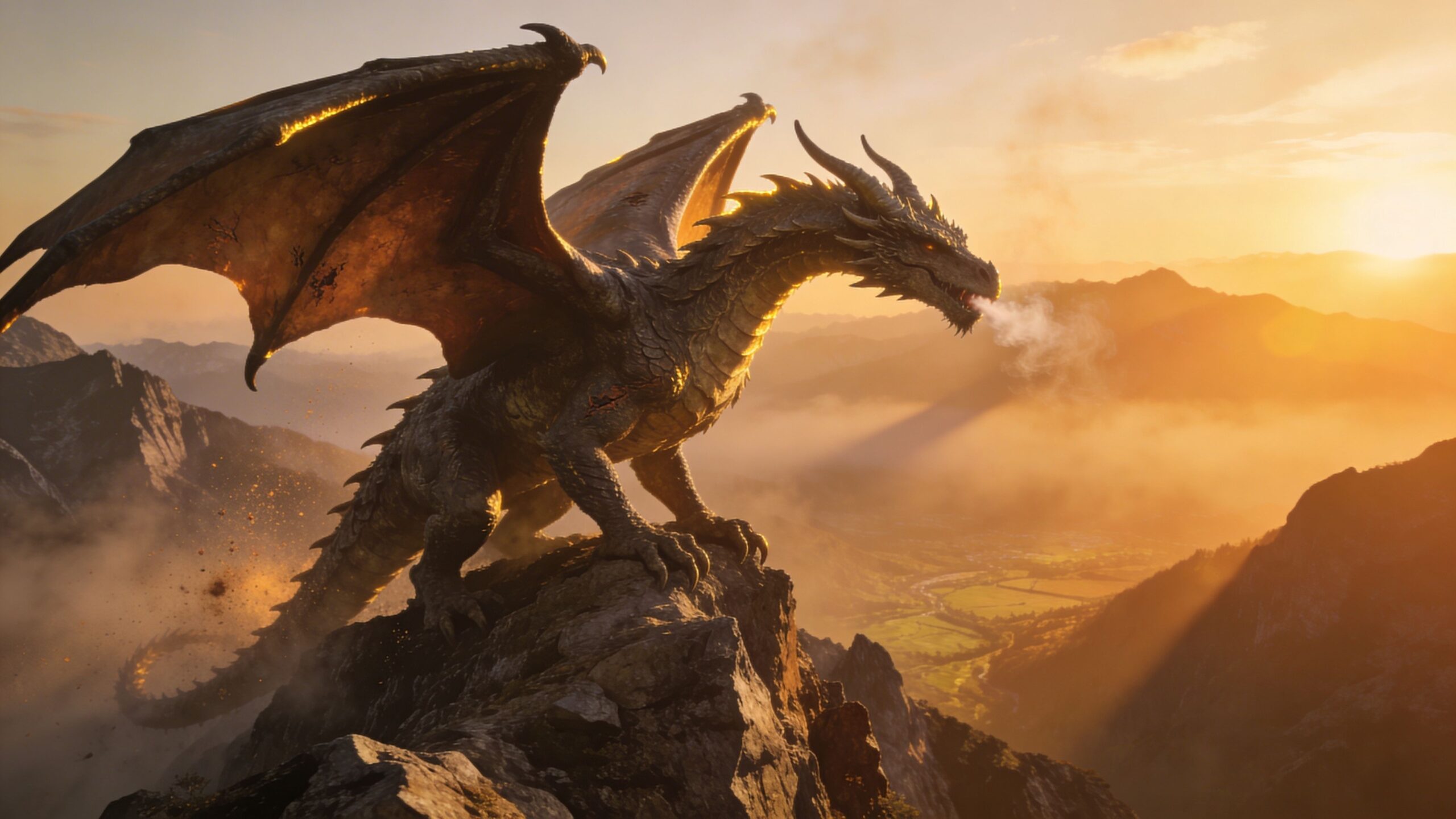
Dragons are the rare kind of monster that can be almost anything and still feel instantly recognizable. A dragon might be a winged tyrant circling a ruined keep, a river-serpent worshiped as rain, a cosmic guardian carved into temple gates, or a whispering shadow that lives in the cracks between thunder and fire. Across continents and centuries, people have described enormous reptilian beings with impossible strength, ancient intelligence, and a talent for changing the weather—and the story never gets old. Dragons aren’t one creature. They’re a global language of awe, fear, and power. What makes dragons so fascinating is that they don’t belong to a single culture or era. They appear in the oldest myths and in the newest fantasy worlds. Some dragons are born from chaos and exist to be defeated. Others are revered as wise forces of balance, linked to rivers, mountains, ancestors, and the sky. The same word can mean “demon,” “deity,” “guardian,” or “king,” depending on where you stand. To understand dragons, you have to travel—not just through geography, but through symbolism.
A: Dragon-like beings appear across most regions, often as serpents tied to storms, water, or power.
A: Many Eastern dragons are linked to rain and balance; many Western dragons are framed as threats and trials.
A: A dragon variant commonly depicted with two legs and wings, often more animalistic than four-limbed dragons.
A: No—some breathe poison, mist, frost, sand, or are associated with storms rather than flame.
A: The hoard often symbolizes temptation, stagnant power, and the price of obsession.
A: Power, chaos, protection, kingship, and overwhelming natural forces.
A: They overlap—sea dragons are dragon-like; leviathans are often framed as vast ocean monsters tied to storms.
A: Serpents mirror rivers and storms: coiling motion, sudden strikes, and life-giving danger.
A: Possibly—large bones found in the ground have been interpreted as “dragon remains” in many places.
A: Clear rules—habitat, motives, limits, and consistent symbolism tied to the world’s geography and culture.
Why Dragons Appear in So Many Cultures
Dragon myths spread because they solve a problem every society shares: how do you describe power that feels bigger than human control? Storms tear roofs from homes. Floods rewrite borders. Droughts starve entire regions. Volcanoes turn daytime into night. When nature behaves like a living, angry mind, a creature-shaped explanation becomes irresistible. Dragons give the ungraspable a face, a body, a motive. They become the story-form of the world’s most dangerous forces.
There’s also something deeply human about the dragon’s design. Most dragons combine features our instincts already treat as threatening: fangs, claws, venom, wings, armor, and eyes that seem to judge. A dragon often mixes predators into one ultimate apex form—serpent, big cat, raptor, crocodile—then scales it up until it feels mythic. That blueprint creates instant tension. You don’t need a long explanation to understand why a village fears what lives beyond the ridge.
And then there’s the oldest trick of all: treasure. Dragons frequently guard something people want, whether it’s literal gold, a sacred spring, a magical fruit, a royal heirloom, or a forbidden passage. The hoard is more than loot. It’s a narrative engine. It lures heroes, tests rulers, exposes greed, and turns ambition into consequence. A dragon is not simply a beast you fight—it’s a problem you must face.
The Oldest Roots: Serpents, Storms, and Sacred Places
Many of the earliest dragon-like beings look more like enormous serpents than winged lizards. In ancient stories, the “dragon” is often a river with teeth or a storm with a spine. These serpentine forms make sense when you picture water itself: it coils, it surges, it strikes, it disappears underground and returns somewhere else. A river can nourish a civilization, then destroy it overnight. In that sense, the serpent-dragon is a perfect symbol for the double-edged nature of life-giving forces.
In several traditions, dragons are tied to borders: the edge of the village, the mouth of a cave, the threshold of the sea, the gates of the underworld. They live at the places where maps fail. When a culture says a dragon guards a pass, a spring, or a mountain, it’s also saying that this location is sacred, dangerous, and transformative. You don’t cross it casually. You cross it with offerings, courage, or consequences. As religions evolved and empires expanded, dragons took on new roles. Some became demons of chaos defeated by gods or heroes. Others became emblems of kingship and cosmic order. The dragon is flexible enough to serve both sides of a story: it can be the reason a hero rises or the reason a kingdom prospers.
East Asian Dragons: Rain-Bringers, Ancestors, and Imperial Power
In much of East Asia, dragons are more likely to be revered than hunted. These dragons are often long, serpentine, and connected to water, weather, and seasonal cycles. They can represent rain that saves crops, rivers that sustain cities, and the balance between heaven and earth. Rather than hoarding gold in caves, they may dwell in lakes, clouds, or palaces beneath the sea, acting as rulers of natural domains.
These dragons are frequently associated with wisdom, longevity, and authority. Their power isn’t just physical. It’s cosmic. When an East Asian dragon moves, it may be guiding the wind or shaping the fate of a dynasty. This is one reason dragon imagery became linked to leadership and governance: the dragon embodies a force that can bring prosperity when respected and disaster when ignored.
Even when dragons are dangerous in these traditions, they are still part of a living system. They can be bargained with. They can be honored. They can be angered and appeased. That relationship feels less like “monster versus hero” and more like “human versus nature,” with diplomacy, ritual, and responsibility at the center.
European Dragons: Hoards, Horror, and the Hero’s Trial
In many European legends, dragons shift into a darker register. They become symbols of devastation and greed, often associated with scorched fields, poisoned wells, and villages living in fear. The European dragon frequently has a bulky, muscular body, powerful wings, and a taste for domination. It is a tyrant of the landscape, and its defeat becomes a public victory, not just a personal achievement.
The hoard motif becomes especially strong here. Gold and jewels are piled beneath the beast, not merely as treasure but as a reflection of corrupted desire. The dragon’s wealth is stagnant. It doesn’t circulate. It doesn’t feed anyone. It sits under a mountain while people suffer. In that sense, the dragon becomes a warning about power that exists only to possess. European dragon-slaying stories often carry moral weight. The hero’s strength matters, but so do courage, humility, and sacrifice. Sometimes the dragon is not only a monster but a test: can you confront fear without becoming it? Can you claim reward without being consumed by greed? The dragon forces the question.
Middle Eastern and South Asian Dragons: Djinn-Adjacent Serpents and Cosmic Foes
Across parts of the Middle East and South Asia, dragon-like beings appear in stories of spiritual forces, monstrous serpents, and battles between order and chaos. Some are linked to deserts, storms, or ancient ruins. Others function as cosmic adversaries in mythic cycles—entities that represent disorder, drought, or the crushing pressure of fate.
South Asian traditions also include powerful serpent beings that can be divine, dangerous, or both. These serpentine figures often live in watery realms, guard treasures, and interact with gods and humans through bargains, blessings, and curses. The dragon here is not always a single standardized creature; it’s part of a broader family of beings tied to the underworld, rain, fertility, and spiritual tests.
What stands out in these regions is how dragons and serpent beings often feel embedded in metaphysical systems. They are not random monsters. They are expressions of spiritual laws. They may enforce taboos, guard sacred knowledge, or embody forces that must be respected rather than conquered.
The Americas and Oceania: Serpents, Sky-Beasts, and Landscape Dragons
While “dragon” is not always the traditional label in the Americas, the dragon-shaped idea—massive serpent forces tied to water, storm, and earth—appears in many forms. Stories of thunder beings, giant serpents, and lake monsters echo the same emotional core: the world contains powers that can’t be controlled, only understood and survived.
In Australia, the Rainbow Serpent stands out as a vast, landscape-shaping presence linked to water, creation, and the rules of life. This isn’t a creature you slay for glory. It’s a foundational power, woven into land and law. It shows how “dragon energy” can be less about combat and more about cosmology: a being that explains why the world is structured the way it is.
Dragon Types: The Major Forms You’ll See Worldwide
Because dragon myths differ so widely, it helps to sort them by traits rather than by names. One of the most recognizable types is the serpentine dragon: long-bodied, often wingless, and associated with water, rain, or earth. These dragons feel ancient, elemental, and connected to landscape.
Then there’s the classic winged dragon common in Western fantasy: four limbs plus wings, a heavy chest, and a predatory silhouette built for dominance. This type often breathes fire, guards treasure, and serves as the ultimate boss of the wilderness.
Wyverns, often described with two legs and wings, appear in heraldry and modern fantasy as leaner, more animalistic dragon variants. Amphipteres—winged serpents—occupy a middle ground: serpentine bodies with wings, emphasizing speed, aerial mystery, and mythic strangeness.
Hydra-like forms expand the dragon concept into multi-headed terror, where the monster becomes a puzzle as well as a threat. Sea-dragon and leviathan variants take the dragon into oceanic scale, replacing wings with fins and turning storms into a habitat.
Finally, there are spiritual dragons: creatures that function as gods, guardians, or omens. These may not “breathe fire” in a literal sense. Their power is symbolic—manifested through weather shifts, luck, fate, and the rise and fall of rulers.
What Dragons Symbolize: Chaos, Protection, and the Price of Power
A dragon often means the thing a culture worries about most—and the thing it secretly admires. If a society fears disorder, the dragon becomes chaos to be defeated. If it fears drought, the dragon becomes rain to be honored. If it wrestles with greed, the dragon becomes a hoarder. If it values rightful leadership, the dragon becomes a banner of authority.
Dragons also represent thresholds. In story logic, a dragon appears where transformation is required. The hero must leave childhood behind, face death, confront the shadow self, or prove the right to rule. The dragon is the moment the story stops being safe. It’s where consequences begin.
That’s why dragons endure even as cultures change. They scale with the times. In one era, a dragon may be the terror of the wilderness. In another, it might become a symbol of empire or a metaphor for catastrophe. The form stays familiar; the meaning adapts.
Famous Dragon Legends and Why They Stick
Some dragon stories survive because they’re simple and sharp: a monster threatens, a hero rises, the community is saved. Others endure because they’re layered, with dragons representing political power, divine judgment, or the dangerous beauty of the unknown.
Dragon legends also stick because they’re visual. They invite art. A dragon’s coils around a mountain, its shadow over a city, the glint of scales in torchlight—these images are easy to remember and hard to replace. Even if you forget the details of a myth, you remember the feeling it created: the world is bigger than you are, and something ancient is watching. Modern fantasy keeps dragons alive by giving them personalities: rulers, tricksters, philosophers, tyrants, parents. But the best modern dragons still echo the old patterns. They guard thresholds. They embody power. They demand a price.
Dragons in the Modern Imagination: Why We Still Need Them
Today, dragons thrive in movies, games, novels, and online folklore because they give us a safe way to approach intense emotions. Dragons let us rehearse fear and courage. They let us explore what power looks like—and what it costs. They’re also endlessly customizable. You can build a dragon that fits any world: icy, volcanic, celestial, mechanical, serpentine, feathered, ghostly, aquatic. And because dragons exist everywhere in human storytelling, they create a sense of global connection. A dragon in one culture might be a guardian of rivers; in another, a hoarder of gold; in another, the personification of a storm. Different meanings, same spark. The dragon is proof that imagination travels farther than borders.
How to Recognize Dragon DNA in Any Myth
If you want to spot dragon patterns across cultures, look for a few recurring signals. The creature is tied to a major force: weather, water, fire, earth, or fate. It guards something: treasure, knowledge, a sacred place, a boundary. It represents a test: moral, physical, spiritual, or political. And it changes the world around it, either by destruction or by renewal.
In that sense, dragons are more than monsters. They’re story engines. They are the pressure point where a myth becomes unforgettable.
One Creature, a Thousand Meanings
Dragons of the world are not a single species you can pin down with one set of rules. They are a worldwide tradition of power made visible—sometimes worshiped, sometimes fought, sometimes feared, sometimes respected. Their forms shift with geography, climate, religion, and history, but their emotional impact stays consistent. A dragon is what happens when a culture takes the biggest forces it knows—storm, hunger, wealth, fate, kingship—and gives them a beating heart. Whether you imagine a river-dragon spiraling through clouds or a winged tyrant guarding gold in a volcanic cave, the fascination is the same. Dragons make the invisible feel real. They turn the world’s wildness into a face you can confront. And that’s why, across every continent, we keep telling stories where the sky itself has teeth.