
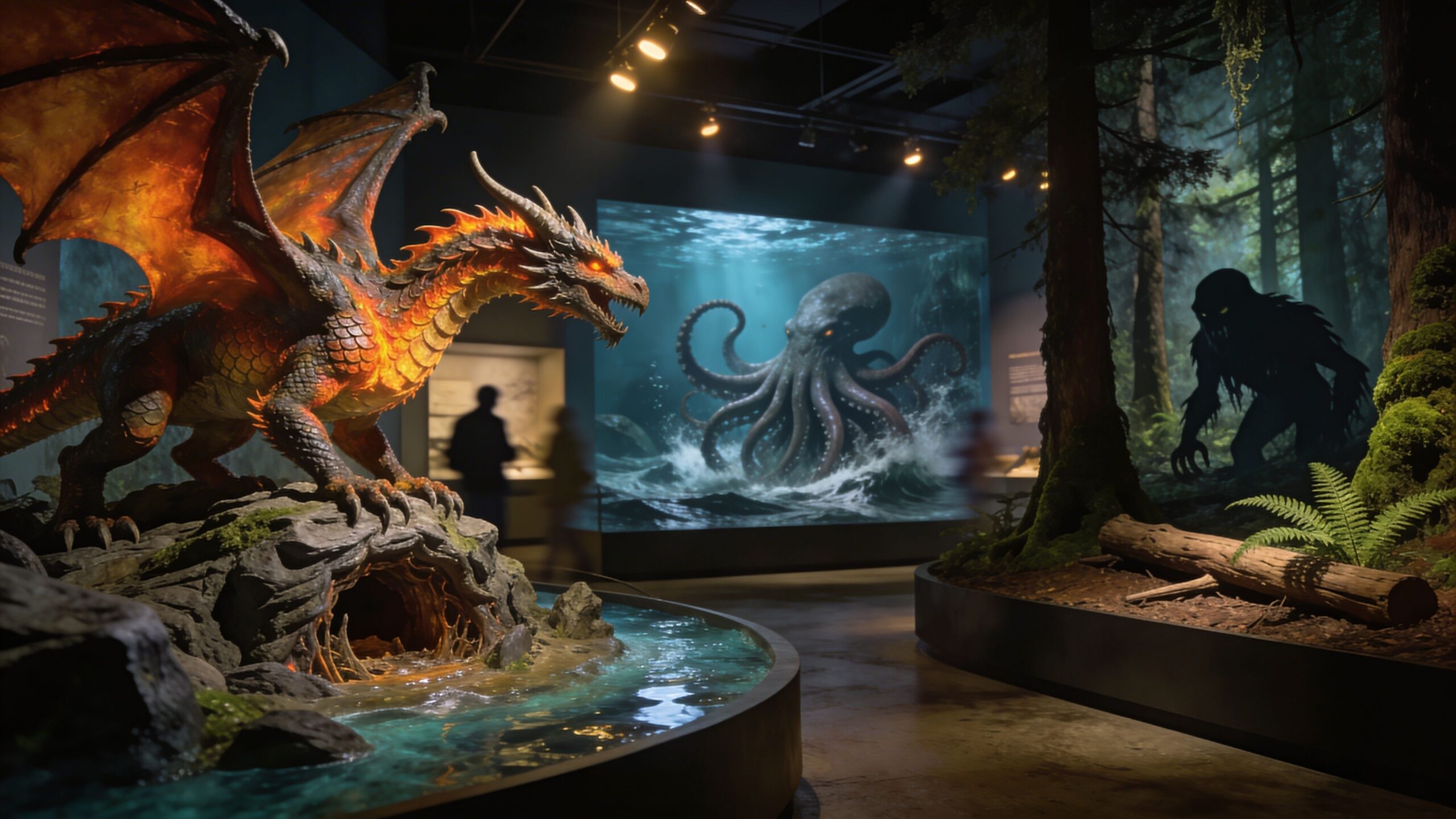
Educational Creature Exhibits on Creature Street invite visitors into the mysterious crossroads where folklore, cryptozoology, and imagination converge. This category explores how museums, traveling displays, immersive galleries, and creative installations bring legendary beings to life—transforming whispered tales into tangible experiences. From towering dragons and elusive lake monsters to forest guardians, shapeshifters, and shadowy cryptids, these exhibits blend art, anthropology, and speculative science to spark curiosity and debate. Articles within this collection unpack the design philosophy behind myth-focused displays, revealing how sculptors, storytellers, and researchers translate centuries of legend into believable environments filled with atmospheric detail. You’ll discover how posture, lighting, texture, and environmental storytelling create the illusion of presence, while cultural narratives provide deeper meaning to each creature’s role across history. Expect explorations of regional lore, legendary sightings, symbolic interpretations, and the modern fascination with unexplained wildlife. Whether you’re a myth enthusiast, creative builder, educator, or cryptid hunter at heart, these guides illuminate the powerful storytelling techniques that turn myth into immersive learning experiences.
A: A creature whose existence is unverified but widely reported in folklore or eyewitness accounts.
A: Many represent cultural values, fears, or natural phenomena interpreted through storytelling.
A: Folklore connects cultural history with imaginative exploration and anthropological insight.
A: By separating legend, speculation, and scientific evidence while honoring storytelling traditions.
A: Atmospheric lighting, environmental storytelling, and realistic creature sculpting.
A: Most aim to inspire curiosity rather than confirm existence.
A: Artists merge folklore descriptions with real-world anatomy and environmental logic.
A: Deep waters and limited visibility create enduring mystery.
A: Yes, storytelling evolves with cultural context and new interpretations.
A: To spark imagination, preserve folklore, and explore humanity’s relationship with the unknown.